



I remember my friend snapping his phone shut. Not dramatically, but I heard a quiet crunch, and for a second I thought he killed his phone that cost him more than his laptop. It survived, by the way. But that ten-second scare taught me more about what actually matters in a foldable phone.
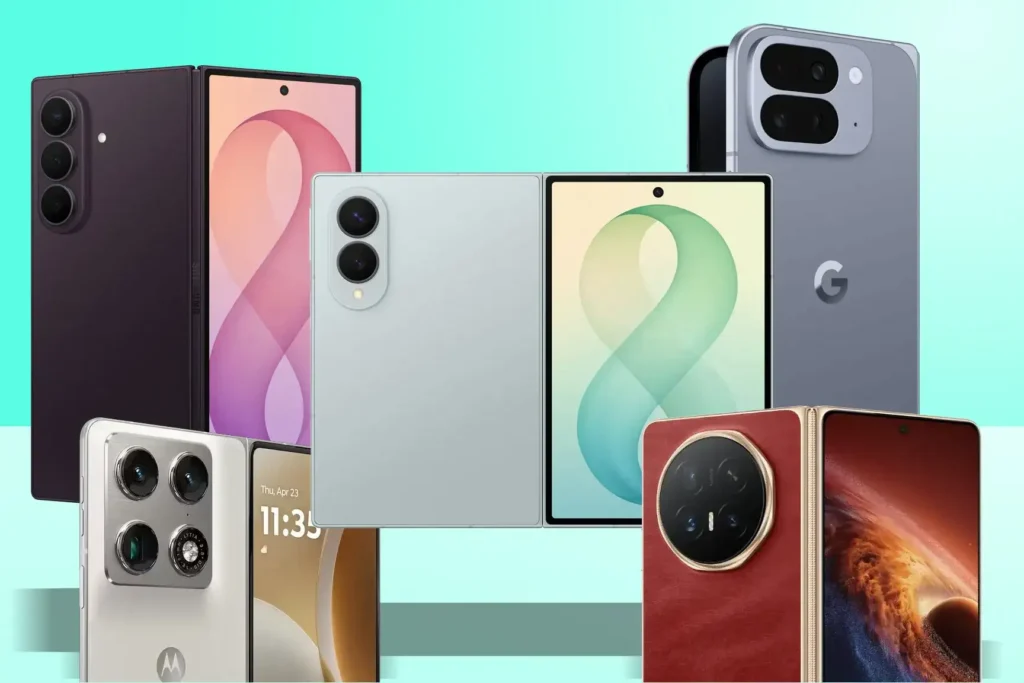
I’ve been using a foldable phone for the past couple of months, but is it finally worth buying one in 2026? The market actually thinks so. Here are the seven things I actually check before recommending one to anyone.
Key Takeaways
- The hinge is the most important part of a foldable phone, even more than its screen. Samsung still rates its hinge at roughly 200,000 fold cycles.
- Screen repairs are brutal. A cracked inner display on a Galaxy Z Fold7 could cost you more than $850.
- Battery life still lags behind flat phones. The Z Fold7 scored 11 hrs 44 mins on its main screen in lab testing. That’s well below top slab flagships.
- Cameras have quietly caught up. Motorola’s 2026 Razr Fold outscored the Galaxy Z Fold7 on DXOMark.
- Flip phones start under $800; book-style folds start near $1,900.
1. Foldable Phone Display Quality and Crease Visibility
Forget the marketing photos. The real test of a foldable phone’s display happens in broad daylight, at an angle, with the screen half-lit by a window.
Theoretically, current foldables are bright enough to use outdoors. The Galaxy Z Fold7’s main display hit 1,408 nits in auto brightness during lab testing, with the cover screen close behind at 1,409 nits. Those numbers rival plenty of non-folding flagships. But what the specs won’t tell you is that the inner panel still uses flexible plastic instead of glass, which makes it noticeably more prone to scratching than the outer screen.
In my opinion,
- Unfold the demo unit and tilt it under the ceiling lights at a low angle.
- Check whether the crease catches light differently from the flat panel around it.
- Run a finger lightly across the inner screen and try to feel for a soft, slightly springy texture. That’s the plastic layer.
If the crease bothers you, it’s going to bother you every single day. Even though it rarely gets worse, it never fully disappears either.
Inner vs Outer Screen Trade-offs
The cover screen is what you’ll see most of the day. Like notifications, quick replies, camera previews. A cramped outer display forces you to unfold the phone for tasks that should take you about 5 seconds. So, test the cover screen’s typing experience specifically. If it feels like texting through a mail slot, the “big screen” USP isn’t going to help you that much.
2. Hinge Durability and Build Quality
This is super important. It decides whether your foldable survives to the 3rd year. Samsung has kept its hinge rated at 200,000 fold cycles since the Z Fold2; that’s about 5.5 years at 100 folds a day, or 7 to 10 years at a more typical 50 to 80 folds a day. Since the average phone gets replaced every 2 to 3 years anyway, most buyers won’t even come close to that ceiling under normal use.
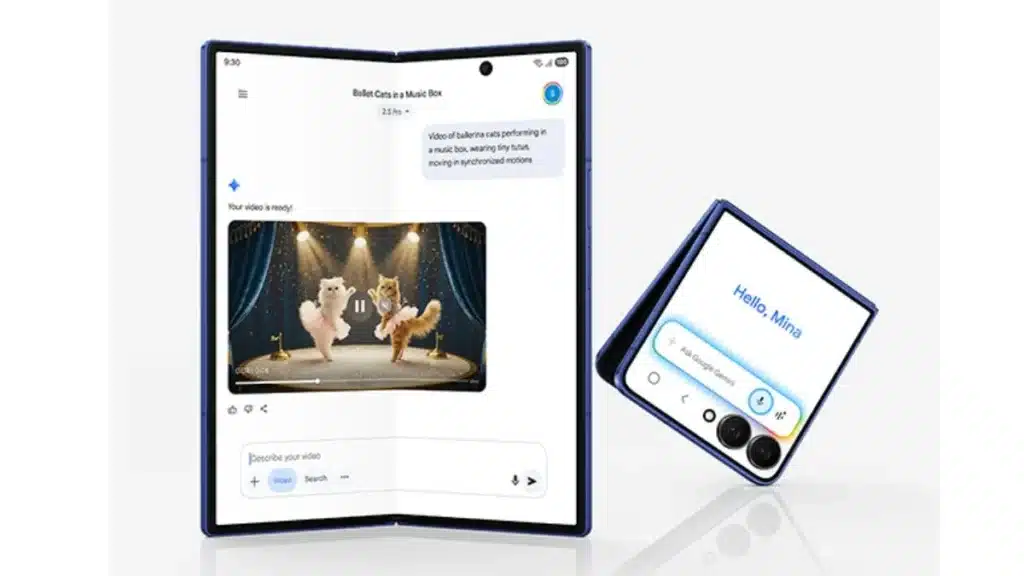
But not every brand publishes a comparable fold-cycle number, so you often can’t compare hinge durability the way you can compare battery capacity or screen size. That’s why experienced reviewers push people to ask about it directly.
A few things you should check:
- Water resistance rating. The IPX8 rating is now common on flagship foldables.
- Whether dust resistance is officially rated at all, since most foldables still skip it.
- Whether the hinge has a visible gap when closed, which invites dust over time.
- And especially how the product warranty treats a hinge failure.
The hinge is the most important part, and you must check that in person.
3. Foldable Phone Price and Long-Term Value
Foldable phone prices have come down from their “second mortgage” era, but it’s still a real commitment. A Galaxy Z Fold8 starts around $1,899, and Apple’s rumored first foldable iPhone is expected to land near $2,300 when it arrives later this year.
The number that actually changes my recommendation, though, is the repair cost. Out-of-warranty parts pricing for the Galaxy Z Fold7 runs $885 for the inner screen and $610 for the outer panel. That’s just hardware; the labor charges are added later. The Z Flip7 is gentler on your wallet at $398 and $240 for its two screens, but that outer panel repair alone costs more than some entire budget phones.

If you’re shopping in a market like India, where retailers are already positioning 2026 as the year foldables go mainstream, factor a protection plan into the total price from day one.
Run the actual math before you decide a price feels fair:
- A $1,899 foldable plus one out-of-warranty screen repair at $885 pushes your real cost past $2,700, before a case, insurance, or a second charger.
- A $799 flip phone facing the same kind of repair loses far less, since its screens cost roughly half as much to replace.
- A protection plan or insured carrier plan, factored in at purchase, usually costs less than a single accidental repair over two years.
Price in the screen protector and the case on day one.
4. Battery Life and Charging Speed
Two screens and a slim, hinged chassis are a hard combination for battery engineers. The Galaxy Z Fold7 kept the same 4,400 mAh cell as its predecessor and only managed an Active Use Score of 11 hrs 44 mins on its main display in lab testing, improving to 12:56 hours when you stick to the cover screen. That’s a good gap compared to top flagships.
Not every brand accepts that trade-off. The Honor Magic V5 packs a noticeably larger 5,820 mAh battery, which is one of the reasons it gets included in the best foldable phone list despite limited availability outside China.
Run this check while you’re still in the store:
- Ask what battery capacity the phone has, not just its charging wattage.
- Try to look for independent lab-tested screen-on-time numbers.
- Assume real-world battery life on the inner screen, which most people use most.
If you’re someone who’s off the charger for a full workday, this single check should probably outrank the camera and even the price when you’re deciding which model to buy.
5. Software Support and Multitasking Features
A foldable is a multi-year purchase, so the software update commitment matters as much as the hardware. Samsung now backs its premium foldables with 7 years of Android updates, which is a solid reason to pick a flagship over a cheaper alternative if you plan to use it for the next 5-6 years.
The phone features that justify the higher price depend on how the software handles the fold itself. Split-screen multitasking, drag-and-drop between apps, and continuity when you fold or unfold mid-task are the actual daily-use wins. But the catch is that plenty of third-party apps still don’t know what to do with the extra screen real estate.
Open the specific apps you use daily on a demo unit before you commit. Banking apps, social apps, and games are the most likely to misbehave on an unfamiliar aspect ratio.
Two more software checks worth five minutes each:
- Test whether the camera app switches cleanly between cover and inner screens without any lag.
- Check the phone’s stated update policy in writing.
6. Camera Performance Across Both Screens
The old rule was simple; foldables trail slab flagships on camera quality because hinges and thinness eat into sensor size. That’s not a rule now. Motorola’s 2026 Razr Fold outscored the Galaxy Z Fold7 on DXOMark’s camera ranking, leaning on stronger telephoto and ultra-wide performance to close the gap.
The advantage foldables still hold is using the main camera sensor for selfies via the cover screen. Since the primary sensor is almost always better than a dedicated selfie camera, that trick alone can produce noticeably sharper self-portraits and group shots than a standard phone manages, without anyone in frame needing to hand the phone to a stranger.
Check these on the exact model you’re buying:
- Sample photos from that specific phone.
- Low-light and telephoto shots specifically.
- Whether the cover screen supports a proper viewfinder for main-sensor selfies.
7. Flip vs. Fold Debate
You need a smartphone guide because choosing between a flip and a fold is a big decision. Flip foldable phones and book-style foldable phones solve completely different problems.
Flip phones win on pocketability and price. Motorola’s 2026 lineup starts at $799 for the base Razr, $1,099 for the Razr+, and $1,499 for the Razr Ultra, putting a real foldable within reach of buyers.
But a book-style fold wins on productivity. Comes with a tablet-sized inner screen for documents, split-screen work, and media that a flip phone simply can’t match.
- Choose a flip if you want a smaller closed footprint and a lower entry price.
- Choose a book-style fold if you regularly read, edit documents, or multitask on your phone.
- Choose neither, for now, if you mainly want a thin, light, one-handed phone at the lowest possible cost.
How to Compare the Best Foldable Phones in 2026
Once you know your form factor, the best foldable phones tend to separate themselves on battery, price, and hinge cycle claims rather than raw specs. Here’s how five current models stack up.
| Model | Price | Battery | Display (inner) | Best for |
| Samsung Galaxy Z Fold8 | $1,899+ | 4,800 mAh | 7.6-inch | Software support, hinge track record |
| Honor Magic V5 | Premium, limited US availability | 5,820 mAh | 7.95-inch | Buyers who prioritize battery life |
| Motorola Razr+ (2026) | $1,099 | Flip form factor | 4-inch cover / main | Pocketability at a lower price |
| OnePlus Open | Mid-flagship | 4,805 mAh | 7.82-inch | Slightly cheaper book-style option |
| Tecno Phantom V Fold2 | ~$1,200 | 5,750 mAh | 7.85-inch | Budget-conscious book-style buyers |
Pricing and specs compiled from manufacturer listings and independent comparisons; confirm current regional pricing before buying, since foldable prices shift often.
Final Thought
These 7 checks come down to whether the fold solves your problem. People who read constantly, multitask hard, or want one device instead of a phone and a small tablet get real value from a book-style fold in 2026, hinge concerns included, because the price finally matches the use case.
But for anyone who wants a smaller phone that opens into a normal-sized one, it’s an easier case than they did two years ago, now that a flip phone starts at $799.
Buying a foldable because the idea appeals to you, the prices are trending down, not up, and the camera and battery gaps keep shrinking every generation, so waiting costs little. Foldables in 2026 have earned their price for the right buyer.
For more info on AI and tech, visit Yaabot.
FAQs
Yes, for those who are heavy “multi-taskers. Software is caught up, hinges are rated for the last 2 years, and flips begin at under $800. The flagship slab phone still provides casual users with longer battery life and cameras for less.
Samsung estimates the life of its hinge at 200,000 fold cycles, which equals 5.5 to 10 years of daily use. Most people change their phones every 2-3 years, so hinge failure is not the first event to occur.
Yes, particularly at an angle in full sunlight, but not as bright as when it is used in regular use at the right angle. Does not deepen with time on existing hinges, but never completely disappears either.
The price of flip phones begins at about $799, and the book-style folds begin at about $1,899. The actual expense is in repairs, which cost $400-$900 for replacing inner panels depending on the model.
The gap is narrowing but hasn’t closed. There are some 2026 foldables that have better camera scores than their older versions, though top slab flagships have an edge on overall image quality.
Choose one of the flips that is easier to carry and has a lower price. If you frequently use two devices at once, such as reading or editing documents, you should consider a book-style fold that provides you with a tablet-like screen without the weight of two devices.
