



With the rapid evolution and mainstream adoption of Artificial Intelligence in recent years, the need for AI regulation has also become equally pertinent. And many countries have already begun constructing the legal framework for the same.

And while there are ripples on the horizon at a global level, many regions are moving forward with establishing nationwide AI legislations. With the EU having the most comprehensive legal landscape, spearheaded by the EU AI Act, many nations are accelerating their efforts as well.
Read more: AI in Cinema: 5 Areas Where Artificial Intelligence Truly Belongs
So, in this blog, we’ll see what the major AI regulations around the world are, what’s the significance of such laws, the regulatory hindrances and much more!
Key Learnings
- AI regulations have become massively significant in recent years to provide a legal background to the AI activities globally.
- The EU leads the AI regulation efforts with the EU AI Act, being the most comprehensive AI Law, with other nations building their own frameworks.
- Implementation of such AI legislations faces challenges like setting the jurisdiction on technologies, balance between innovation and protection, and others.
Why AI Regulation Matters: Significance of Global AI Laws
- Safeguarding Individual Rights and Privacy: AI laws protect people from invasive surveillance, unauthorized data collection, privacy violation.
- Making Digital Services entrustable: When people know there are enforceable AI legislations, people are more willing to use AI-powered alternatives as these laws require AI transparency and labeling from the companies.
- Encouraging Responsible Innovation: AI laws let companies develop cutting-edge technology, as they have clear norms to develop the uses and capabilities of their products or services.
- Establishing clear legal procedures: AI laws actually establish clear procedures in case of system failure and subsequent harm, ensuring the provision of correct legal judgements.
Who Do AI Regulations Affect?
- Tech Companies and personnel: Organizations and employees of the tech sector developing AI technologies have to comply with the AI laws in force.
- AI-powered businesses: Companies deploying AI at any degree must ensure AI governance and compliance in accordance with the applicable framework.
- Individual civilians: AI Regulations protect people from discriminatory algorithms and privacy violations by providing them with a set of enforceable rights.
- Government Agencies: Public authorities and institutions employing AI are also subject to the applicable compliance standards.
Major AI Regulations Around the Globe
| Country/Region | Major AI Laws/Legislations | Penalties & Enforcement |
| European Union | EU AI Act (fully applicable Aug’26), General Purpose AI model rules, Prohibited practices ban | Up to €35 million (prohibited practices) €15 million or 3% (other violations); €7.5 million or 1% (misleading information). Enforcement from Aug 2026. |
| United States | State AI Laws: California (AI Safety Act, Training Data Transparency Laws), Colorado (SB 24-205 (Feb 2026)), Texas (TRAIGA (Jan 2026)), New York (RAISE Act, Local Law 144) | Varies by state. Civil penalties and fines for discrimination/bias. Private right of action in some states. No jail time or federal penalties. |
| China | Interim Measures for Generative AI Services, Deep Synthesis Regulations, Content AI transparency and labeling Measures | Monetary fines and service blocking. Companies fined for non-compliance with content rules and censorship. |
| South Korea | Basic Act on AI (enacted Jan 2025, effective Jan 22, 2026) | Fines up to KRW 30 million ($20,000 USD) only. No criminal penalties or imprisonment under the AI Basic Act itself |
| Canada | Artificial Intelligence and Data Act (AIDA) (not yet in enforced), Digital Charter Implementation Act | No penalties currently. AIDA is still an AI legislation. Once enacted, expected to include fines for high-impact AI. Currently voluntary guidelines only. |
| Japan | AI Bill, Fundamental Plan for AI | No specific penalties. Voluntary compliance framework. |
| India | Digital Personal Data Protection Act (2023), IT Rules amendments (2025), AI Ethics & Accountability Bill 2025 (proposed) | Current penalties under IT Rules include fines and service blocking. No AI-specific enforcement yet. ₹5 crore ( $600,000 USD) under the proposed Ethics Bill. |
Read more: How Multi-Agent AI Systems Are Transforming Decision-Making Across Industries
The EU AI Act (European Union)
Scope: All 27 EU member countries.
Enforcement: Entered force August 2024, fully applicable August 2026
Features: It is a risk-oriented framework that bans unacceptable AI practices like social scoring while imposing strict requirements on high-risk systems including mandatory conformity assessments, transparency obligations, human oversight, and extensive documentation.
South Korea’s AI Basic Act
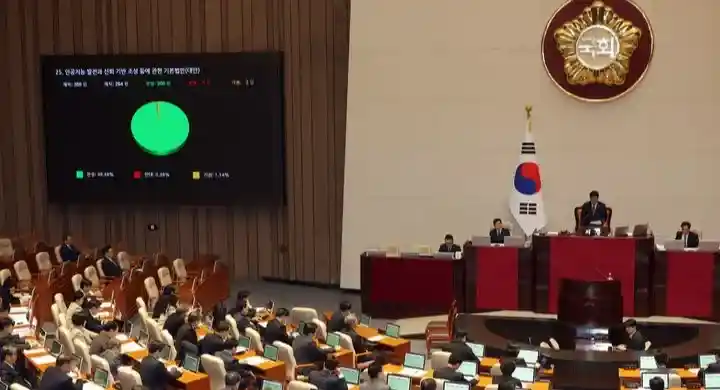
Scope: Nationwide across South Korea
Enforcement: Will take effect on January 22, 2026.
Features: Asia’s first comprehensive AI law that focuses on high-impact AI systems and generative AI through a risk-based approach requiring transparency, impact assessments, and risk management systems with human oversight.
California’s AI Regulatory Framework

Scope: State Laws having jurisdiction over California only
AI Laws’ Features and Enforcement:
- AI Training Data Transparency Laws (w.e.f January 1, 2026): Requires covered providers to publish high-level summaries of training data used in generative AI systems including sources, data types, and IP information.
- AB 2013 (w.e.f January 1, 2026): California’s first AI law addressing specific AI applications and requirements.
- Defending Democracy from Deepfake Deception Act (w.e.f 2024): Mandates large online platforms to ensure AI transparency and labeling on posted content.
China’s AI Legal Framework

Scope: Nationwide across China
AI Laws’ Features and Enforcement:
- Interim Measures for Generative AI Services (w.e.f 2023): Comprehensive rules that require lawful data use, user consent, content moderation, and mandatory registration for generative AI services provided to the public.
- Deep Synthesis Regulations (w.e.f 2022): This AI law governs AI-generated content including deepfakes and synthetic media, which require clear labeling.
- Algorithmic Recommendation Guidelines (w.e.f 2022): These govern how algorithms provide content and product recommendations to users, ensuring transparency and preventing manipulation regarding AI.
- Content Labeling Measures (w.e.f September 1, 2025): This is a mandatory AI transparency and labeling law that requires platforms to clearly identify when content has been created or synthesized by AI.
India’s AI Regulatory Measures

Scope: Nationwide across India
AI Laws’ Features and Enforcement:
- Digital Personal Data Protection Act (w.e.f 2023): An act which governs how personal data needs to be collected, processed, and used in AI applications, requiring consent and data governance measures.
- IT Rules Amendments (Amended in 2025): Updates on regulating synthetically generated information and AI-generated content by intermediaries.
- AI Ethics & Accountability Bill (Proposed in 2025): A Proposed AI governance and compliance framework for development and deployment with fines up to ₹5 crore and creating a dedicated independent Ethics Committee.
Challenges in Implementing AI Regulation Globally
As important as AI governance and compliance is , the challenges in establishing these AI legislations, make the establishment of such AI legislations even more difficult. Take these for example:
- Accounting for technological evolution: AI evolves so rapidly that by the time regulators understand one generation of AI, companies have already moved on, rendering the drafts obsolete.
- Defining jurisdictional boundaries: There’s no universal agreement on what actually qualifies as AI. And without explicit AI laws, companies exploit loopholes, and regulators can’t enforce rules effectively.
- Global standards inconsistency: Every country has its own AI regulations approach. So, companies operating internationally face conflicting requirements, while gaps between jurisdictions let harmful AI slip through the cracks.
- Balancing Innovation and Protection – Regulators have the extremely difficult task of fostering breakthroughs and pushing innovation, while eliminating discrimination and privacy violations.
Read more: Best Netflix Shows of 2025: Top Series, Hidden Gems & Genre-Wise Picks
The Future of AI Regulation:
- Alignment of Global AI legislations: We will likely see the emergence of more international agreements and frameworks spearheaded by organizations like the UN and OECD, and aggressive AI transparency and labeling.
- Introduction of sector-specific Laws: AI Laws in future could include separate rules for AI in healthcare, finance and others, factoring in each sector’s unique risks, challenges and degree of AI use.
- Emergence of dedicated AI Enforcement Agencies: We can expect establishment of new government bodies focused exclusively on AI oversight, like Spain’s AESIA. These will have the right technical expertise, enforcement power, and resources.
- Establishment of ‘Mandatory’ norms: We will also likely see the shift from voluntary frameworks to AI laws with serious legal ramifications when AI systems cause damage.
The Bottom Line
To conclude, I believe that AI regulation has reached a stage of accelerating globally. With the emergence of dedicated laws or necessary guidelines like the ones discussed above, the signs are clear. AI governance and compliance is becoming formalized, enforceable, and consequential for organizations using AI, regardless of its scope.
However, the future will also come along with major challenges, including the persistent gap between technological advancement and legislative response, the need for specialized regulatory expertise, and other pertinent hindrances.
Lastly, we could see greater international coordination, the establishment of dedicated AI oversight bodies, and the evolution from voluntary guidelines to binding legal obligations with meaningful enforcement mechanisms.
So, while the signs are there, circumventing the challenges will be key…
Read more: What Is Hyper-Personalized Medicine and How Does AI Enable It?
Want to learn more about the latest tech developments and solutions? At Yaabot, we pride ourselves on being your ultimate stop for all things related to online technology, software, applications, consumer trends, AI, science, health tech, and more.
Frequently Asked Questions
- How many countries have AI regulations?
More than 70 countries globally have national or state AI regulations of varying degrees. On the global level, the UN encourages global frameworks, showing a significant global push towards governance beyond just direct laws, covering guidelines, strategies, and standards.
- What is the status of regulation of AI in India?
India doesn’t have any explicit AI laws, but the government is using existing frameworks like the Digital Personal Data Protection Act (DPDP Act, 2023) and intellectual property laws to regulate AI, which showcases a light-touch approach that favors innovation over strict regulation.
- Is AI regulation in the ‘Big Beautiful Bill?’
The “One Big Beautiful Bill” did initially include a 10-year moratorium which blocked states from regulating AI, but the Senate voted 99-1 to remove this provision in July 2025. Therefore, the final bill signed into law contains no AI regulation restrictions, leaving state governments to continue establishing their own AI legislations.
- How many AI laws are there?
According to the OECD there are over 1,000 AI policy initiatives across 69 countries, though most are guidelines rather than binding laws. In the US alone, states filed more than 1,000 AI-related bills in 2025, with 28 states enacting at least 75 new measures, as per National Conference of State Legislatures (NCSL).
- What are AI regulatory sandboxes?
AI sandboxes as controlled testing zones where companies can experiment with new AI technology. Currently, there are over 60 of such sandboxes worldwide. The EU is making member countries set up at least one by August 2026, and US states like Utah and Texas already have their own.
