



Technology is moving faster than ever, but so are cyberattacks. Every year, businesses add more tools, credentials, and data online, making them more vulnerable to cybercriminals. What used to be rare has become a constant stream of silent intrusions and data leaks behind the scenes.
In this outline, I’ll discuss what cyberattacks are, how to prevent them, types of cyberattacks, and how to tackle them effectively.
What Are Cyberattacks and Why Do They Keep Changing?
Cyberattacks are malicious efforts to gain unauthorized access to systems, sensitive data, or networks. It is not the intention that has changed; it is the execution.
The initial attacks were dependent on technical loopholes. The current attacks are just as reliant on psychology, automation, and trust chains. To tech-savvy individuals, the shift is clear. Attackers have come to believe that eventually, systems will be patched. Individuals, workflows, and third-party dependencies are more difficult to protect and easier to reuse as entry points. That is why the most common cyberattacks continue to occur, even though tools have become more sophisticated.
Even in 2025, human factors remained a leading cause for these breaches. Data suggest that around 68% of breaches involved some form of human error, showing how attackers exploit behavior and trust as much as technical faults.
How Cyberattacks are Really Happening?
Cyberattacks no longer involve cases driven only by manual errors. Data shows that most of the attacks follow a certain kind of pattern.
1. Phishing attacks
- According to IBM’s data, phishing attacks account for nearly 30% of global breaches.
- More than 900,00 attacks just in the last quarter of 2024. This averages out to more than 300,000 attacks per month.
2. Zero-Day attacks
According to a Google report, 97 zero-day vulnerabilities were reported in 2023, out of which 48 were linked to spyware vendors and 12 to China.

3. Ransomware attacks
- Statista states that ransomware attacks are mainly caused by phishing (54%), poor practices (27%), lack of cybersecurity training (26%), and malicious websites (14%).
- By 2031, every 2 seconds, a ransomware attack will hit a consumer or business, which comes to around 43,200 attacks every day.
- The average ransomware payment was around $2 million, and 94% of the companies paid the initial ransom demand.
Types of Cyberattacks to Watch Out For
The types of cyberattacks are consistent across industries and levels of expertise. They all still exist because they fit well with how people use digital systems today.
1. Phishing attacks
Phishing is an online fraud method in which hackers use trusted parties to obtain credentials, payment information, or access information.
How attackers use it
Urgency and familiarity are the lifeblood of phishing. Attackers craft messages to appear ordinary rather than unusual or strange, designing security alerts, invoice notices, and even internal emails to avoid scrutiny.
Recent real-world example
Credential-harvesting campaigns at this scale targeted email and productivity platforms, resulting in mass account takeovers via cloud security warnings.
Signs that you are affected
Sending you emails that say to reset your password, which you have not yet done, receiving messages that you are logging in, which you are not, or your log showing that someone performed an action that you do not remember doing.
Immediate steps to contain
Immediately change credentials, revoke active sessions, enable multi-factor authentication, and view connected applications.
2. Ransomware attacks
Ransomware is used to encrypt systems or data and to ask for money, usually accompanied by threats of making them public.
How attackers use it
Attackers are oriented toward interruption rather than stealth. They use poor credentials or vulnerable services and put strain on them by down-timing and reputational risk.
Recent real-world example
Ransomware attacks that involved the use of encryption, together with threats of data leaks, resulted in the extended shutdown of critical infrastructure and service providers.
Signs that you are affected
Locked files, ransom notes, disabled systems, or sudden loss of access across departments.
Immediate steps to contain
Isolate compromised systems, confirm clean backups, and start incident response without processing attackers directly.
3. Malware attacks
It uses malicious software to spy on devices, steal data, or slow down your system’s performance. It’s one of the most common cyberattacks.
How attackers use it
Contemporary malware embeds itself in apparently innocent programs, browser extensions, or similar persistence mechanisms; continuity matters more than the immediate effect.
Recent real-world example
Attackers install credential-stealing malware as browser extensions and silently collect data over long periods.
Signs that you are affected
You may notice abnormal background activity, degraded performance, unexplained network traffic, or unknown processes running.
Immediate steps to contain
Conduct complete system scans, delete suspicious applications, and update operating systems and security tools.

4. DDoS (Distributed Denial of Service) attacks
DDoS is a type of cyberattack that saturates systems with traffic and makes the services inaccessible.
How attackers use it
Attackers use large botnets of compromised devices to flood the target during peak usage or at scheduled times.
Recent real-world example
Monitored financial sites went offline multiple times due to coordinated traffic floods aimed at disrupting access rather than stealing information.
Signs that you are affected
Service downtime, severe latency, or sudden unexplained traffic spikes.
Immediate steps to contain
Turn on traffic filtering, rate limiting, and dedicated DDoS protection.
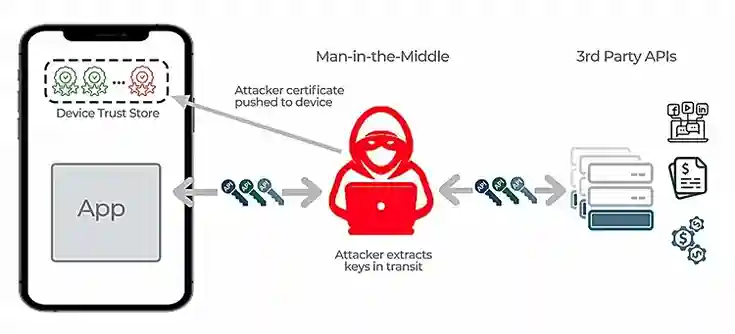
5. Man-in-the-middle (MITM) attacks
MITM attacks do not allow the users and the services to know that the communication is intercepted.
How attackers use it
Attackers can use unsecured networks, weak encryption, or hacked routers to steal credentials and session data.
Recent real-world example
Intercepted login credentials of remote workers using internal tools and interfered with their access via public Wi-Fi networks.
Signs that you are affected
Service downtime, severe latency, or sudden unexplained traffic spikes.
Immediate steps to contain
Never use public networks for sensitive tasks; use encrypted links instead.
6. SQL injection attacks
SQL injection is a type of attack that manipulates the backend database by using unsafe input processing.
How attackers use it
Hackers use poorly validated parameters and forms to log in and alter or steal sensitive data.
Recent real-world example
Attackers used the search and login fields that had vulnerabilities to gain access to the customer databases.
Signs that you are affected
Public display of database errors or unauthorized changes to the data.
Immediate steps to contain
Fix vulnerable applications and test trace logs of database access.
7. Zero-day exploits
Zero-day attacks exploit previously unknown vulnerabilities before developers fix them.
How attackers use it
Speed is the advantage. Attackers act when defenders have no visibility.
Recent real-world example
Before the vendors issued security updates, attackers breached enterprise software.
Signs that you are affected
No cause of crashes, unusual permissions, or suspicious behaviour.
Immediate steps to contain
Install emergency patches as fast as possible and limit privileges where feasible.
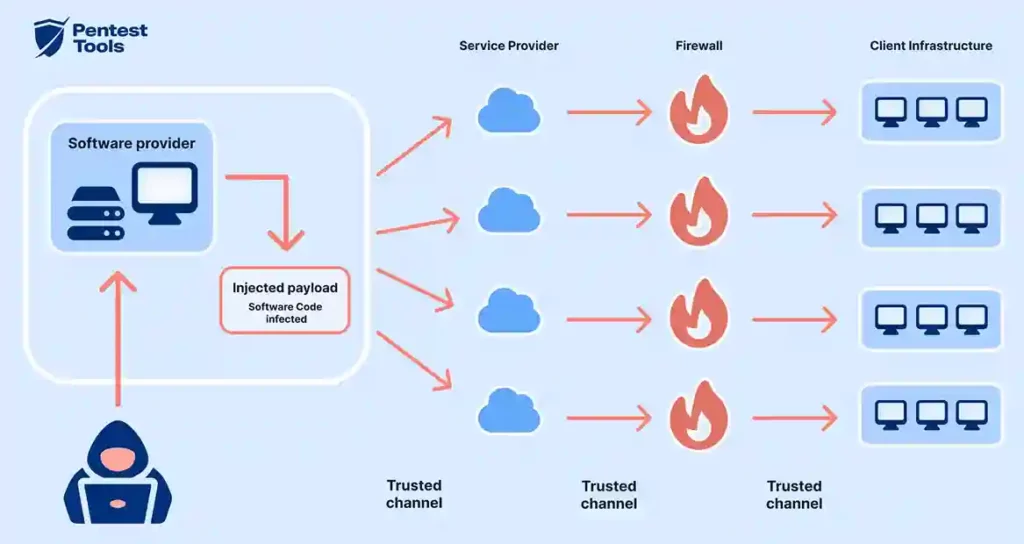
8. Supply chain attacks
A supply chain attack involves using trusted vendors or tools to target various targets.
How attackers use it
Attackers quietly increase the volume of effects by inserting malicious code into valid updates.
Recent real-world example
There is a distribution of malicious software updates that are propagated via trusted channels and downstream users.
Signs that you are affected
Problems with the security that emerge after routine updates.
Immediate steps to contain
Restrict third-party access, audit vendor access, and update integrity monitoring.
Pending Reviews & Approval – Updated and Revised Explainers
9. Insider threats
Insider threats arise when authorized users abuse their access, either intentionally or unintentionally.
How attackers use it
With too much freedom and loose controls, abuse is simple to ignore.
Recent real-world example
Leakage of internal data due to excessive permissioned accounts and insufficient access control.
Signs that you are affected
Abnormal access patterns or excessive data transfer during the off-peak hours.
Immediate steps to contain
Include implementing role-based access and ongoing monitoring.
10. AI-powered cyberattacks
Scalable attacks are a type of cyberattack that is automated and personalized by AI-powered cybersecurity attacks.
How attackers use it
AI can create persuasive phishing emails, voices, and impersonations with minimal effort.
Recent real-world example
Deepfake voice frauds duped finance departments into approving fraudulent transactions.
Signs that you are affected
Extremely specific scams that appear context-sensitive and natural.
Immediate steps to contain
Provide levels of verification and train teams to question abnormal requests.
Preventing Different Types of Cyberattacks without Overengineering
In the majority of successful cyberattacks, there is no evasion of high-tech security measures. They sneak through loopholes of habitual conduct. Strong authentication, regular updates, access control, and reliable back-ups ensure less harm than fancy schemes installed incompetently. Knowing how to prevent cyberattacks is often about consistency rather than sophistication.
How to Prevent Various Types of Cyberattacks Effectively
Preventing different types of cyberattacks doesn’t require complicated security features. Most attacks exploit behavioural patterns, weak habits, and inconsistent safety controls. Effective prevention focuses on the basics, which are applied across different attack types.
Individuals
Individuals are the easiest entry point for cyberattacks. But it could be prevented by awareness and basic security controls.
- Use strong and unique passwords for every account and enable multi-factor authentication.
- Be cautious with email, sms, links, and attachments, especially those that trigger urgency.
- Avoid using public WiFi for personal work or use a trusted VPN when needed.
- Keep your OS and browsers updated with the latest security patches.
Organizations
Organizations face a broader risk of cyberattacks, and preventing these requires consistent enforcement of security controls.
- Enforce role-based access controls and apply the principle of least privilege.
- Maintain regular patches, vulnerability management, and system updates.
- Monitor systems for abnormal access patterns or unexpected data transfers.
- Maintain reliable and tested backups separate from the primary systems to support recovery during any attacks.
In the majority of cases, there’s no evasion of security measures. Instead, attackers exploit loopholes created by habitual conduct or inconsistent execution. Strong authentication, regular updates, etc., are more efficient than complex tools deployed without discipline.

Final Thoughts
In 2026, cyber threats are no longer unreal and isolated. They are predictable, reproducible, and familiar to the attackers. Being aware of the types of cyberattacks to which you are most susceptible makes it possible to detect them early.
Security today is not a one-time investment or a set of isolated tools. It depends on consistent awareness, disciplined access control, and everyday decisions made across teams. The adjustment might feel complicated, but the outcome is a more resilient security control that benefits both organizations and individuals.
FAQs
1. What are the three key prevention measures of cyber attacks?
The three key prevention measures of cyberattacks are
- strong authentication,
- regular system updates,
- and employee awareness,
which together reduce access risks, software vulnerabilities, and human error.
2. What are the four categories of threats?
There are four broad categories of cyber threats.
- Malware-based threats use malware softwares to penetrate systems.
- Social engineering threats exploit human habits rather than systems.
- Threats that are network-based, like DDoS or MITM attacks, target connectivity and traffic flow.
- Insider threats caused by the misuse of authorised access, intentionally or by mistake.
3. What are the seven categories of cybersecurity?
There are generally seven overlapping domains of cybersecurity:
- Network security
- Application security
- Cloud security
- Endpoint security
- Information or data security.
- Identity management and access control.
- Operational security
Each protects a different layer of contemporary digital infrastructure.
4. What are the five pillars of cybersecurity?
The five pillars are the main concepts of the security strategies that are based on:
- Confidentiality: Only authorised personnel could access the data.
- Integrity: Resisting data corruption.
- Availability: Ensures systems are available when required.
- Authentication: Verifying identities to maintain security.
- Non-repudiation: It means actions cannot be denied.
