


There are more than 10,000 mental health apps available today. Most are not worth your time. A small number are genuinely useful – not as replacements for therapy, but as structured tools that hold up between sessions or provide a meaningful first step when professional care isn’t immediately accessible.
In this article, I’ll walk you through the best mental health apps in 2026 for stress, sleep, and anxiety. I’ll also cover what each one does well, who it’s best for, and whether it’s worth your time.
Key Takeaways
- The best mental health apps in 2026 combine AI personalisation, CBT frameworks, and guided meditation for well-rounded, evidence-based support.
- Calm and Headspace remain the leading picks for sleep quality and daily stress management.
- MindShift CBT is the strongest fully free option for structured anxiety management.
- Wysa provides accessible, around-the-clock AI-driven emotional support between therapy sessions.
- Talkspace bridges the gap between self-guided apps and licensed online therapy.
- No app replaces professional mental health care – but the right one can meaningfully support your wellbeing between sessions.
What Are Mental Health Apps?
Mental health apps are smartphone or web-based tools that support emotional wellbeing using evidence-based techniques – including cognitive behavioural therapy (CBT), guided meditation, mood tracking, and journalling.
Some platforms connect users with licensed therapists for structured online therapy (e.g., Talkspace). Others are fully self-guided (e.g., MindShift CBT, Calm).
Peer-reviewed research supports their use as supplements for mild-to-moderate anxiety, chronic stress, and sleep difficulties – particularly in populations where access to in-person mental health care is limited by cost, geography, or wait times.
They are not a replacement for clinical mental health care.
Do Mental Health Apps Actually Work? What the Evidence Says
Mental health care has a structural supply problem. The World Health Organization estimated a global total of more than 1 billion people with mental health issues in 2025.
Apps have emerged as a meaningful first line of support – particularly for people managing stress, generalised anxiety, and sleep difficulties while waiting to access formal care.
A 2025 meta-analysis published in npj Digital Medicine, reviewing 19 randomised controlled trials, found that app-based CBT interventions produced statistically significant reductions in anxiety symptoms. Evidence is strongest for mild-to-moderate presentations – which is precisely where these tools are positioned.
What’s changed in 2026 is the quality. These aren’t just timer apps with gentle bells anymore. The best ones now incorporate:
- AI-driven personalisation that adapts to your mood and usage patterns
- Evidence-based CBT frameworks built in collaboration with licensed clinicians
- Sleep-specific tools like soundscapes, sleep stories, and wind-down routines
- Real-time crisis pathways that connect users to professional help when needed
These apps can support everything from mood tracking and therapy access to CBT-based tools and AI-guided exercises – making them a genuinely useful part of a broader mental health toolkit.
How We Tested and Evaluated the Best Mental Health Apps
Each app was tested over a minimum of three weeks between January and March 2026 on iOS and Android. I assessed:
- Evidence base: Peer-reviewed research supporting the therapeutic framework.
- Clinical involvement: Whether licensed clinicians developed or reviewed content.
- Usability: Onboarding friction, feature accessibility, and consistency of engagement over the test period.
- Transparency: Whether the app communicates its own limitations and when to seek professional help.
The Best Mental Health Apps
Calm: Best Mental Health App for Sleep and Stress Relief
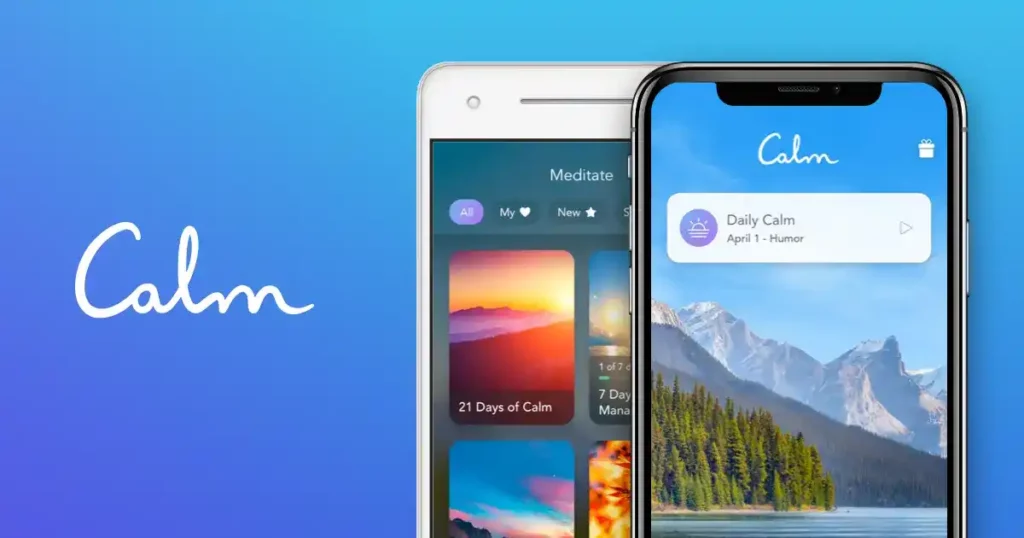
If there’s one app that has become almost synonymous with mental wellness and a good night’s sleep, it’s Calm. Honestly, the reputation is earned.
What works
- The sleep stories are legitimately soothing – I fell asleep faster using them than I expected to
- Nature soundscapes (rain, ocean, forest) are customisable and high quality
- The Daily Calm feature gives you a fresh 10-minute meditation every single day, which helped me build a consistent habit
- Celebrity narrators (think Matthew McConaughey reading a bedtime story) are surprisingly effective
Who it’s best for
Calm is ideal if sleep is your biggest issue, or if you want a polished, low-effort daily stress management tool. It’s also great for beginners who find silence intimidating.
Platform
Both iOS and Android.
Limitation
Calm does not include CBT tools, crisis pathways, or therapist access. If your anxiety is affecting your ability to function at work or in relationships, Calm alone is insufficient. Use it alongside professional support or pair it with MindShift CBT.
Headspace: Best for Meditation and Building Mental Fitness
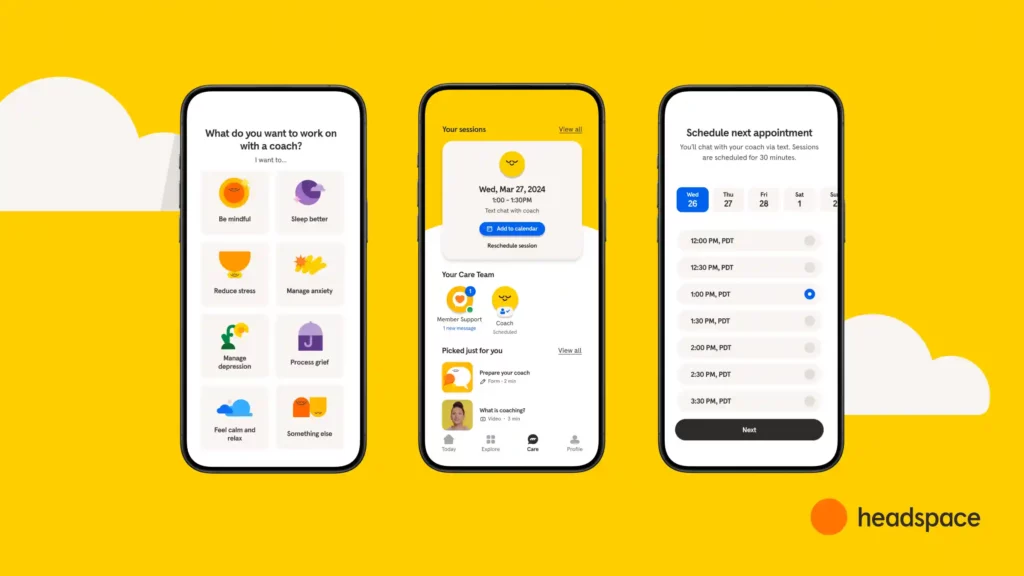
Headspace has always been the more structured, curriculum-driven alternative to Calm. In 2026, it has evolved significantly and the addition of their AI companion, Ebb, has made it feel genuinely personalised.
What works
- Structured meditation courses that build on each other – great if you’re a beginner who needs guidance
- Ebb, the AI companion, checks in with you, adapts recommendations based on how you’re feeling, and nudges you gently when you’ve been off-track
- Focus sessions with ambient music helped me during deep work blocks
- A solid library of content for stress, anxiety, sleep, and even physical movement
Who it’s best for
Headspace is perfect for people who want to build a genuine meditation practice rather than just dip in and out. The structured approach suits those who like working through a programme rather than choosing randomly.
Platform
Both iOS and Android.
Limitation
The app can feel slightly overwhelming at first because of how much content there is. Stick with one course and resist the urge to browse everything at once.
MindShift CBT: Best Free App for Anxiety
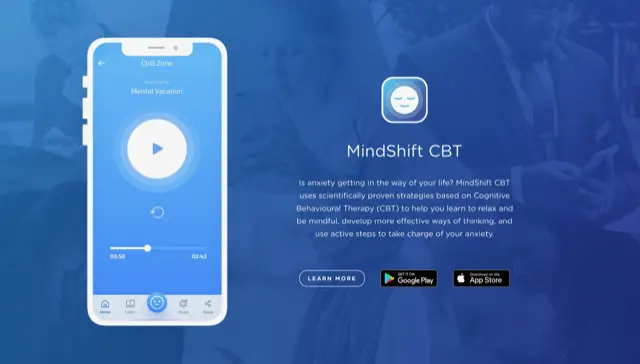
This one surprised me. MindShift CBT is free, clinically grounded, and more powerful than many paid alternatives when it comes to anxiety management.
Developed with Anxiety Canada, a registered mental health nonprofit, in collaboration with licensed anxiety disorder specialists, MindShift CBT uses cognitive behavioural therapy – one of the most well-researched approaches to treating anxiety – to help you identify, challenge, and reframe anxious thoughts.
Smartphone-based Cognitive Behavioral Therapy (CBT) apps are effective, scalable tools for reducing anxiety symptoms, supported by studies in JMIR Mental Health.
What works
- The “Thought Journal” helps you catch negative thought spirals before they take over
- Breathing and grounding tools are available quickly when panic sets in
- The “Chill Zone” offers quick-access calming exercises for acute stress moments
- It educates you about anxiety rather than just distracting you from it – which means you’re building real skills
Who it’s best for
MindShift CBT is the strongest recommendation I can make for someone dealing with anxiety on a budget. It’s especially useful if you’re already in therapy and want a tool that reinforces what you’re learning in sessions.
Platform
Both iOS and Android.
Limitation
The interface is functional but not especially beautiful. If aesthetics matter to your motivation, apps like Calm or Headspace may keep you more engaged.
Also read: Electromagnetic Therapy for Depression and Anxiety Treatment
Talkspace: Best for Online Therapy Access
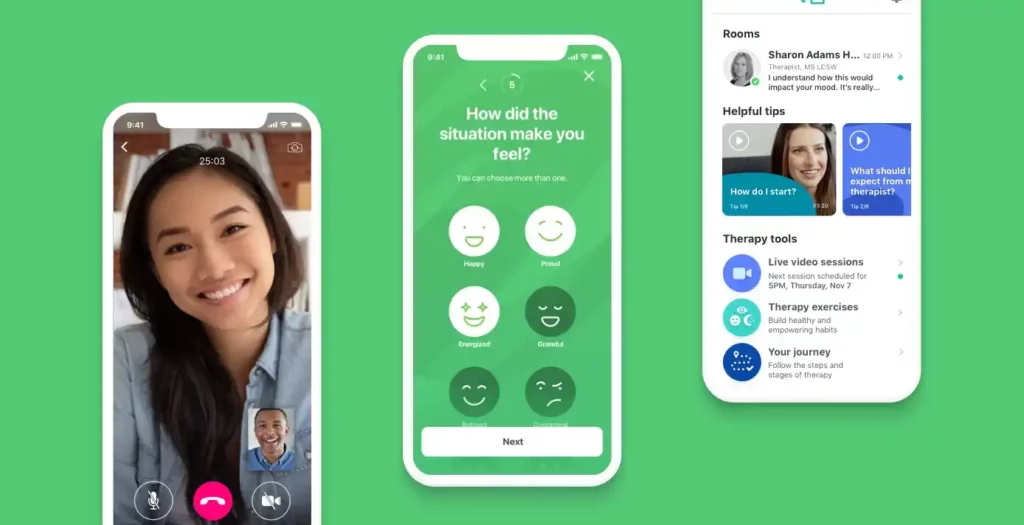
Talkspace occupies a different category from the other apps on this list. Remember that it’s not a self-help tool – it’s a platform that connects you to licensed therapists via text, audio, and video messaging.
I’m including it here because the line between mental health apps and online therapy platforms has blurred significantly in 2026, and for many people, Talkspace represents the most accessible route to professional support.
What works
- Ability to message your therapist anytime – not just during scheduled sessions
- A broad network of licensed therapists with varied specialisations, including anxiety, depression, and trauma
- Psychiatry services are available for those who may need medication management
- The intake process matches you with a therapist based on your specific needs
Who it’s best for
Talkspace is the right choice if you’ve been putting off therapy because of logistics – cost, location, scheduling. It makes professional mental health support genuinely more accessible. It’s not a replacement for in-person care in every situation, but for mild to moderate anxiety and stress, it can be transformative.
Platform
Both iOS and Android.
Limitation
Response times from therapists vary, and the asynchronous messaging model doesn’t suit everyone. If you need real-time conversation, opt for scheduled video sessions.
Wysa: Best AI Chatbot for Emotional Support
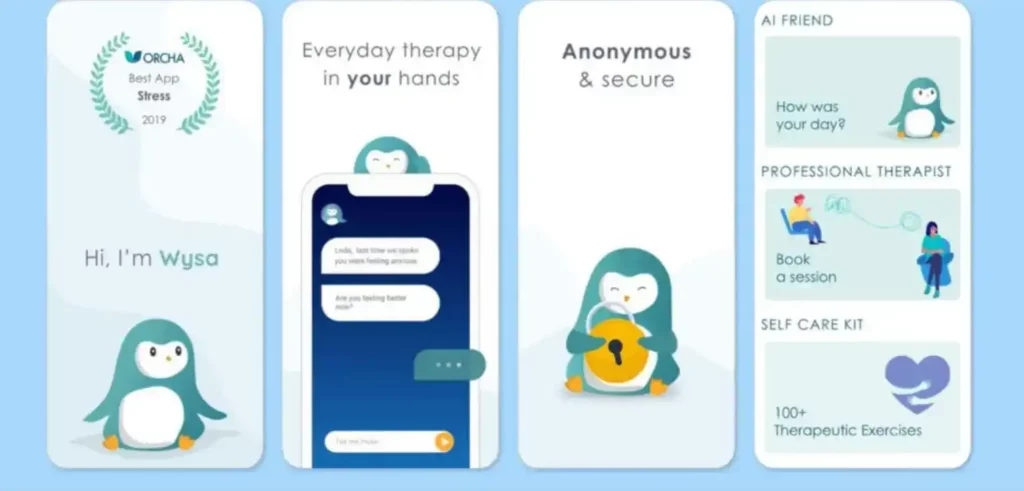
Wysa is the app I recommend most often to people who feel awkward talking about their feelings – even to a therapist. The AI chatbot format makes it feel lower-stakes, which paradoxically makes it easier to be honest.
Wysa uses CBT, DBT, and mindfulness techniques validated in a peer-reviewed study by Inkster et al. (2018), published in JMIR mHealth, which found statistically significant reductions in depression scores among users.
What works
- The conversational format feels natural and non-judgmental
- It’s available 24/7, which matters at 2am when anxiety spikes
- Wysa gently escalates to human support when it detects that someone needs more than an AI can offer
- Evidence-based techniques are embedded into conversations rather than presented as formal exercises
Who it’s best for
Wysa is especially valuable as a between-session support tool if you’re already in therapy. It’s also a good starting point for people who are not yet ready to speak to a human therapist but know they need to process their emotions more regularly.
Platform
Both iOS and Android.
Limitation
Wysa is an AI, and there are limits to what it can do. If you’re in crisis, please contact a crisis helpline or emergency services – not a chatbot.
Also read: AI in Healthcare: A Challenge to Doctors?
Quick Comparison: Top Mental Health Apps in 2026
| App | Primary Use | Evidence Base | Monthly Cost | Free Tier | Crisis Support | Best For |
| Calm | Sleep & stress | Mindfulness (MBSR) | $69.99-$79.99/yr or $16.99/mo | Yes (limited) | No | Sleep problems, daily stress |
| Headspace | Meditation practice | Mindfulness, CBT elements | $69.99/yr or $12.99/mo | No | No | Building a meditation habit |
| MindShift CBT | Anxiety management | CBT (clinician-developed) | Free | Yes (full) | No | Anxiety on any budget |
| Talkspace | Online therapy | Licensed therapist access | $69-$109/wk (billed monthly) | No | Yes | Moderate anxiety, depression |
| Wysa | AI emotional support | CBT, DBT, mindfulness | Free / $74.99-$79.99/yr | Yes | Yes (escalation) | Between-session support |
Who Should NOT Use These Apps
Most mental health app reviews omit this section. It is one of the most important.
Apps in this guide are designed for mild-to-moderate symptom management and general mental wellness support. They are not appropriate as a first response to the following:
- Active suicidal ideation or self-harm behaviour
- Psychosis, mania, or symptoms consistent with bipolar disorder
- Severe clinical depression where daily functioning is significantly impaired
- Complex trauma or PTSD requiring specialist trauma-processing modalities such as EMDR or somatic therapy
- Eating disorders requiring medical monitoring and clinical oversight
- Substance dependency requiring medically supervised detoxification or treatment
For acute crises in any of these situations: contact a crisis helpline immediately or go to your nearest emergency department.
How to Choose the Best Mental Health App for Your Needs
The wrong framework for choosing is: ‘which app is most popular?’ The correct framework is: what is your primary presenting difficulty, and what form of support will most directly address it?
- Sleep is your primary issue: Choose Calm. Its sleep story and ambient sound tools have the strongest evidence base for sleep onset improvement in this category.
- Anxiety is your primary issue and you want to actively manage it: Start with MindShift CBT for structured cognitive work. Add Wysa as a between-session support tool.
- You want to build a consistent meditation habit: Choose Headspace. The structured curriculum reduces the abandonment rate that open-library apps commonly produce.
- You need professional therapy: Use Talkspace if cost or scheduling are the barriers. Otherwise, consult a local therapist directory. Apps are not a substitute for this level of care.
- You are not ready for therapy but need to start processing: Start with Wysa. The lower barrier to entry and immediate availability make it the most accessible entry point.
The Bottomline
The best mental health apps in 2026 are substantially more effective than their predecessors – more personalised, more clinically grounded, and more honest about their own limitations.
Whether you’re managing everyday stress, working to improve sleep quality, building anxiety management skills, or looking for accessible online therapy, there is a specific tool in this guide suited to your situation.
Use these apps as part of a broader, integrated approach to mental health care – not as a standalone solution. They are most effective in combination with professional support. If your symptoms feel larger than an app can address, that is a meaningful signal: reach out to a licensed mental health professional.
For more info on tech, visit Yaabot.
Frequently Asked Questions (FAQs)
MindShift CBT is the strongest free option for anxiety, with a clinician-developed CBT framework and no subscription fees. Wysa offers a free tier for basic AI-driven emotional support. For sleep specifically, Calm’s free version is limited; the meaningful sleep tools require a paid subscription.
Neither is primarily designed for anxiety management – both are mindfulness and meditation apps. Calm and Headspace can reduce acute stress but do not address the cognition-anxiety cycle that maintains anxiety disorders.
No. Apps are appropriate for mild-to-moderate symptoms as self-management tools or as supplements to therapy. For moderate-to-severe presentations, apps do not provide the relational, diagnostic, or clinical intervention that licensed therapy delivers.
Talkspace accepts many US insurance plans including Cigna, Aetna, and some Blue Cross Blue Shield plans.
MindShift CBT was specifically developed with teenagers and young adults in mind. Wysa is also appropriate for teens due to its non-judgmental conversational format. Talkspace offers a teen therapy plan with parental consent.
Use apps if: your symptoms are mild, you are managing day-to-day stress or occasional anxiety, and your functioning is not significantly impaired. Seek a therapist if: symptoms are affecting your ability to work, maintain relationships, or perform daily tasks; if you have thoughts of self-harm; or if you have been using self-management tools for more than four weeks without meaningful improvement.
