


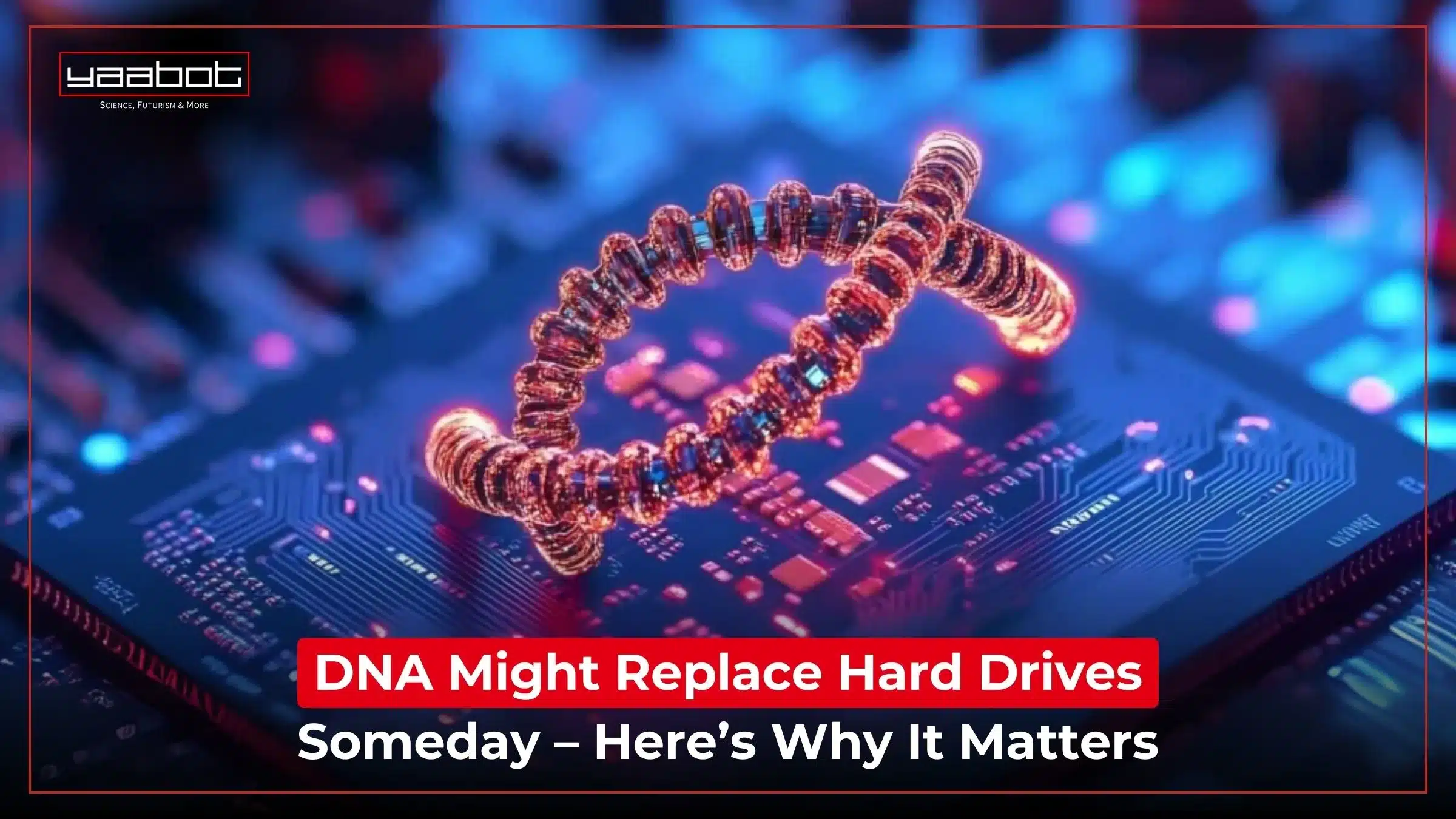
Imagine fitting all the world’s data, every photo, movie, and document, into a container the size of a sugar cube. Sounds like science fiction, but it isn’t. Thanks to DNA storage, this could be our reality very soon.
Here’s something to think about: A single gram of DNA can hold up to 455 exabytes of data. That’s more than what hundreds of hard drives can store! As our digital world grows every second, DNA based data storage might be the game-changer we’ve been waiting for.
Key Takeaways:
- DNA can store massive amounts of data in very small space
- It lasts longer than traditional storage like hard drives
- Scientists have already stored movies and documents on DNA
- It could solve future data storage problems
The Science Behind DNA Data Storage
You’ve probably heard of DNA as the thing that makes you who you are. But it can also work like a super-smart computer chip. Instead of using 0s and 1s like traditional computers, DNA data storage uses A, T, C, and G, the four letters that make up DNA.
This method lets scientists turn digital files into DNA hard drive code. The result? You can read and write data using life’s building blocks. It’s like swapping your USB drive for a strand of genetic material.
The Capacity of DNA Storage vs. Traditional Storage
Let’s break it down:
- 1 gram of DNA = 455 exabytes of storage
- 1 exabyte = 1 billion gigabytes
Compare that with your regular hard drive or SSD. It’s not even close. With DNA based storage, you can shrink huge data centers into something you could carry in your pocket. That’s why big tech companies are now investing in digital DNA hard drives.
The Sustainability of DNA-Based Storage Solutions
Using storage DNA isn’t just smart, it’s green. Here’s why:
- DNA doesn’t need power to hold data
- It lasts thousands of years without degrading
- It doesn’t rely on rare metals or create e-waste
Think about all the energy our current data centers use. Now imagine a DNA based storage system that stores all that data without needing power 24/7. That’s a win for the environment.
Challenges of DNA Data Storage

DNA data storage still has a few bumps to smooth out:
- It’s expensive right now
- Reading and writing data takes time
- We need better tools to fix tiny errors
- Ethical issues about storing private data in DNA
Still, scientists are making fast progress. Companies like Twist Bioscience have stored hundreds of megabytes of data in DNA-based archival storage systems.
How DNA Data Works
Let’s keep it simple:
- Convert digital data (like a photo or video) into a DNA code (A, T, C, G)
- Use machines to write that code into real synthetic DNA
- Store the DNA somewhere safe
- When you want the data back, read the DNA and convert it back to digital
This process turns ordinary info into storage DNA that can last for generations.
Current Developments in DNA Data Storage Research
There’s a lot going on:
- In 2020, Netflix and researchers stored an entire show (Biohackers) on DNA
- In France, government archives now keep historic documents on DNA
- A startup, Biomemory, made a DNA storage card that can last 150 years
These are all early examples of a DNA-based archival storage system in action. By 2030, this market is expected to grow to over $3395 million.
The Future of Data Security and DNA
With DNA hard drives, your data might be safer. Why?
- DNA can’t be hacked like a regular computer
- It can last for thousands of years if stored right
- It’s harder to copy or corrupt DNA sequences
As cybersecurity becomes more important, digital DNA hard drives offer a powerful alternative.
Will DNA Be the Key to Solving the Data Explosion Problem?
Data is growing faster than ever. We’re taking more photos, storing more videos, and building smart devices that collect data 24/7.
Traditional storage like hard drives and cloud servers can’t keep up. That’s why scientists believe DNA based data storage can help.
Using a DNA-based archival storage system, we can store data more efficiently, safely, and sustainably. This could be the answer to the world’s growing data problem.
Conclusion
You’ve seen the numbers, the science, and the real-world progress. DNA storage might not replace your laptop’s drive just yet, but it’s closer than you think.
If you’re curious about where technology is heading, or want to stay ahead in the data game, follow Yaabot for more future-tech updates. We’re always breaking down the big ideas into easy reads.
FAQs
1. What is DNA storage?
DNA storage is a way to save digital data using DNA molecules instead of traditional hard drives.
2. How much can DNA store?
1 gram of DNA can hold around 2 exabytes of data. That’s huge!
3. Is DNA data storage safe?
Yes, it’s very secure. It’s also durable and hard to hack.
4. Can I buy a DNA hard drive today?
Not yet for home use, but some companies are testing early versions.
5. What’s the future of DNA based storage?
More research, lower costs, and maybe everyday use in the next 10-20 years.
6. Who is working on digital DNA hard drives?
Startups like Iridia and Biomemory, and big names like Microsoft and Netflix, are all exploring DNA data storage.
