



We think of planets as spheres of huge masses revolving around a star like our very own Earth. In fact, we were all taught that all planets have a sun. Together the sun and the planets form a nice orderly place called the solar system. So what is all this talk about rogue planets?
What are Rogue Planets?
Rogue planets are no ordinary planets. To put it in the simplest of terms, they do not follow one of the largely accepted conventions of planet-hood, which involves revolving around a star. Rogue planets are completely free of an elliptical orbit around a host star caused by its gravitational force. In other words, they are huge planetary mass objects which have somehow been pulled apart from the planetary system they were once a part of, or were never gravitationally bound to a star in the first place.
We discovered these planets quite recently, about 25 years ago; so it is a relatively novel concept and there is quite a lot we may not know yet. For instance, determining how many of these rogue planets are out there is no easy task for us. Researchers from Stanford University estimate that the number of rogue planets could outnumber stars by as much as 100,000 to 1. In 2019, Simon Portegies Zwart, a University of Leiden astronomer in Netherlands estimated about 50 billion rogue planets in the Milky Way alone.
Helping us with the precision of these estimates will be NASA’s James Webb Telescope, which is expected to mount a search for rogue planets too. These themselves do not give off any light and since they are not gravitationally bound to a host star, they do not always have a light to reflect.
Scientists have worked out alternate options to detect rogue planets in the meantime. One method, using which we detected two of them in 2018, involved observing the manner in which light coming from behind a planet bent because of its gravity. Recent surveys have hinted towards an existence of about 100-200 Jupiter-sized rogue planets hurtling through space.
So while we wait for our able astronomers to find out more about these intriguing objects, let’s look at what we do know.
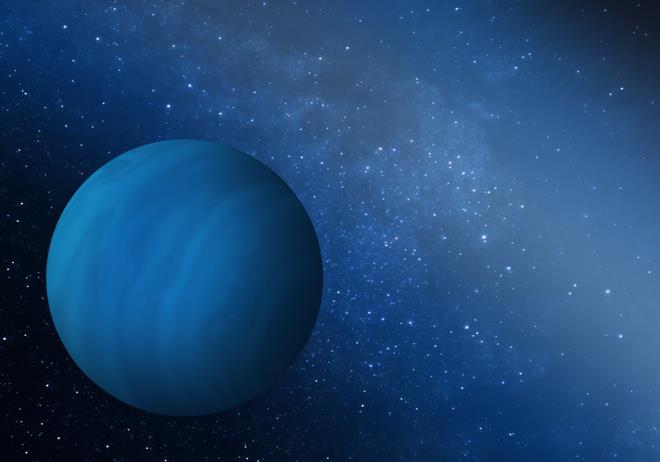
They’re Quite Large
You may think of rogue planets as being tiny masses hurtling through space. The reality, though, is quite the opposite. These planets, or sub-brown dwarfs as they are also known, are rather huge with a heavy mass. They can be anywhere between three times the size of Earth to an astonishing 12 times the size of Jupiter.
How do Rogue Planets Form?
You might be wondering how a huge planetary mass just walks out on its solar system. It takes some massive interactive incidents between two stars, or a planet and its parent star or even between two planets, to make this possible.
According to Simon Portegies Zwart, collisions among planets and also between planets and between planets and host stars is quite common, with this occurring in more than 3% of the planetary systems.
Such collisions will majorly affect the gravitational structure within the planetary system and could cause a planet to be pushed away and out of the system. In other instances, the gravitational disturbance caused when two stars pass one another closely, can also cause a planet to be ejected from its bounds.
However, we remain in the early stages of this discovery and have a lot to learn, before we build a comprehensive understanding of them.
Are Rogue Planets Habitable? Will Rogue Planets Have Life?
As always, one question we will always ask is can we live on them? Can life exist on rogue planets? While life itself may be present on these planets in some form, they are unlikely to be habitable for humans. Whether we could ever engage in rogue planet colonization, therefore, remains solidly in the realm of science fiction for now. With no constant source of energy and light from a host star, they are likely cold and thus uninhabitable.
There isn’t consensus on this though. As early as 1998, David J. Stevenson professor of planetary science at Caltech, suggested that some of these objects, despite being adrift in interstellar space, may still be able to hold a thick atmosphere that would prevent a heat loss and therefore a planetary freeze. Stevenson proposed that these atmospheres would be preserved by the “pressure-induced far-infrared radiation opacity of a thick hydrogen-containing atmosphere.” Some of them might generate heat from the gases still inside them from the contraction of the planet’s core. Jupiter and Saturn, for instance, give off more energy than what they receive from the sun.
