


Cities are testing driverless cars, warehouses are using robots, and hospitals are using AI-powered machines to manage supplies. What once was an experiment is now a pillar of daily operations. Basically, autonomous systems are moving from pilot projects into the real world.
The systems use sensors and AI, paired with software, to make decisions without human input. Labor shortages and lower computing costs are driving the rapid adoption of these systems. What we are seeing is now in active usage across multiple industries.
In this post, we’ll cover what autonomous systems are, why self-driving technology is picking up, and five key areas where it’s being adopted. You’ll also get to know about the challenges ahead and what the next phase of autonomy may look like.
Key Takeaways
- Autonomous systems are rapidly moving from pilot programs into real-world deployment across multiple industries.
- Self-driving technology combines sensors, AI models, and decision engines to operate with minimal human intervention.
- Industries such as urban mobility, logistics, healthcare, agriculture, and manufacturing are leading adoption.
- While autonomy improves efficiency and safety, challenges around regulation, accountability, and workforce transition remain critical.
What are Autonomous Systems?
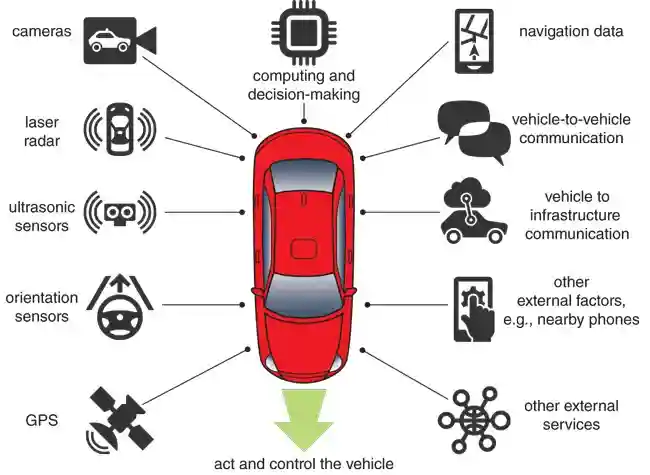
Autonomous systems are AI-powered technologies capable of performing tasks and making decisions without direct human control using sensors, machine learning, and real-time decision engines.
They’re based on three core components:
- Sensors: Their job is to collect real-world data by using cameras, radar, or even LiDAR.
- AI models: The only thing they have to do is to process the raw data received from the sensors.
- Decision engines: The engines are the final stage of an autonomous system. All they do is make real-time decisions.
Autonomous systems are different from basic autonomous systems. The basic system follows a fixed set of rules, which is totally the opposite of the autonomous one. It updates itself regularly based on the data and adapts to the conditions.
Autonomous vehicles steering through the streets and autonomous robotics handling warehouse operations are some of the common examples.
Why Self-Driving Tech Expansion Is Accelerating
Self-driving tech expansion is no longer just a curiosity. The demand for operational needs is driving the expansion. Sensors and other hardware have been far more affordable over the last few years, and at the same time, it’s become easier to train an AI model. With labor shortages across different industries, organizations are forced to rethink how to get things done.
According to estimates, the global autonomous systems market is expected to grow at a CAGR of 42.8% till 2030. It shows how businesses are quickly deploying systems. And with the rising pressure to improve security and reduce downtime, the shift is obvious.
And over the last few years, pilots were implemented in production systems. Companies are adopting autonomous systems to maintain output levels and stay competitive in markets where labor is increasingly limited.
Real-World Areas Where Autonomous Systems are Growing
1. Autonomous vehicles in urban mobility
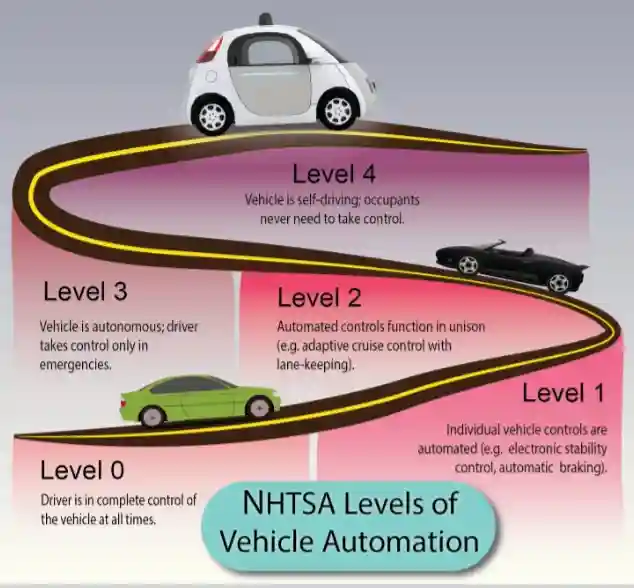
Autonomous vehicles are beginning to transform the transit systems. Last-mile delivery vans and driverless shuttles are already operating in specific urban areas. These systems focus on solving everyday problems like congestion, delays, and inconsistent service.
But one of the points of attention is safety. Human error contributes to nearly 90% of road accidents globally. So the self-driving technology is designed to reduce those risks. The tech fully relies on sensors, real-time data, and rule-based decision systems. This helps with traffic congestion, when even a small improvement in reaction time can make a huge difference.
These systems also increase efficiency. Autonomous vehicles can optimize routes, maintain a safe speed, and work with the traffic systems to reduce idle time. But regulatory issues remain a huge barrier. Urban mobility requires strong public safety systems and infrastructure, resulting in phased adoption, rather than all cities in one go. And even after this, urban mobility systems are becoming part of the planning process, not a distant future.
2. Logistics and warehousing through autonomous robotics
Logistics is the perfect ground for autonomous systems. It’s mainly because storage offers environments where machines can operate reliably. Today, autonomous robotic systems handle picking, forklifting, and inventory management, easing workflows that once relied entirely on manual labor.
Now the robots follow predefined paths, eventually reducing idle movements, and move goods efficiently across large facilities. The vision systems and sensors help minimize errors and inventory mismatches, which directly reduces the costs. Another major plus point of this system is continuity. Autonomous robotics operates 24/7, allowing warehouses to function without shift limitations.
Some reports suggest that facilities using autonomous systems often see a rise in productivity by 20%-30%, especially during peak demand. And with labor shortages and rising delivery numbers, it puts direct pressure on supply chains, so the autonomy is no longer just a support layer. It’s more of a core part of modern logistics.
3. Agriculture and precision farming
Autonomous systems are quietly transforming the agriculture sector. It brings precision to tasks that once relied on manual labor. Driverless tractors now handle planting and harvesting accurately, with the crop-monitoring drones scanning fields to detect pests and nutrient gaps early. Even the automated spraying systems apply fertilizer or pesticides only where needed.
This approach is delivering visible gains for the farmers. Precision farming technologies reduce water usage by up to 20% while increasing crop yields by 10%-15%. The system also reduces chemical runoffs through automated spraying systems. These small factors matter to farmers because the systems help reduce the costs.
In this market, sustaining is a larger factor than productivity. By adding real-time data with autonomous systems, farms can produce more food with less resource waste. In this way, the systems aren’t just improving the yields. It’s also helping the farmers move toward a model that is both economical and environmentally responsible.
4. Healthcare and medical robotics
Autonomous systems are being introduced in healthcare with real care, with humans keeping an eye on the systems. Surgical assistance robots help doctors with precise movements during complex surgeries. And the hospital delivery robots help in moving medicines and samples across the facilities. AI-based diagnostic tools support lab technicians by identifying patterns in scans and test results that might go unnoticed.
What matters most here is the control. These are human-in-the-loop systems, designed to help rather than replace professionals. Every deployment follows safety-first protocols, with the doctors still being the sole decision makers.
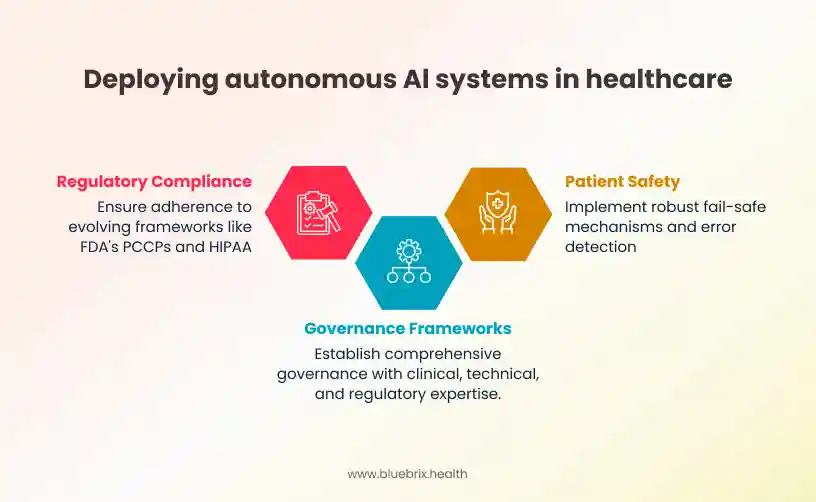
Reports suggest that robot-assisted surgeries can reduce blood loss and shorten hospital stays in certain procedures, but the technology is far from total autonomy. But still, its real value lies in precision and workload reduction. Autonomous systems allow healthcare workers to focus more on patient care, which is exactly the objective of autonomy.
5. Industrial manufacturing and inspection
In manufacturing, autonomous systems are already doing much of the back-end work that keeps the factories running. From assembly-line robots handling repetitive tasks with precision to inspection systems scanning structural components to detect early signs of damage.
This results in reduced downtime and safer working conditions. By identifying early faults, factories avoid unplanned shutdowns that can hit the supply chains. Autonomous inspection systems also limit the need for workers to enter dangerous environments, lowering the risk of any injury.
But this shift is often ignored. Autonomous systems are now a core function of many production units. They’re quietly helping factories with the manual labor to focus on supervision and higher-value work.
Challenges of Autonomous AI
1. Safety validation
Autonomous systems must be tested in real-world scenarios. Even a slight anomaly can lead to serious consequences in public or critical environments.
2. Bias in training data
If AI models are trained on incomplete datasets, the models may carry those biases into future decisions, especially in mobility, healthcare, or hiring systems.
3. Job displacement
With autonomy creating new roles, it might reduce demand for normal labor, making workforce reskilling and transition planning a necessity.
4. Accountability when systems fail
Responsibility is often unclear, which further complicates the legal and ethical ownership of outcomes.
These issues give a much clearer picture that autonomous systems require governance, transparency, and human supervision. Adopting these systems should be guided by clear standards and public trust.
Future of Autonomous Systems
1. Hybrid autonomy
Most deployments still combine machines with human judgment, especially in healthcare, manufacturing, and urban mobility, where supervision is necessary.
2. Industry-specific regulation
Instead of a single rulebook, sectors like transport, medicine, and logistics should develop their own frameworks to govern the safe operation of autonomous systems.
3. Wider enterprise adoption
Other than tech giants, mid-sized businesses should also integrate autonomous systems into their daily operations, making autonomy a standard part of their infrastructure.
Final Thoughts
Self-driving technology is no longer limited to pilots or research labs. It’s already across the mobility sector, logistics, and many more. The autonomous systems are already transforming the core function of operations. These systems have a practical impact, from reducing errors and downtime to addressing labor shortages and improving efficiency.
What this shows is a deeper transition. Autonomy is working in the background, becoming part of daily operations. But the real success lies in its deployment, supervision, and clear governance. As these systems mature, trust and reliability will matter more than speed.
FAQs
Security depends on encryption, secure sensors, and constant monitoring. Most deployments use layered defenses, but ongoing testing remains essential.
Healthcare, agriculture, and manufacturing are leading the adoption, using autonomous robotics for precision tasks, inspections, and repetitive workflows where consistency matters more than speed.
Workers will need basic system-monitoring skills, data awareness, and troubleshooting abilities, along with the ability to supervise autonomous robotics in hybrid human-machine environments.
Self-driving technology goes through simulation, closed-track trials, and limited real-world pilots. Autonomous vehicles must prove reliability across thousands of scenarios before wider rollout.
Beyond hardware, costs include integration, staff training, software updates, cybersecurity, and infrastructure upgrades, especially during early phases.
