


YouTube’s AI likeness deepfake detection tool is a platform-level system that scans uploaded videos for AI-generated replicas of real people’s faces.
In early 2024, deepfake videos of Taylor Swift circulated across social platforms, including fake advertisement content she never agreed to. That incident became a reference point in congressional discussions about AI likeness protection and accelerated pressure on platforms to act.
YouTube has built a deepfake detection tool to address this, and recently opened that system to the wider entertainment industry. As of April 2026, the tool is available to YouTube Partner Program creators, celebrities, government officials, and journalists, but not yet to private individuals.
This article breaks down what the tool is, how it works, and where it still falls short
Key Takeaways
- YouTube’s AI likeness deepfake detection tool scans videos for deepfakes of enrolled users’ faces.
- It works similarly to YouTube’s existing Content ID system, but for faces instead of copyrights.
- Enrollment requires a government ID and a self-recorded video for face verification.
- Access has expanded from a small creator pilot to politicians, journalists, and now celebrities and talent agencies.
- Removal is not guaranteed. Parody and satire content may stay up even after a removal request.
- Audio detection is not yet live, though YouTube has confirmed it is in development for 2026.
What Is YouTube’s AI Likeness Deepfake Detection Tool?
YouTube’s AI likeness deepfake detection tool is an automated scanning system that identifies AI-generated versions of enrolled users’ faces across all videos uploaded to the platform.
YouTube’s Content ID system has done something similar for years, automatically detecting copyrighted music or footage in uploaded videos. This tool works on the same principle, except instead of matching a song or a film clip, it matches a person’s face.
If a deepfake of a celebrity appears in a scam ad or fabricated news clip, the tool flags it. The enrolled person or their representative can then decide what to do: request removal, file a copyright claim, or leave it alone.
The tool was announced by YouTube and is being positioned as a direct response to the rise of AI-generated synthetic content across the platform.
YouTube’s VP of Creator Products Amjad Hanif described the tool’s purpose directly: ‘Creators can already request the removal of AI fakes, including face and voice, through our existing privacy process. What this new technology does is scale that protection.’
Why YouTube Built This Deepfake Detection Tool Now
The pressure from creators, celebrities, and lawmakers has been building for years, and it shows in how the platform has responded.
The Scale of the Deepfake Problem in 2026
Deepfakes are no longer difficult or expensive to make. Tools that generate convincing synthetic faces are widely available, and the results are increasingly hard to spot.
The consequences are concrete:
- Celebrities find their faces in fake scam ads they never agreed to. In 2024, YouTube removed over 1,000 AI-generated ads from a single ad network using deepfakes of Taylor Swift, Steve Harvey, and Joe Rogan to promote Medicare scams. Before removal, those videos had accumulated nearly 200 million views.
- Musicians find AI-generated content using their voice released without permission
- Bad actors impersonate journalists and politicians in fabricated clips designed to spread misinformation.
- Creators lose viewers and income when fake videos mimic their content and style
These risks sit alongside growing concerns about AI data privacy and who actually controls a person’s digital identity once it has been replicated. Public figures are also increasingly targeted through cyberattacks that exploit their online presence.
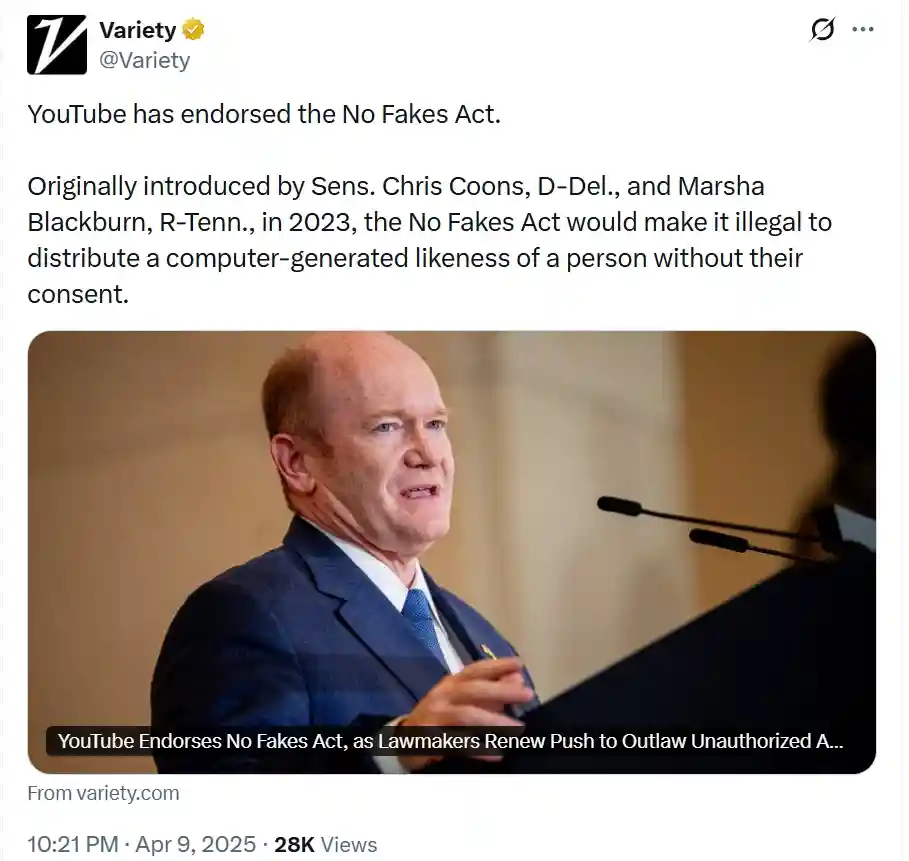
YouTube has also publicly supported the NO FAKES Act, a proposed US federal law that would protect individuals’ voices and visual likenesses from unauthorized AI-generated replicas. Building this deepfake detection tool is part of demonstrating to regulators that the platform is taking the issue seriously.
How YouTube’s Likeness Detection Tool Works
Step-by-Step: From Face Verification to Removal Request
Step 1: Enroll and verify identity:
The individual, or their talent agency or management company, submits a government-issued ID and a self-recorded video. This face verification step is used to create what YouTube calls a “face template.”
Step 2: YouTube creates a face template:
The platform processes the submitted facial data and generates a unique digital reference point used for all future scans.
Step 3: The system scans uploaded videos:
YouTube’s AI scans new uploads across the platform, looking for AI-generated content that visually matches the enrolled person’s face template.
Step 4: A match triggers an alert:
When the system detects a potential match, the enrolled person or their representative receives a notification and can review the flagged content.
Step 5: The person chooses a response:
After reviewing a flagged video, there are three options:
- Request removal under YouTube’s privacy policy
- Submit a copyright removal request
- Take no action
Step 6: YouTube reviews the request:
Removal is not automatic. YouTube’s team reviews each request. Content that falls under parody, satire, or fair use may be allowed to stay even after a removal request is filed.
Step 7: Opt out anytime:
If someone wants to leave the program, YouTube stops scanning within 24 hours of opting out.
Biometric data collected during enrollment is used only for identity verification and running the tool. It is not used to train Google’s generative AI models.
Who Can Use the YouTube AI Deepfake Detection Feature Right Now?
The rollout has happened in phases and is still not open to private individuals.
| Phase | Who Was Added | When |
| Pilot | CAA clients (via agency partnership) | December 2024 |
| Creator expansion | ~5,000 YouTube Partner Program creators | October 2025 |
| Civic expansion | Government officials, journalists, political candidates | March 10, 2026 |
| Entertainment industry | Celebrities, CAA, UTA, WME, Untitled Management | April 21, 2026 |
As of March 2026, around 4 million creators had enrolled in the program. Celebrities and entertainers do not need a YouTube channel to participate. Their talent agency or management company can enroll and monitor the platform on their behalf.
Private individuals, meaning everyday people who are not creators or public figures, are not yet covered by this tool. If you are a regular person who finds a deepfake of yourself on YouTube, the manual privacy complaint process is still your only option. This includes creators and users in regions like YouTube India, where the tool’s availability may vary due to local regulations and rollout timelines.
Should You Enroll in YouTube’s Deepfake Detection Tool?
If you are a YouTube Partner Program creator, public figure, journalist, or represented by a talent agency, enrolling is worth doing. Your face is already public. The tool moves the detection burden from you to the platform.
Hold off if you are a smaller creator with limited public presence. The enrollment requires submitting a government ID and biometric face verification data. The privacy cost should match the realistic threat level.
Private individuals are not yet eligible. The manual YouTube privacy complaint process remains the only option.
Removal is never automatic. Parody content can stay up even after a request is filed.
YouTube’s AI Content Policy and Synthetic Content Disclosure Rules
YouTube has tightened its YouTube AI content policy around AI-generated content over the past year. The current rules in plain terms:
- Creators must disclose AI-generated content: If a video uses realistic synthetic media, such as a deepfake or an AI voice, creators are required to label it in the upload settings.

- YouTube adds its own labels: On videos where synthetic content is detected or flagged, YouTube may add a visible label for viewers, particularly on content related to elections, health, or public figures.
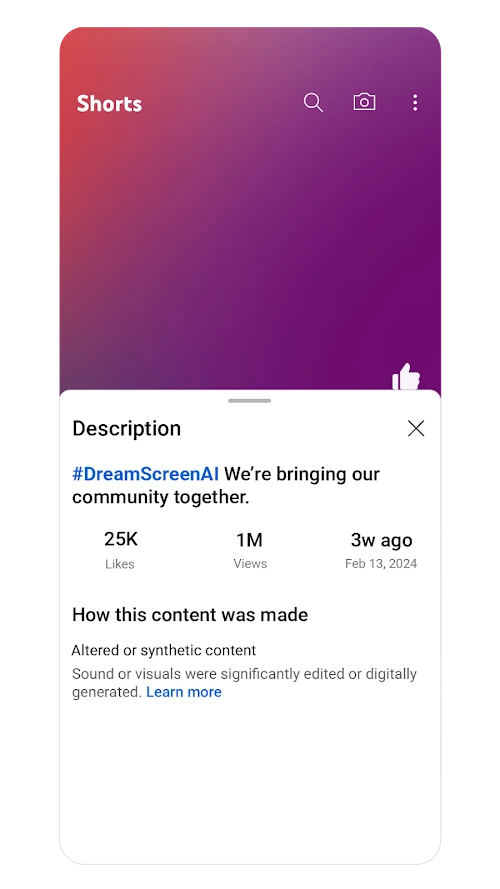
- Parody and satire are still permitted: YouTube allows parody content featuring a real person’s likeness, as long as it is clearly labeled and does not constitute direct content replacement or realistic disparagement.
- Exact content replacement is a takedown trigger: If AI-generated content is a direct replica of a creator’s videos, effectively stealing their audience and income, that qualifies for removal under the YouTube AI content policy.
These rules connect to a broader regulatory shift. California already requires platforms to label AI-generated content as part of its transparency obligations. Global AI regulation is catching up, though at very different speeds in different regions.
Deepfake Risks the Detection Tool Doesn’t Cover Yet
This deepfake detection tool does not mean creators and public figures are fully protected. The deepfake problem is developing faster than detection systems can keep pace with. Bad actors are already experimenting with partial face swaps and hybrid techniques that may not trigger a clean match.
Specific risks the tool does not yet address:
- Audio deepfakes: The tool currently only scans for visual matches. Voice cloning is not yet covered. YouTube has confirmed audio support is planned for 2026, but it is not live yet.
- Cross-platform spread: YouTube can flag and remove a deepfake on its own platform. Once that video has spread to other platforms, there is nothing YouTube can do about it.
- Fan edits and grey-area content: Not every deepfake is malicious. Fan-made videos, creative remixes, and parody sit in a legal and ethical grey zone the tool cannot always navigate by itself.
- Scam speed: A fake ad featuring a celebrity’s face can run for days before the system catches it. The financial and reputational damage happens fast.
For YouTube Partner Program creators specifically, the stakes are higher. A deepfake that mimics their content or voice can redirect their audience and damage their monetization standing before a removal request is even filed.
Limitations of YouTube’s Deepfake Protection System
Let me put the limitations in a clear, side-by-side format so you can see exactly what this tool does and does not cover.
| What the Tool Does | What the Tool Does Not Do |
| Scans YouTube videos for AI-generated facial matches | Scan other platforms like TikTok, Instagram, or X |
| Alerts enrolled users when a potential match is found | Automatically remove flagged content |
| Allows enrolled users to request removal | Guarantee that removal requests will be approved |
| Supports talent agencies enrolling on behalf of clients | Serve private individuals who are not creators or public figures |
| Protects against visual deepfakes | Detect audio deepfakes or voice cloning (yet) |
| Stops using biometric data within 24 hours of opt-out | Undo training or storage of data from before opt-out |
| Detection accuracy and false positive rate | Not publicly disclosed by YouTube |
YouTube’s own disclosure adds weight to this. As of March 2026, the platform confirmed that actual content removals managed by the tool remained ‘very small,’ despite 4 million enrolled creators. The gap between enrollment scale and removal volume is not explained publicly.
How YouTube Compares to Other Platforms on Deepfake Policy
| Platform | Deepfake Detection Tool | AI Content Labeling | Likeness Removal Request | Audio Deepfake Coverage |
| YouTube | Yes, opt-in face scanning | Required by creator + platform labels | Yes, via privacy or copyright claim | In development for 2026 |
| Meta (Facebook/ Instagram) | No equivalent tool | Limited, elections-focused | Manual report only | No |
| TikTok | No equivalent tool | Required disclosure for AI content | Manual report only | No |
| X (Twitter) | No equivalent tool | No mandatory disclosure | Manual report only | No |
YouTube is currently the only major video platform with a structured, scalable face-matching system for deepfake detection. Every other platform relies on manual reporting by the person affected.
What This Means for the Future of Digital Identity Protection
YouTube’s deepfake detection tool is the first time a major video platform has created a structured, scalable system for protecting individual facial identity. Before this, the only option was to manually find a deepfake, file a complaint, and hope for the best. This shifts the detection burden from the individual to the platform.
Protection is only one side of the story. YouTube is actively exploring a licensing model that would allow creators to authorize and monetize approved uses of their AI likeness, structured similarly to the existing Content ID revenue-sharing system. The same tension is already playing out in AI in cinema, where the line between real and synthetic performance is becoming harder to define.
Platform tools can only go so far. The NO FAKES Act, proposed at the US federal level, would give individuals a legal right to control their digital likeness. If passed, it would raise the stakes for every video platform, not just YouTube, and would likely force updates to YouTube’s AI content policy globally.
Deepfake Detection Gaps: What YouTube’s Tool Still Can’t Do
Three gaps remain that the deepfake detection tool cannot yet close:
- Audio detection is in development but not live. Voice cloning remains unchecked.
- Private individuals are still unprotected. The tool only serves creators and public figures.
- Cross-platform spread is unsolved. A deepfake removed from YouTube can live on indefinitely elsewhere.
As AI features become standard on mobile platforms, the gap between platform-level identity protection and device-level exposure will matter more, not less. The face verification standards that platforms set today will influence how biometric data is handled across devices for years to come.
Conclusion
YouTube’s AI likeness detection tool does not cover audio, does not protect private individuals, and cannot stop a deepfake from spreading to other platforms. But it is the most concrete attempt a major video platform has made to give people control over how their face is used online.
For celebrities and creators, enrolling is worth considering. For everyone else, this is a signal of where digital identity protection is heading. The tools are improving, the laws are catching up, and platforms are under growing pressure to take responsibility.
Want to stay ahead of where money and technology are heading? At Yaabot, we cover the latest in AI, fintech, machine learning, and the tech developments reshaping how you work, spend, and invest.
FAQs
YouTube states that biometric data is used only for identity verification and running the tool, not for training Google’s AI models. However, opting out stops future scanning within 24 hours; it does not delete data collected prior to opt-out. Users should review YouTube’s privacy policy for full retention terms before enrolling.
YouTube’s deepfake detection tool creates a face template from a user’s submitted government ID and self-recorded video during face verification. It then continuously scans uploaded videos for AI-generated content matches to that template and alerts the enrolled user when a potential match is found.
As of April 2026, the tool is available to YouTube Partner Program creators, government officials, journalists, political candidates, and celebrities through their talent agencies or management companies. Private individuals are not yet eligible for the program.
Yes. The YouTube AI content policy requires creators to disclose synthetic or AI-altered content at upload. YouTube may also add its own visible label to videos involving public figures, elections, or health topics.
