


The iOS 26 vs. Android 16 comparison highlights how modern smartphones are evolving beyond hardware into AI-driven ecosystems focused on privacy, performance, and personalization. Smartphones in 2026 have entered a new phase, with AI and privacy now necessities. The clash of iOS 26 vs. Android 16 shows the structural shift, where both platforms move beyond hardware upgrades toward smarter and more adaptive systems.
Apple is focusing on controlled, on-device intelligence with Apple Intelligence, while Android 16 is pushing adaptive, AI-driven experiences powered by Google Gemini. But at the same time, concerns about smartphone privacy and data usage are also important factors.
More than a billion people now use AI tools, and over 38% of smartphone users regularly use AI features, underscoring how quickly AI has become part of everyday mobile usage.
In this post, we’ll compare Android 16 and iOS 26 across their AI features, privacy standards, and OS performance. You’ll also see how both OSes work, where they differ, and which one best fits your priorities.
Key Takeaways
- Android 16 offers ample room to personalize your phone to your own style.
- iOS 26 ensures that things are in control, with more privacy- and stability-oriented features.
- Google Gemini makes Android feel more proactive, while Apple Intelligence stays more restrained and local.
- Performance on iOS is steady across all their devices. Android performance depends heavily on the hardware.
- Apple’s update cycle is longer and more predictable; Android still varies by brand.
- The choice comes down to preference: flexibility and range with Android, or consistency and control with iOS.
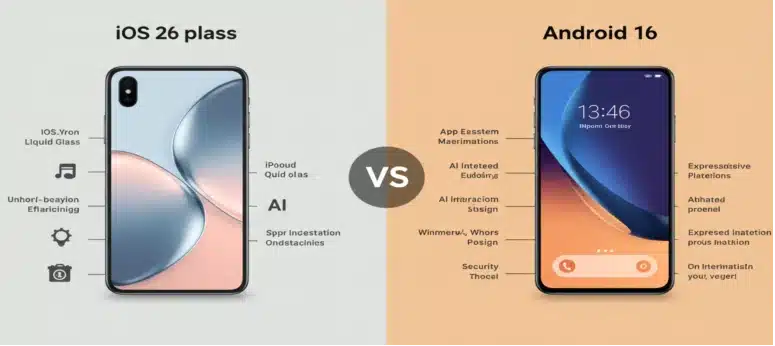
iOS 26 vs Android 16 Design Comparison: Liquid Glass vs. Material 3
Both brands take noticeably different approaches to presenting their UIs. Apple prefers a controlled, polished user experience, while Android continues to expand its user-customization features. The contrast is noticeable in how each system looks and behaves in everyday use.
iOS 26 Liquid Glass design:
Apple made a major UI overhaul with a fluid, layered, and translucent aesthetic, designed to smoothly adapt to its 2025 OS performance.
- Translucent UI elements are designed to refract, bend light, and adapt to wallpapers.
- Design consistency across all Apple devices.
- Focuses on clarity, simplicity, and aesthetic balance.
Android 16: Material 3 Evolution
Android 16 builds on personalization, allowing users to customize their UIs to suit their preferences.
- With a dynamic UI and animations, the interface feels “springier,” with jiggle and bounce effects.
- Customizable fonts, layouts, and widgets.
- Better adaptability across screen sizes.

Insight
- iOS 26 leans more on visual consistency and design precision.
- But Android 16 gives you full rein to personalize your interface.
Verdict
In the game of iOS 26 vs. Android 16, the latter gives you more control and flexibility with design.
AI Features: Google Gemini vs. Apple Intelligence
Artificial intelligence is the core of both operating systems. Each platform integrates AI as a system feature rather than an add-on, but its implementation shows very different priorities. Android focuses on reach and capability, while Apple places limits to protect user data.
Google Gemini
Android 16 has deeply integrated Google Gemini into its devices, making AI a constant presence in everyday tasks. It works across all of Google’s system apps and assists without switching tools.
- AI is integrated into messaging, search, email, and productivity apps.
- Cross-app assistance for tasks.
- Strong cloud-based processing for more advanced outputs.
Apple Intelligence
iOS 26 has reintroduced Apple Intelligence, keeping smartphone privacy in focus. For data privacy, the system prioritizes on-device processing, limiting the amount of user data sent to external servers.
- Supports core AI-based tasks like writing, summarization, and organization.
- Siri has been updated with better contextual understanding.
- Designed to reduce data sharing and protect user information.

Key difference
- Android pushes for scale and integration.
- But Apple focuses on privacy and control.
Insight
Both AI infrastructures are built on different philosophies, even when artificial intelligence is a core feature.
Verdict
Android 16 offers more flexible and powerful AI tools. iOS 26 provides a more secure and privacy-conscious AI experience.
Privacy and Security: iOS 26 vs. Android 16 Privacy
Privacy and security are now defining factors in the iOS 26 vs. Android 16 comparison, especially with AI at the core of these OSes. Both have strengthened their security frameworks, but their approaches to user experience remain different.
Apple focuses on restricting data access, while Android prefers giving users more control over their own data.
iOS 26 privacy strengths
iOS 26 is built on Apple’s privacy-first approach by focusing on on-device processing and limiting how apps and services access user data.
- On-device AI processing to reduce reliance on cloud servers.
- Strong encryption and a tightly controlled app ecosystem.
- To restrict third-party data collection, strict app-tracking policies are in place.

Android 16 privacy improvements
Android has always focused on giving users more control over their data and user experience. But in Android 16, they’ve made notable progress by improving transparency.
- Detailed permission dashboards for app activity tracking.
- Features like Private Space for sensitive apps and data.
- Continuous security updates to address evolving threats.
Emerging trend
Both platforms are updating themselves to address rising security risks, especially as AI becomes a core feature and advanced protection measures become essential.
Verdict
iOS 26 remains way ahead in the game of smartphone privacy due to its strict data policies and on-device approach. Android 16 has been updated with user-based control of data, but it still relies on cloud-based systems.
Performance: Speed, Efficiency, and Optimization
Performance is one of the clearest points of difference in the iOS 26 vs. Android 16 comparison. Even though both systems are fast, the ways they achieve that speed differ. Apple relies on hardware-software control, while Android depends on the capabilities of individual devices.
iOS 26 performance
If someone asks about Apple’s performance, the first thing that comes to mind would be the stability of their devices. This integration of iOS with Apple’s hardware allows the system to run smoothly.
- Optimized hardware and software integration for consistent speed.
- Strong long-term performance with minimal slowdowns over time.
Scores
- The iPhone 16 Pro Max with the A18 chip has a GPU (Metal) score of 32,502, which is 14.43% lower than the iPhone 17 with the A19 chip, which scores 37,194.
- CPU performance hasn’t increased significantly for iOS 26. The single-core Geekbench score of the iPhone 17 is 5.71% (3624) higher than the iPhone 16 Pro Max (3428). The iPhone 17 scored 8.24% higher than the iPhone 16 Pro Max on the multi-core benchmark.
Android 16 performance
Android 16 offers a huge range of performance, but it depends on the device. Flagship phones deliver excellent speed, while lower-end devices may vary.
- High-end devices provide strong multitasking and fast processing.
- Improved memory management and background app handling.
- Performance varies across brands and price segments.
Scores
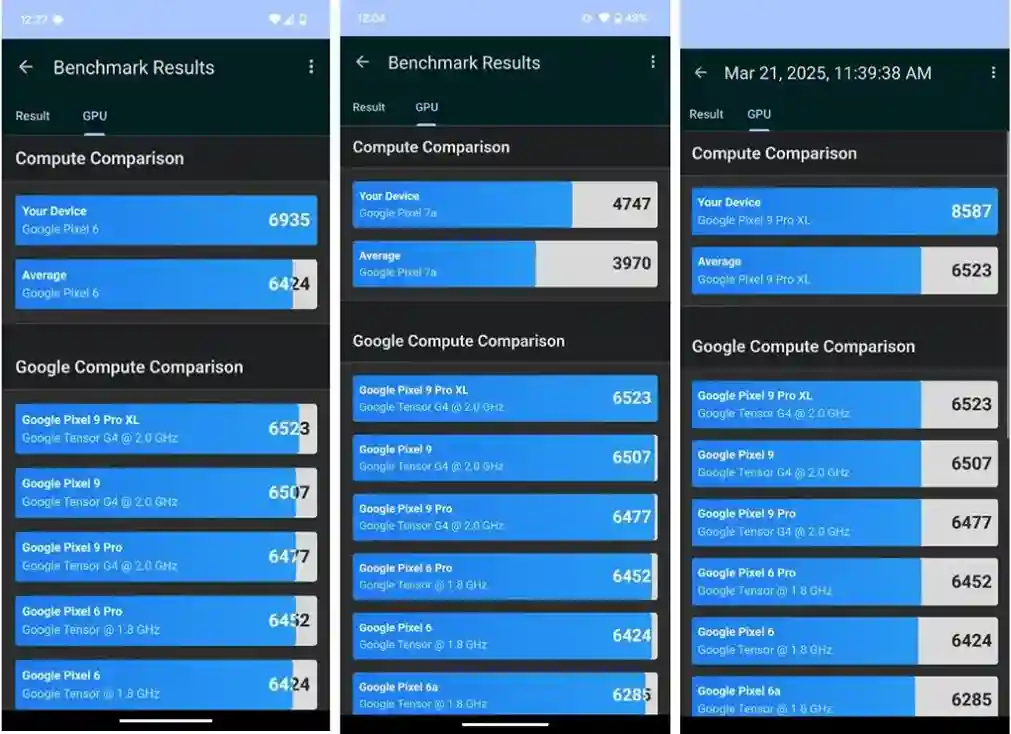
- After the Android 16 beta was installed, GPU benchmark scores increased by 62% on Pixel 7A, 31% for Pixel 8, and 32% for Pixel 9.
- CPU performance hasn’t increased much for Android 16, either. Geekbench 6s single-core performance showed a 2% increase and 5% for multi-core when averaged across three tests.
Insight
Apple focuses on efficiency and stability. Compared to Android, which focuses on flexibility and scalability of performance.
Real example
- Devices powered by Apple silicon tend to deliver consistent results across generations. The iPhone 17 with the A19 chipset has performed pretty well compared to the 16 Pro Max. GPU and CPU scores have increased, which shows Apple’s focus on efficiency.
- Pixel devices running Android’s latest version have seen significant gains, with a 62% increase in GPU scores. Though the CPU scores have seen a very marginal improvement due to different chipsets across devices.
Verdict
iOS 26 leads in consistency and reliability. Android 16 stands out for raw performance on high-end devices.
Customization and Multitasking
Personalizing and multitasking are the most contrasting things between the OSes. Android 16 offers freedom to customize devices, while iOS 26 maintains a simple, structured approach.
Android 16
It offers a highly flexible experience. It lets users customize their smartphones according to their preferences.
- Huge set of themes, widgets, and layouts.
- Ability to change default apps and system settings freely.
- Advanced multitasking with split-screen and floating windows.
iOS 26
Apple has made some improvements, but it still runs under a controlled system.
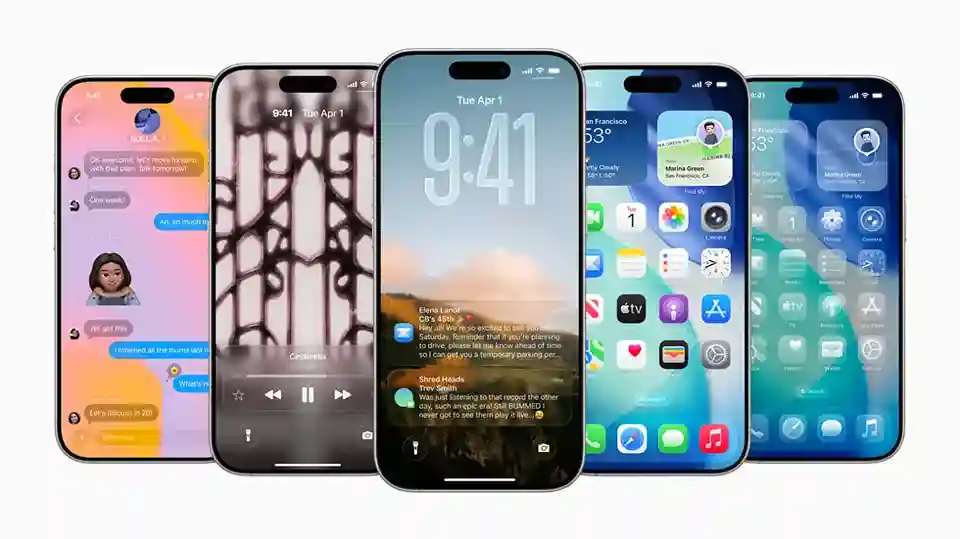
- Improved widgets and lock screen customization.
- Clean and simple interface designed for ease of use.
- Multitasking features remain more limited than on Android.
Verdict
Android 16 clearly leads in customization and multitasking flexibility. iOS 26 focuses on simplicity and a more guided user experience.
Ecosystem and Integration
Ecosystem strength is the most important thing for every OS. And Android and Apple approach it differently. iOS 26 is built on a tightly connected environment, while Android focuses on openness and compatibility across smartphones.
Apple ecosystem
Apple’s ecosystem is designed to work as a unified system, where devices can connect seamlessly.
- Smooth integration across Apple devices.
- Apps are optimized specifically for Apple hardware.
Android ecosystem
Android is built on a broader ecosystem with a wide variety of smartphones, making it more accessible and flexible.
- Works across various brands, from budget to premium devices.
- Strongly integrated with Google apps.
- Compatible with third-party apps.
Insight
- Apple offers a smooth but tight ecosystem.
- Android, on the other hand, is much more flexible.
Verdict
If you want a seamless experience with near-zero hassle, choose devices with iOS 26. But if you want compatibility and flexibility, go for Android.
System Updates
Software updates play a huge role in how well the device works after a few years. In the iOS 26 vs. Android 16 comparison, Apple maintains a clear advantage, while Android continues to improve across devices.
iOS 26
Apple ensures that all supported devices receive updates at the same time.
- Long-term software support, often lasting 5–7 years.
- Immediate rollout across all eligible devices.
- Consistent security patches and feature updates.

Android 16
Android’s update experience depends largely on the device brand, though recent improvements have narrowed the gap.
- Update speed varies by manufacturer.
- Pixel devices receive the fastest and most consistent updates.
- Growing commitment from brands to offer longer support cycles.
Verdict
iOS 26 remains the leader in long-term software support. Even though Android continues to improve, it lacks uniformity across devices.
iOS 26 vs. Android 16: Side-by-Side Comparison
A direct comparison helps in clarifying the key differences between the OSes.
| Features | iOS 26 | Android 16 |
| Design | Liquid Glass with visual consistency. | Material You with deep customization. |
| AI features | Apple Intelligence with on-device processing. | Google Gemini. |
| Smartphone Privacy | Leading OS with a privacy-first approach. | Privacy features are being improved steadily. |
| Performance | Uniform across all devices. | Depends on the device hardware. |
| Customization | Limited but more polished. | Extensive control over UI and apps. |
| Ecosystem | Seamless within Apple devices. | Compatible across multiple brands. |
| Software updates | For 5-7 years. | Varies by manufacturer. |
Insight
- Android 16 is perfect if you want flexibility and personalization.
- iOS 26 offers stability and privacy, with a consistent ecosystem.
Verdict
If you prefer flexibility, Android 16 stands out. But if you value stability and a seamless experience, iOS 26 remains the stronger choice.
iOS 26 vs. Android 16: Which One Should You Choose?
Choosing between Android and iOS devices depends on your preferences. Both systems are mature, but they serve different purposes.
Choose Android 16 if you want:
Android 16 is best for people who prefer flexibility and control.
- Greater control over device customization.
- Advanced AI capabilities powered by Google Gemini.
- Wider range of device options across different price points.
Choose iOS 26 if you want:
iOS 26 is suitable for people who want their data to be secured and value consistency.
- Strong smartphone privacy protections with on-device processing.
- Stable and predictable OS performance over time.
- Seamless integration within the Apple ecosystem.
Pros and Cons: iOS 26 vs. Android 16
iOS 26 Pros
- Smartphone privacy with on-device processing is the core objective.
- Consistent and reliable OS performance.
- Long-term software updates.
- Clean and simple UI.
iOS 26 Cons
- Limited personalization features.
- AI features are less flexible.
Android 16 Pros
- Highly flexible personalization experience.
- Flexible AI features powered by Google Gemini.
- Compatible with multiple smartphone brands.
- Wide range of devices across price segments.
Android 16 Cons
- Performance varies by hardware
- Software updates depend on manufacturer
- Some AI features rely on cloud processing
Final Thoughts
The matchup between iOS 26 vs. Android 16 shows a clear shift in what users want from their smartphone experience. AI is the core, and smartphone privacy isn’t an option. And this change is visible in both, but they approach it differently.
Android 16 is exceptional for its flexibility in personalization and integration with Google Gemini. Compared with iOS 26, it focuses purely on privacy and a seamless user experience built around Apple Intelligence. These differences may seem subtle, but they significantly affect daily user experience. They shape how each device feels and performs in daily use.
OSes are moving toward AI-first design, where the system anticipates user needs. At the same time, there is growing pressure to balance intelligence with data protection, shifting more processing toward on-device systems.
And the final decision comes down to priorities. If you want control and adaptability, there’s nothing better than Android. But if you want consistency and long-term reliability, nothing comes near iOS.
FAQs
Apps are more responsive and aware. Android can predict actions between apps, whereas iOS offers suggestions more confined, writing, sorting, and quick edits.
The general battery management of iOS 26 is more efficient because the system is more tightly controlled and processed on the device. Android 16 also works well on the flagship devices, although it varies with hardware and usage.
iOS 26 generally manages battery more efficiently due to tighter system control and on-device processing. Android 16 performs well on flagship devices but varies depending on hardware and usage.
