



Theoretically, India isn’t short of pathology labs. But the problem was never the count. When I needed a simple blood test for a relative in a small town, the nearest lab was two hours away. This was the problem. And that gap between a lab existing and me being able to reach one is what a diagnostic desert means, and it shapes healthcare access in India far more than the raw lab numbers suggest.
So, here we’ll look at what a healthcare desert is, the current situation of healthcare access, and why labs are clustered in cities.
Key Takeaways
- Around 80% of the labs are based in the urban region, while about 65% of the total population lives in rural areas.
- Diagnostic deserts are all about affordability, accreditation, and reach.
- A useful map layers population, marks accredited-lab counts, with real coverage data.
What Is a Diagnostic Desert? India’s Hidden Healthcare Deserts
A diagnostic desert is any area where people can’t get a basic lab test done without facing physical, financial, and logistical barriers. The labs might be absent. They also might exist but without any accreditation. And without accreditation, you can’t trust the reports. Or they’re so far away that a routine health checkup might cost them a full day of earnings. Healthcare deserts are defined by access, not by dots on a map.
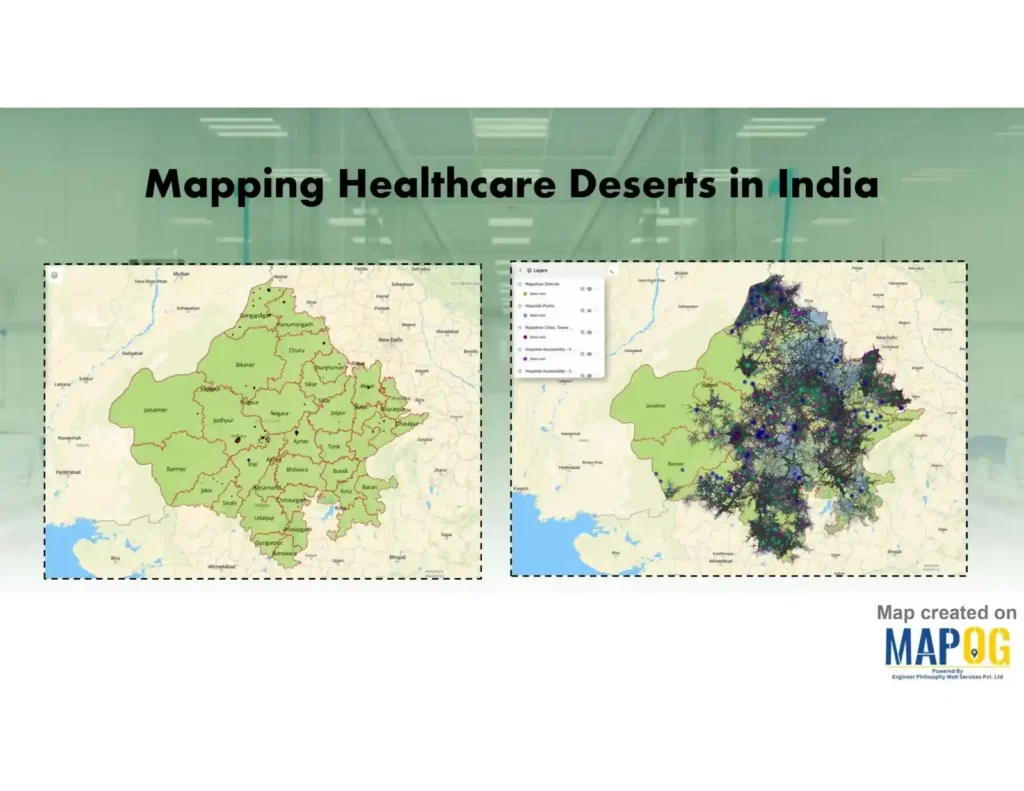
India’s Pathology Labs Are Clustered in Cities
Here is the supply image. India runs an estimated 200,000 to 300,000 labs, but fewer than 2,300 are accredited by NABL. And most of them are clustered in metros. Around 80% of laboratories are based in urban areas even though roughly 65% of Indians live in rural areas.
- Plenty of labs, but most of them are in the urban regions.
- Only a fraction of them are accredited, almost all in big cities.
- Rural pathology labs are fewer, smaller, and rarely accredited.
For healthcare in India, the lab map is about a few dense clusters with some droplets of thin coverage.
For Diagnostic Testing, Access Is About More Than Distance
Distance is the obvious barrier. But it’s surely not the only one. Whenever I need a test, there are usually three things that I factor in:
- Accreditation: An unaccredited lab test is cheaper, but you can’t trust the result.
- Price: The same panel can have a huge price swing between a metro chain and a small-town lab.
- Reach: Home sample collection service is convenient for the elderly and anyone without a car.
| Location type | Nearest NABL lab | Price, standard panel | Home collection |
| Metro | Within a few km | Wide, competitive | Widely available |
| Tier-2 city | 10 to 30 km | Moderate | Sometimes |
| Tier-3 / rural | 30 to 100+ km | Narrower, often higher per test | Rarely |
Illustrative patterns, not exact figures, based on the urban concentration of labs and reported rural travel distances of 5 km to as much as 100 km.
Mapping India’s Underserved Areas: Where Millions Still Can’t Get Tested
Visualize a common journey. A woman living in a tier-3 town needs a thyroid test and a fasting sugar test. But there’s an issue. The nearest accredited lab is 50 km away, with buses rarely running, and no facility for collecting the samples from home. The tests do exist in the state, but not for her.
To map that at scale, you have to stack three layers:
- Population: To see how many people live in a specific area.
- Accredited-lab counts: To see the real, trustworthy supply of accredited labs.
- Coverage data: To check where testing actually reaches the doorstep.
Platforms like Locatemycentre sit on that third layer. Their listing of 900+ cities shows where diagnostic testing is genuinely accessible and where it thins out. Add that over population and accredited lab supply, and the healthcare deserts will be right in front of your eyes.
How the map was built (methodology)
Population comes from Census data, lab supply from the public NABL registry, and public infrastructure data from the Health Ministry. The coverage comes from sites like Locatemycentre. But here’s a catch. The listings show labs a platform can see. But it doesn’t include every lab that exists, so the thin coverage flags a likely gap.
What Diagnostic Deserts Mean for Public Health and Rural Healthcare
The cost of public health is slow and mostly invisible. When a health checkup means a full day and a long trip, people prefer to skip it. A condition that a cheap lab test would catch early, like diabetes or anemia, gets found late, when it’s harder and costlier to treat.
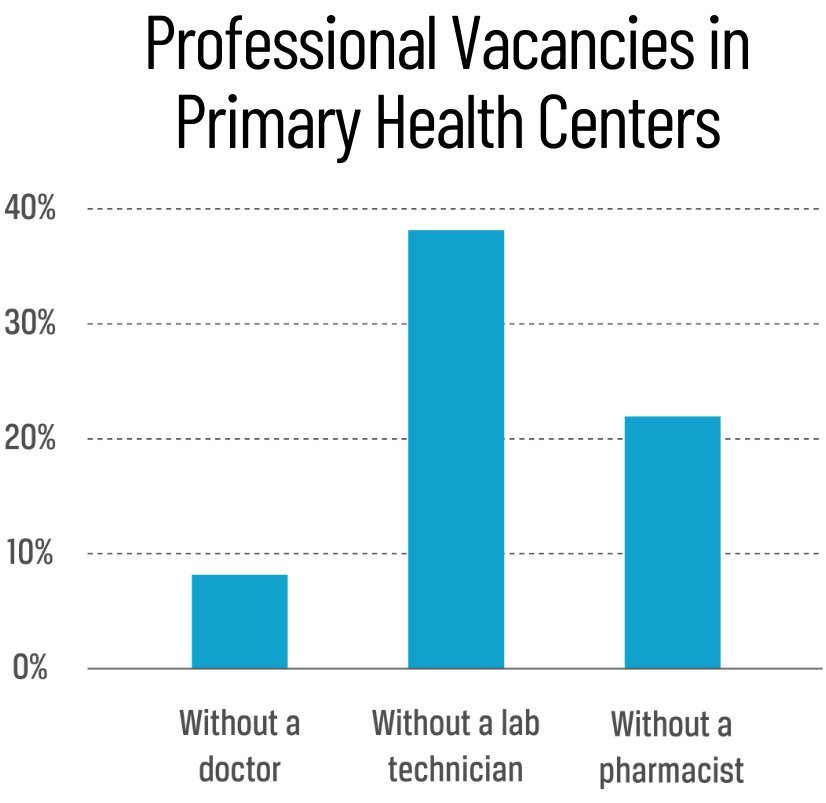
Rural healthcare access is twice the struggle, because the public system is stretched too. Health centers report a shortfall of about 7,930 lab technicians, so even existing labs are sitting idle. And the result is quiet but very expensive.
Final Thought
Building more pathology labs isn’t the only fix for diagnostic deserts. A new lab in a town that already has three surely won’t help the town that has none. Improving healthcare access in India starts with seeing where the gaps are, then putting accredited, reachable diagnostic testing where the map says people can’t get tested.
FAQs
An area where people can’t get lab tests done reliably or affordably because they face physical and logistical barriers.
Rural areas and tier-3 cities. These areas have the least pathology labs and are rarely accredited.
Fewer than 2,300 of an estimated 200,000 to 300,000 labs, with most of them concentrated in metros.
