


AI is no longer just limited to research labs or pilot projects. It’s now the backbone of modern armies. Global militaries are deploying AI-based systems for surveillance, logistics, cybersecurity, and autonomous operations. From battlefield analysis to unmanned aerial vehicles, AI in military is transforming the genesis of modern warfare.
This shift is evident in how conflicts escalate quickly today. The volume of data is overpowering manual analysis, and global tensions demand quicker, more precise decisions. Militaries from all around the world, like the U.S., China, Israel, and India, are heavily investing in AI warfare technology. All to gain operational advantage across air, land, sea, and cyber domains.
In this blog, we’ll discuss the key benefits of AI in military operations and walk you through some real-world military AI applications. You’ll also learn about current global deployments and what’s in the future for artificial intelligence in defense.
Key Takeaways
- AI accelerates military decision-making by processing vast battlefield data in real time.
- Defense forces integrate AI into drones, cybersecurity, logistics, ISR, and autonomous platforms.
- Major powers invest heavily in AI to secure multi-domain strategic advantages.
- Militaries retain human oversight to prevent escalation and ensure operational accountability.
What is AI in Military?
AI in military refers to the use of artificial intelligence technologies such as machine learning, computer vision, predictive analytics, and autonomous systems to enhance defense operations including surveillance, cybersecurity, logistics, intelligence analysis, and combat support.
Market Overview of AI in Military
- As per industry research estimates, the defense AI market is valued at $9.9 billion in 2023, with projections reaching $35 billion by 2035 at a CAGR of 11.1%.
- The United States DoD has allocated more than $1.8 billion in FY2024 for AI-focused technologies, including imagery analysis and command-support platforms.
- The Government of India has allocated roughly ₹100 crore annually specifically for military AI projects.
- As per a recent report, China has revealed a drone swarm of 200+ units controlled by a single operator.
Beyond investment trends, the operational advantages of AI adoption are reshaping defense capabilities across multiple domains.
Benefits of Artificial Intelligence in Defense
1. Faster decision-making
AI helps analyze massive chunks of real-time data, helping forward defense posts to engage quickly with any emerging threats.
2. Operational efficiency
Automated surveillance and maintenance reduce manual workload and free personnel for high-value tasks.
3. Enhanced accuracy
AI in military can help in more accurate target and position recognition in combat situations. It also allows forces to gain a detailed understanding of an operational area by analyzing information much faster than humans can.
4. Force protection
AI-powered drones, robotic systems, and unmanned ground vehicles perform high-risk tasks, reducing exposure to direct combat risks.
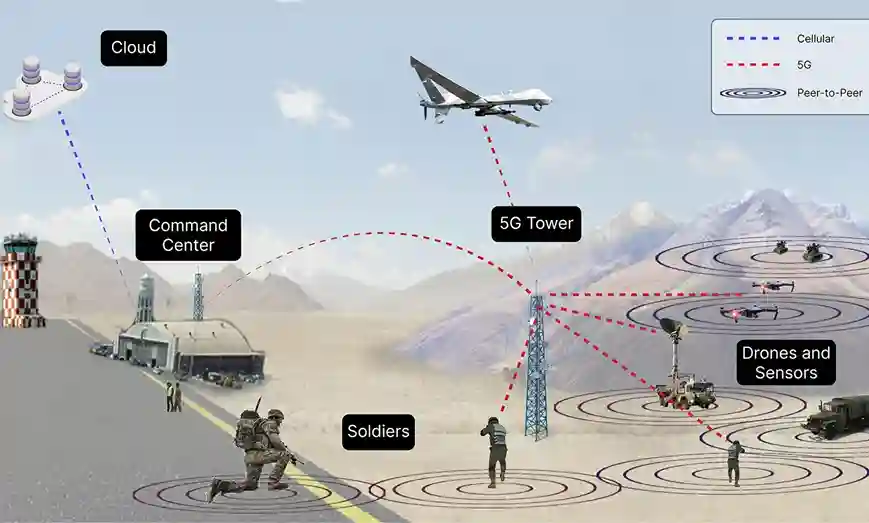
5 Areas of AI Integration in Modern Defense
1. Autonomous drones and unmanned systems
- AI-powered UAVs or UGVs are preferred for reconnaissance, tactical support, and intelligence gathering from the enemy territory where deployments are unsafe.
- Computer vision helps systems recognize terrain, track moving objects, avoid obstacles, and operate in hostile situations without constant manual control.
- Automated navigation helps drones operate in war zones, even when the connectivity is weak.
- The rise of swarm drones, in which multiple UAVs follow a coordinated route to achieve objectives, is made possible by AI models.
Key operational impacts:
- Continuous surveillance
Drones are used to patrol large areas continuously, sending back live intel to the central command centers. - Immediate response
Autonomous military systems shorten reaction times in hostile environments. - Lower human exposure
High-risk reconnaissance missions are handled by UAVs and UGVs, reducing the risk of damage.
These modern capabilities are already in deployment with the Israelis, Indians, etc. Many countries are using the systems for border security, intel, and real-time operational needs. This makes military AI applications a central pillar of modern defense strategies.
2. Cybersecurity and cyber warfare
- AI systems monitor networks continuously to detect intrusions by identifying any behavioral changes, such as unusual login patterns or any suspicious system activity.
- AI-based cyber defense systems use machine learning to predict attacks, allowing teams to proactively fix the gaps rather than react after damage occurs.
Key operational angles:
- AI-driven threat scan
Algorithms scan massive sets of data to detect hidden malware and dormant intrusions that traditional tools often miss. - Protection of classified infrastructure
AI in military safeguards command networks, communication systems, and intelligence databases from espionage and sabotage. - Algorithmic cyber warfare
Nations now deploy AI warfare technology to automate offensive and defensive cyber operations.
China has deployed AI-based cyber systems within its People’s Liberation Army units. These systems support large-scale monitoring of military infrastructure while providing immediate response to cyber threats.
3. Predictive maintenance and logistics
- AI systems analyze sensor data from aircraft, armored vehicles, and naval vessels to predict failures before they occur.
- Machine learning models track patterns of vibration, temperature, pressure, etc., to identify any early signs of system faults.
- Analyzed data can help the forces for condition-based maintenance only when it indicates risk.
Key operational benefits:
- Reduced downtime
Aircraft, tanks, and ships will spend less time grounded or docked, improving availability during deployments. - Mission readiness
Commanding officers get a clear idea of the equipment’s health, which reduces the risk of mechanical failures during operations. - Cost savings
Early detection of faults prevents breakdowns and extends the service life of critical assets. - Faster repair cycles
AI-based diagnostics help maintenance teams identify the exact issue, eventually reducing the repair time.
The British Armed Forces are using AI-based maintenance, particularly the Royal Air Force and the Royal Navy. The system helps them monitor the fleet’s health, simplify military supply chains, etc., making logistics more data-driven.
4. Intelligence, Surveillance, and Reconnaissance (ISR)
- AI in military systems processes large volumes of satellite imagery, drone videos, radar signals, and ground sensors to create an operational scenario.
- Automated pattern recognition helps identify vehicles, troop movements, and any unusual activity in the enemy territory.
- Modern ISR platforms can identify suspicious movements in minutes. It helps forward bases with faster situational awareness.

Key operational impacts:
- Real-time battlefield awareness
With the help of AI-based systems, central command centers receive continuous updates. - Reduced analyst fatigue
AI handles the data analysis part, allowing human analysts to focus on strategy.
Most of these advanced ISR capabilities are supported by DARPA with active deployments across the U.S. Armed Forces, making it a core function of modern military ops.
5. Autonomous combat vehicles
- AI-assisted combat platforms now include unmanned ground vehicles (UGVs), unmanned surface vehicles (USVs), etc., designed for patrol, reconnaissance, frontline support, and bomb disposal.
- Most deployments follow a human-in-the-loop model. Here, the AI handles navigation and threat detection, but engagement decisions remain with the command centers.
Key technical elements:
- Semi-autonomous vs. fully autonomous military systems
Semi-autonomous systems require human authorization for offensive actions. But fully autonomous military systems operate under predefined mission parameters, though they’re still in experimental phases. - Rules-based engagement
AI-based systems follow programmed instructions to avoid restricted zones, friendly units, and civilian areas. - Combat integration
ACVs are directly connected to the command centers, sharing live data with ISR platforms and tactical units.
India has been testing these capabilities developed by the DRDO in collaboration with the Indian Army. Primarily focusing on UGVs and AI-enabled surveillance platforms for border security and altitude deployments.
AI in Military: Real-World Examples Around the Globe
United States of America
The U.S. Armed Forces use AI mainly for gathering and analyzing intelligence, logistics optimization, and predictive maintenance. Programs like Project Maven use ML to analyze drone and satellite imagery, reducing the time required to process data.
People’s Republic of China
The People’s Liberation Army mentioned the use of AI as a core military capability in its 2019 defense white paper. And since then, the PLA has tested AI-based command systems and facial recognition at military facilities and conducted trials of swarm drones and autonomous vehicles during military exercises.
India
DRDO’s Centre for Artificial Intelligence and Robotics has developed AI-based UGVs and surveillance tools. The Indian Army uses AI-enabled applications for border monitoring, logistics planning, and predictive maintenance in high-altitude regions.
Israel
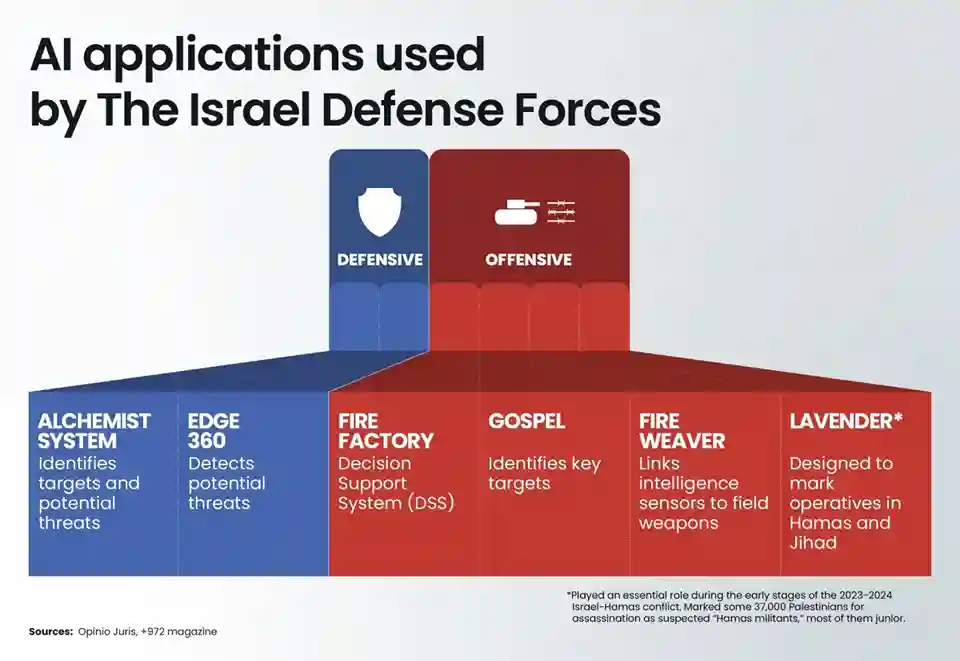
The IDF uses AI systems like the Fire Factory and Gospel. It’s used to rapidly analyze ISR data and generate target recommendations. During the Gaza operations, these platforms processed drone, satellite, and sensor feeds to support strike planning.
Future of AI in Military
The future of AI in military is moving towards central integration, but without full autonomy. The armed forces are increasingly using AI-supported central command centers, where algorithms decode intelligence. It’s either from the air, land, sea, space, or cyber domains to support faster, more informed decisions. Autonomous military systems will only get integrated into logistics, surveillance, defensive roles, and intel, with the offensive decisions remaining under human supervision.
And within all this, the key focus is explainable AI. XAI will help the forces to understand how and why an AI system gives recommendations. This transparency is necessary for trust and accountability in high-risk environments. But overall, AI is seen as an additional force that enhances human judgment.
Final Thoughts
AI in military has moved beyond just experiments. It’s now a core support system for gathering intelligence, supporting logistics, cybersecurity, and autonomous platforms. Also, the ISR systems process warzone data in a blink to predictive maintenance that improves fleet readiness. Artificial intelligence in defense is not only improving efficiency but also safety and precision while reducing human exposure in high-risk environments.
But at the same time, AI in military is a serious responsibility. Ethical concerns, system reliability, and human oversight remain critical as the adoption of autonomous military systems increases. So the next step should be to focus on XAI, clear command accountability, and strong governance frameworks, ensuring that the AI warfare technology strengthens human judgment.
FAQs
Yes. Cloud platforms and open-source tools are lowering entry barriers, allowing smaller nations to deploy limited military AI applications for surveillance, logistics, and border monitoring.
Artificial intelligence in defense remains vulnerable to data poisoning, but layered security, model validation, and human oversight help reduce risks across critical AI in military deployments.
Training timelines vary widely. Simple military AI applications may take weeks, while complex AI in military systems trained on classified datasets often require several months.
Currently, autonomous military systems operate under human oversight, while international bodies continue debating regulations for artificial intelligence in defense.
Yes, rapid automated responses can raise escalation risks, which is why AI in military systems usually operates with strict human-in-the-loop controls.
