



It is amply clear by now, or has been for quite some time, that Elon Musk is on a mission to transform the future of the human species.
In a time when electric cars, solar roofs and re-usable rockets seemed like a distant dream, this entrepreneur with an impeccable business style sprang into action and brought this futuristic tech in our reach. Today, Tesla has built itself a global mass market and SpaceX has demonstrated re-usability of its Falcon rocket boosters and is planning to colonize Mars. Meanwhile Solar city (now acquired by Tesla) is powering up an entire island. Musk’s companies signify technical prowess when it comes to innovation and efficient design.
As if tackling the three biggest global issues of the planet wasn’t enough, Musk has decided to plunge into yet another futuristic dream of his: creating super-humans.
A few days ago, an announcement by the tech billionaire created waves (don’t they all?) across the scientific and business community: the beginning of an era of enhanced human intelligence, envisioned by his new company – Neuralink. His vision: To couple the human brain with AI in order to magnify the brain’s cognitive capacities.
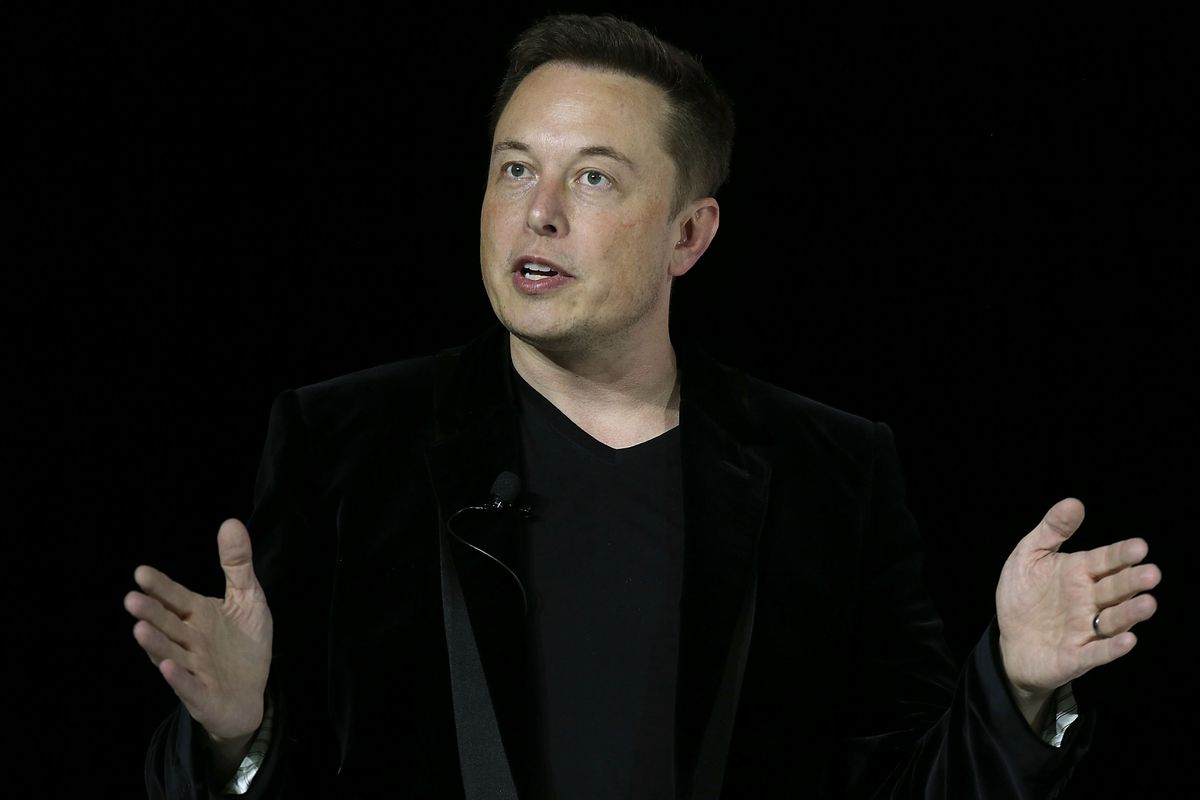 Elon Musk believes his new venture Neuralink will enable humans to catch up with developments in Aritificial Intelligence
The Imminent Intelligence Revolution
Until a decade ago, cyborgs belonged in sci-fi literature and depicted in movies like The Matrix and Terminator. These movies typically involved a protagonist whose physical abilities would be extended beyond human limitations by mechanical elements built into the body. Hollywood often paints a dystopian future in its sci-fi genre, with machines and humans up against each other in war. Instead, in reality, we are now forming visions of a future where humans and machines converge for good.
The concept of a brain co-processor, a device that intimately interacts with your brain, is not novel today. In the medical realm, implants and electrode arrays have been used to help patients suffering from Parkinson’s, epilepsy, and other neuro-degenerative diseases. Although over a third of a million patients have had brain or neural transplants that stimulate the nervous system, the implants do not communicate with the brain in a fully responsive manner.
 In the medical realm, electrode arrays and other implants have been used to help ameliorate the effects of Parkinson’s, epilepsy, and other neurodegenerative diseases.
Once we start to couple AI to the brain that can really augment the brain’s unique capabilities. There’s potential for a new era, what you could call “hybrid intelligence”. This would give birth to a new kind of symbiosis: rather than only AI driving the human brain or humans upgrading themselves via natural evolution. The brain function would merge with AI to create a new species of super-intelligent humans.
Neuralink will combine the human brain with AI
Musk has repeatedly warned about AI posing a significant threat to humanity, by essentially taking over intelligent operations and rendering humans helpless and useless. Like Skynet.
In an attempt to prepare humanity to combat the rise of Artificial Intelligence, Musk launched OpenAI – a non profit dedicated to AI safety research. With Neuralink, the intention is to build a brain-computer interface company, with a goal to turn cloud-based AI into an extension of the human brain. This will work on the principle of a ‘Neural Lace’, described as a “digital layer above the cortex that could work well and symbiotically with the human brain.”
Think of it like a bio-mechanical parallel processing system: two or more systems processing a said function faster and quicker than before. It can upload info to the brain and download info from it. Such tech could replace lost memories, boost cognition and augment decision making.

Image Source: WaitButWhy
In a way, we already have a digital tertiary layer. It comprises of our computer or our phone or our applications. We can ask Google a question, and the answer is right there instantly. We can access any book or music instantly with just a click. Imagine all of this just a thought away! A neural lace embedded in our brains would demolish social and economic barriers in achieving unlimited information, job performance and seamless communication with anyone on the planet instantly.
Socio-economic impact
The human brain is nature’s engineering marvel: an advanced instrument with innate complex pattern-matching capabilities. In his book On Intelligence, Jeff Hawkins describes how the human brain is a highly capable future predicting machine as a result of certain portions of the brain matching sensory inputs to stored memory patterns.
But adhering to a harsh truth, we are limited in our cognitive capabilities by factors such as culture, language, training, location, etc.

It all boils down to one simple truth: We lack an optimal interface.
Once this technology reaches maturity, our way of life would undergo a revolution:
- The possibility of mind-based communication would open doors to new type of relationships.
- Learners will be able to access knowledge by allowing the interface to direct experiences and thoughts into consciousness – without actually reading, listening and interpreting from sensory feeds.
- A new profession will be born: mind-workers, individuals who can train their minds by leasing it to institutions via the MMI.
- This in turn would give rise to a new way of employment which would need only one qualification: a functioning mind.
- Feelings and thoughts would become commodities for exchange and purchase, leading to new media and entertainment industries.
- This would eradicate inequality among workers as low productivity and labor market polarization would ease out, tacking some of the most pressing economic challenges globally.
The next stage in human evolution
This is the dawn of brain tech and a new form of trans-humanism. The convergence of the digital and biological realm would be a major leap in human progress. The plan to create super-humans is as exciting as it is challenging.
Our understanding of the brain as yet in its infancy. Creating a brain chip would require extensive research into neural activities, cognitive developments, understanding of perception and self-awareness. To enhance or integrate machines with these functions, we need to understand their physical framework. Designing interfaces that can communicate with individual neurons and safely integrate with existing biological networks requires a great amount of medical innovation.
Musk’s ten year timeline depends on tacking these challenges, few of which are having enough ‘bandwidth’ to process this advanced technology and finding non-invasive methods to implant bio-compatible chips in the brain without getting rejected by the body’s defense response. Initially it is aimed at ameliorating effects of severe brain damage, but gradually the technology will be available to common masses.
At first, this mind-machine technology would face apprehension when it would come to mass adoption, owing to major risks like computer bugs and brain hacking. The technology will be necessary if we are to remain “economically valuable.” and would allow us to better reap the benefits of advancing artificial intelligence. The implications of such a technology would imply the transformation of human species into trans-humans: highly efficient, super-intelligent and seamlessly interactive with other fellow trans-humans and machines. Thus shattering our limitations as a species.
Brain science is the new rocket science! And we are excited about how far it goes.
What are your thoughts about Elon Musk’s outrageously ambitious neural interface technology? Let us know in the comments below.
