


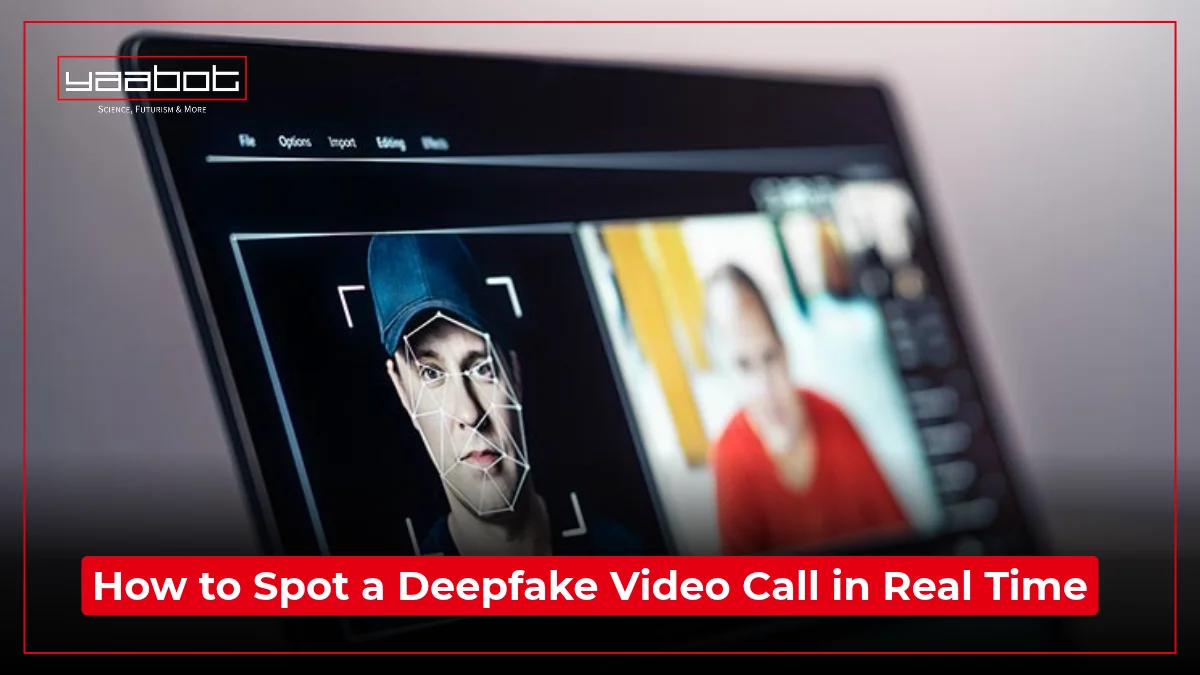
In January 2024, a Hong Kong finance employee got a video call from the CFO, which was joined by several of his coworkers. He recognized every face and every voice. But surprisingly, none of them were real. He wired $25 million – that’s about HK$200 million – before anyone got the idea.
That’s the new baseline for a deepfake video call scam. Real-time deepfake tech has gotten fast and cheap enough that the visual tells everyone learned to spot in 2023 are fading fast.
So here are the 5 checks that you must keep in mind, in order of how long they’ll keep working.
Key Takeaways
- Verify any high-stakes request through a second, independent channel, like calling a known number back, before acting on anything.
- Urgency and secrecy are stronger red flags, and unlike the visual tells, this signal doesn’t degrade as the tech improves.
- Physical challenges, like asking someone to turn sideways or wave a hand across their face, still trip up most live deepfakes, though that window is closing.
- Detection software helps but isn’t reliable alone. Human eyes are worse: one study found people barely detect deepfakes better than chance.
What Is a Deepfake Video Call?
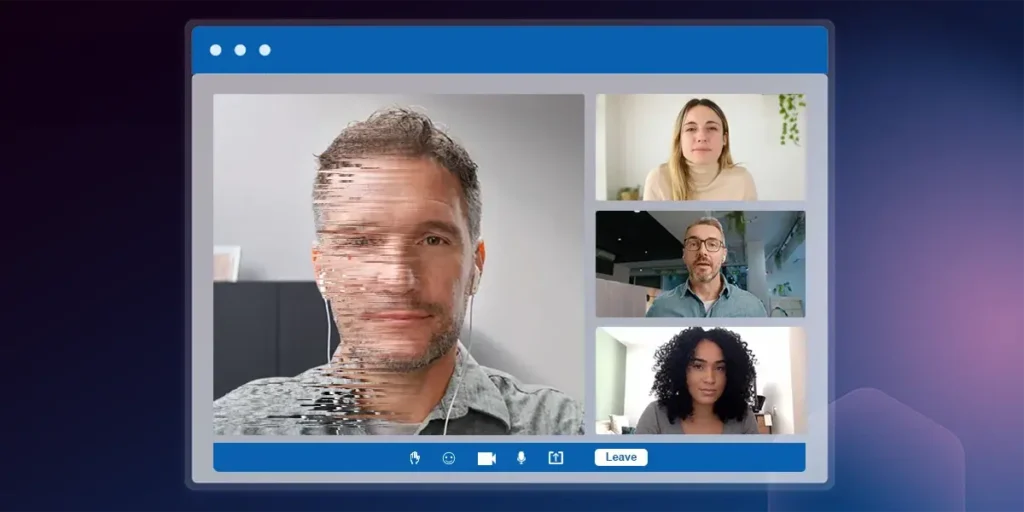
A deepfake video call is a live video conversation where at least one person’s face, voice, or both have been synthetically generated in real time. Unlike a doctored photo or a pre-rendered deepfake video, the fake has to react to the conversation as it happens, with no retakes.
That live constraint used to be the main thing protecting people. But that’s not the case anymore:
- Deepfakes now make up 6.5% of all fraud attempts detected globally, up from 0.1% in 2022.
- Deloitte projects US generative AI-enabled fraud losses will climb from $12.3 billion in 2023 to $40 billion by 2027, roughly 32% annual growth.
- The tech pairs real-time face-swapping with voice cloning that needs only a few seconds of speech to mimic someone.
How Real-Time Deepfake Video Call Scams Actually Work
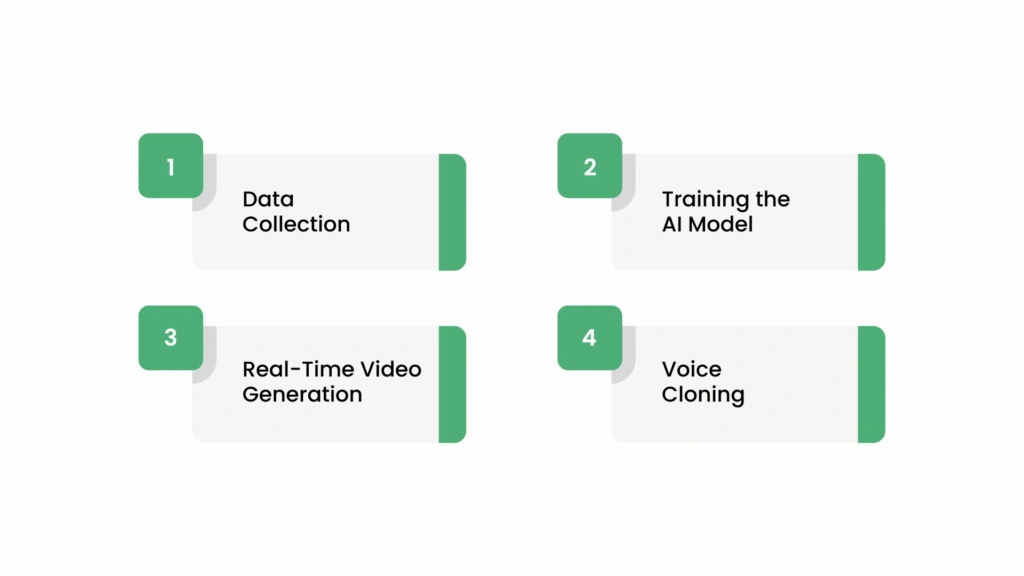
Live face-swapping software runs a six-stage pipeline for every video frame: capture, face detection, landmark mapping, synthesis, blending, output, all inside a 30 to 50 millisecond window. That’s fast enough to hold a normal 24 to 30 frame-per-second call without lag. It runs so fast that most people on the call never notice anything is off in the moment.
- A consumer GPU with 8 to 12GB of VRAM can handle 720p synthesis.
- Just one reference photo is enough to start a deepfake video call.
- And voice cloning adds only 200 to 500 milliseconds of latency.
Once it’s running, the attack follows a set shape.
- Someone posing as a CEO or CFO joins a call, and sometimes with deepfaked colleagues for social proof.
- Pushes you for an urgent wire transfer, credential handover, or policy exception, etc., using confidence and a familiar face to shut down hesitation.
| Factor | Pre-recorded deepfake | Live deepfake video call |
| Preparation | Rendered and reviewed for hours | Generated frame by frame, live |
| Interactivity | Scripted, can’t handle surprises | Must react instantly to unexpected requests |
| Detection window | Analysts can frame-compare later | Seconds, before a decision gets made |
| Visual ceiling | Higher quality possible | Capped by the 30-50ms latency budget |
Who gets targeted and why
Finance staff, executive assistants, and anyone who can move money or unlock accounts are the highest-value targets.
- Attackers don’t need everyone at a company to fall for it. They need just one person.
- An accounts payable clerk told a payment has to clear before day’s end during quarter-close isn’t going to pause and study pixel quality. That’s the exact setup that worked at Arup.
- 62% of organizations reported facing some form of deepfake attack in the past year.
5 Practical Checks to Detect a Deepfake Video Call
Check 1: Verify through a trusted channel
The single most reliable defense is actually very simple – just hang up and call back through a channel you control. If someone claims to be your CFO or IT admin and asks you to wire them money or share credentials, end the call and dial that person directly.
This works no matter how good the deepfake gets, because you’re not trying to guess. You could try something like, this sounds urgent; let me confirm on our usual line and call you right back. A two-minute callback costs nothing in most cases, and it’s the cheapest insurance against a video call scam.
Check 2: Ask for an unpredictable real-time action
Live deepfake models still struggle with anything outside their training data, because the software has to invent detail it never learned. Ask the person to turn their head a full 90 degrees, wave a hand across their face, or hold an object between their face and the camera.
These requests often produce jitter, warping, or a brief freeze right at the moment of unexpected motion. But the problem is that this window is shrinking fast, and tactics like these are already described as temporary, likely to lose effectiveness within months.
Check 3: Watch for lighting, edge, and sync breakdowns
Even strong live deepfakes leave their fingerprints. Always try to watch for weird lighting between face and background, a blurred or discolored hairline, frequent blinking or too rare, etc.
None of this is proof by itself. Detection accuracy degrades as generation technology improves, and last year’s tells are quietly disappearing. So, treat it as supporting evidence.
Check 4: Probe with context only the real person knows
Ask something that depends on shared history the caller actually has, that shouldn’t include public information. Reference a detail from your last one-on-one, or try something specific like What did we grab for lunch after last week’s sync?.
This works because most deepfake video call scams run on limited real-time intelligence. An off-script personal question breaks the act fast, without accusing anyone.
Check 5: Treat urgency and secrecy as the real signal
Almost every deepfake video call scam pressures you to act fast and stay quiet. The Hong Kong finance employee case involved something similar. And Quick Heal’s review of scam patterns lists secrecy demands and rushed payment requests as consistent markers.
This check is very important because it doesn’t degrade as video quality improves. A flawless deepfake still has to ask for something and rush you into it. Confidence in the request isn’t evidence the request is real.
What to Do the Moment You Suspect a Deepfake
You don’t need to accuse anyone. Buy time with something neutral, and then work through this sequence:
- Try to get out of that call without any further confrontation.
- Verify independently by calling back on a saved number or reaching them through a separate app.
- Loop in IT security or your manager immediately. And for financial requests, call your bank’s fraud line.
- Screen-record what you can, save chat logs, and note the exact time and platform.
- Report it to the FBI’s Internet Crime Complaint Center (IC3) in the US or your country’s cybercrime unit.
Can Deepfake Detection Tools Catch This? (Honest Limits)
- Detection software exists, and the market is growing fast: valued at $5.5 billion, projected to reach $15.7 billion by 2026, a 42% compound annual growth rate.
- Tools like Reality Defender, Pindrop, and Facia scan video and audio streams for synthesis artifacts in real time.
- Some platforms use C2PA, a standard for cryptographically signing media at the point of capture so its origin can be checked later.
- The detection accuracy degrades as generation technology improves, and real-time detection often produces enough false positives to disrupt legitimate calls.
- Corporate infiltration using synthetic media hit 980 reported cases in Q3 2025 alone, so software isn’t closing the gap on its own.
- There’s also no universal browser plugin or built-in Zoom/Teams feature that catches this automatically today, which is why the manual checks above still matter.
- Human judgment is worse than software. A study backed by iProov found that only 0.1% of people could accurately detect AI-generated deepfakes on their own.
- That’s the real case for the five checks above. None of them ask you to out-see the AI. They ask you to verify around it instead.
Final Thoughts
Synthesis models keep improving and our visual tells keep shrinking, so that race isn’t winnable in the long term for us. But having a verification habit applied to any high-stakes request, regardless of who appears to be asking, is very important.
Pause, verify through a separate channel, then act, whether the request comes by video, phone, or email. That habit costs you a few minutes. The Hong Kong finance case cost $25 million, and that gap only gets more lopsided as deepfake video calls keep getting more convincing.
For more info on tech and AI, visit Yaabot.
FAQs
No longer able to estimate distances and heights just by looking. These glitches are still visible in lower-quality deepfakes, but for the best ones, it is not that easy to see. Second channel is better for verification.
Inconsistencies in the lighting, unclear eye lines, unnatural eye blinks, audio/lip lag, rushing to make a request, hiding the request. Until technology improves, the most important signal to hold up is the urgency signal.
Yes. Without specific deepfake laws, most jurisdictions consider the use of a deepfake in making an authorized transfer or to obtain identity to be a violation of existing wire fraud and identity theft laws.
End the call politely, then call back on a number you already have saved, not one given during the call. Loop in IT security before acting on any money or credential request.
Partially. It identifies live streams for synthesis faults, but as generation models get better, it gets worse, and it can also produce false positives; it should be used in addition to, not as a replacement for.
Far more prevalent than many believe. Of all the fraud attempts, 6.5% were deepfakes, compared to 0.1% in 2022, and 62% of organizations reported having been attacked with deepfakes.
