



Small Language Models (SLMs) are set to redefine how we use AI. Looking ahead to 2026, it’s obvious that artificial intelligence isn’t just something in the cloud or behind big tech walls – it’s going to be right in my pocket. We’ve already discussed the large language models (LLMs), and now I believe the biggest buzz is going to be about Small Language Models, or SLMs.
These mini-AIs are fast becoming the workhorses of the smart devices and apps we rely on daily, quietly powering my experiences without the resource-hungry demands of their extra-large cousins.
In this post, I’ll walk you through what small language models are, how they work, their benefits, and their applications.
Key Takeaways
- SLMs make AI as personal as a smartphone, offering real-time smart applications without the lag.
- They’re more affordable, energy-efficient, and tailored than large language models (LLMs).
- SLM use cases are exploding across industries – expect hyper-local, speedy, and secure AI everywhere.
What are Language Models?
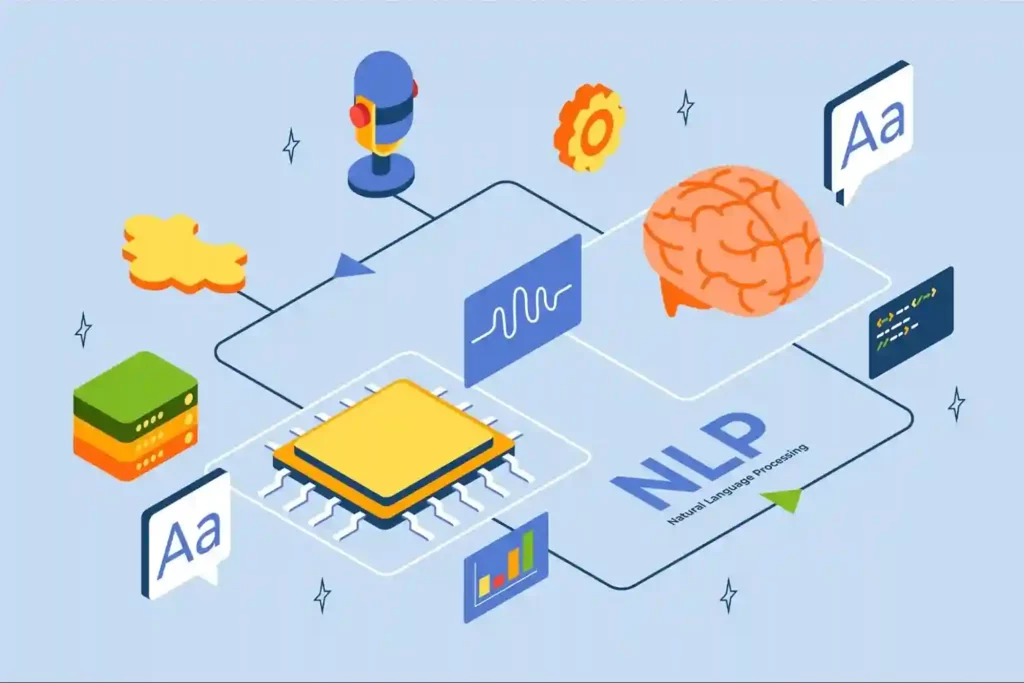
A language model is an intelligent system that understands and generates human language using natural language processing. It works by predicting the next word or sequence of words based on context, much like how we instinctively finish sentences in a conversation.
The language models can analyze vast amounts of data to interpret human language patterns – mostly used in chatbots and AI assitants.
While they don’t really understand language like we do, their ability to predict and generate responses makes them unique in communication.
The way I see it, they’re reshaping how we interact with machines in a surprisingly natural way.
Read more: The Best Websites and Apps for Learning a New Language.
What are Small Language Models (SLMs)?
A Small Language Model is a scaled-down AI designed to process, generate, and understand natural language on the fly. Think of it as a compact, agile version of the massive LLMs like GPT-4, but built to run on my phone, a car dash, or an IoT device.
Instead of hundreds of billions of parameters, SLMs usually work with millions to a few billion – plenty for most everyday conversations and tasks.
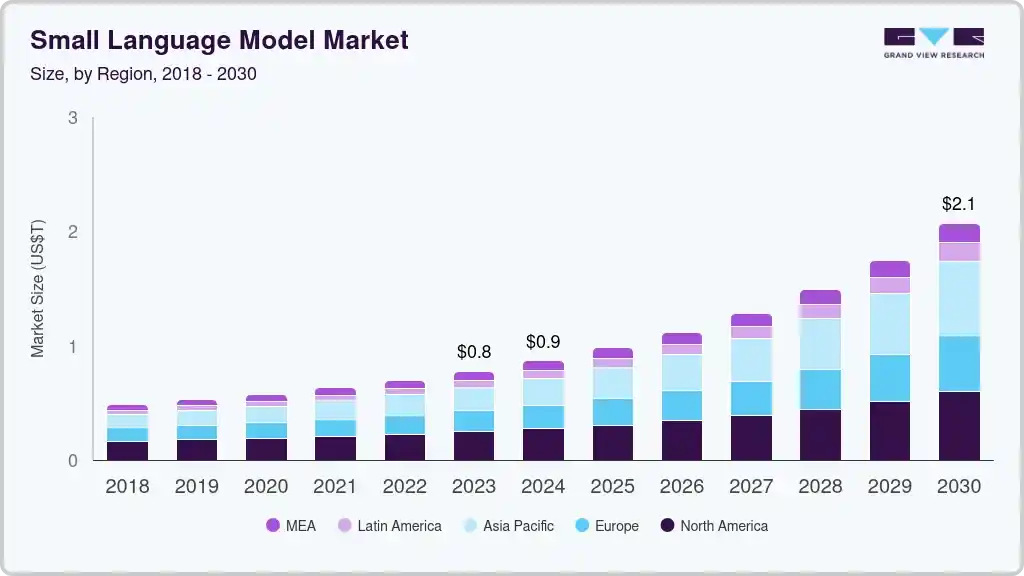
Why are SLMs the Next Big Thing?
Here’s why I’m convinced SLMs will define how we use AI from now on:
- Scarce data and rising training costs make giant models unsustainable – SLMs need less to deliver value.
- Privacy is less worrisome as processing sensitive info right on my device means less data leaves my hand.
- Speed makes a big difference. Small language models offer near-instant responses, since they’re running locally – not waiting on the cloud.
- They can be custom-trained for business or personal needs, not just one-size-fits-all.
- Eco-friendliness is essential. With lower power draw, SLMs are greener tech for a warming planet.
How Do Small Language Models Work?
Let me break down the technical jargon about how SMLs actually work:
- Model compression and optimization: SLMs use techniques like pruning (removing unnecessary connections) and quantization (lowering numerical precision) to reduce their memory footprint and speed up inference, without majorly sacrificing performance.
- Knowledge distillation: They learn from a larger “teacher” model, mimicking its behavior to compress its core knowledge into a more efficient, smaller “student” model.
- Curated, domain-specific datasets: Instead of training on vast, general internet data, SLMs are trained or fine-tuned on smaller, high-quality, and task-specific datasets to achieve high accuracy on targeted functions.
- Simplified architecture: SLMs are built on the same foundational transformer architecture as LLMs but use a simpler design, with fewer layers and parameters, for faster processing.
- Domain-specific fine-tuning: Their smaller size makes them easier and faster to fine-tune with custom data, allowing them to be quickly adapted for niche applications with less computational cost.

Leading Small Language Models
Here’s a list of a few rising SLMs shaping 2026:
Microsoft Phi-3

Microsoft’s Phi-3 is a family of “tiny but mighty” SLMs that achieve impressive performance for their compact size by being trained on highly curated, high-quality datasets. They are designed for strong reasoning, efficient coding, and language understanding, outperforming many larger models.
Key Features
- Multimodal capabilities: Phi-3 Vision adds image processing, allowing it to analyze and reason over images, charts, and diagrams.
- Extended context window: Some versions feature a context length of 128k tokens, enabling them to process and understand significantly longer documents.
- Optimized for edge deployment: Phi-3’s small size and efficient performance make it ideal for running locally on devices with limited resources, like phones and laptops.
Google Gemma 3

Gemma 3, built with technology from the larger Gemini models, is a lightweight, open-weight family of models from Google, released in various sizes for flexible and responsible AI development. These models are known for their efficiency and strong performance on a single GPU.
Key Features
- Multimodal and mobile-first: Models like Gemma 3 are optimized for on-device processing and can handle audio, visual, and text inputs efficiently.
- Massive context window: Larger variants support a 128k token context window, enabling them to process hundreds of images or multi-page documents in a single prompt.
- Responsible and open: Google provides the models with open weights and responsible commercial use licensing, along with comprehensive safety evaluations.
Meta Llama 3 8B

Meta’s Llama 3 8B is a powerful, open-source model optimized for dialogue, reasoning, and code generation, designed to deliver a strong balance between capability and efficiency. It is part of a larger family and is widely accessible for developers and researchers.
Key Features
- Optimized for dialogue: It has been fine-tuned extensively for assistant-like chat experiences, showing strong performance on industry benchmarks for conversational AI.
- Open-source accessibility: As a cornerstone of Meta’s open-source strategy, Llama 3 is freely available and promotes a strong ecosystem and rapid innovation.
- Enhanced scalability: It uses Grouped-Query Attention (GQA) to improve inference scalability and helps manage performance and cost.
Apple OpenELM

OpenELM (Open-source Efficient Language Models) is Apple’s family of transformer-based models optimized for running on devices with memory and computational constraints, emphasizing efficiency and accuracy. The models are available in multiple sizes and include both base and instruction-tuned versions.
Key Features
- Layer-wise scaling strategy: OpenELM uses a unique architecture that efficiently allocates parameters within each layer. It also improves accuracy while reducing computational costs.
- Emphasis on privacy: The focus on on-device processing ensures user privacy by keeping data local rather than sending it to external cloud servers.
- Full open-source framework: Apple released the complete training and evaluation framework, including model weights and code. This empowers the open-source community.
Mistral AI Mixtral 8x7B
Mixtral 8x7B – a Sparse Mixture of Experts (SMoE) – model from Mistral AI that uses a clever architecture to achieve high performance with lower computational requirements. While its total parameter count is high, it only activates a subset for each token, making it highly efficient.
Key Features
- Mixture of Experts (MoE): This architecture allows the model to achieve higher performance than others by using a router to activate only a fraction of its experts for any given token.
- Cost-effective inference: The sparse activation results in faster and more affordable inference. Thus, making it an excellent choice for a wide range of applications.
- Strong performance balance: It offers a compelling mix of high-end capabilities for complex tasks while remaining more efficient to deploy than traditional dense models.
Here’s a comparison table listing the pros and cons of the leading SMLs.
| Model | Pros | Cons |
| Microsoft Phi-3 | Performance: Strong reasoning and coding for its size. Extended context: Processes longer documents efficiently with 128K token context window. | Factual recall: Smaller size limits vast general knowledge compared to larger models.Primarily english focus: Not as optimized for performance in all languages. |
| Google Gemma 3 | Open-weight: Accessible for developers to build and customize responsible AI applications easily.Multimodal: Handles text, images, and audio, optimizing for on-device use. | Accuracy limitations: May not match larger models’ accuracy in complex, niche tasks.Evolving model: New model families may have undiscovered limitations or bugs. |
| Meta Llama 3 8B | High efficiency: Runs efficiently on consumer hardware for edge and offline deployment. Fast inference: Responsive user experiences through rapid generation of responses. | Complex reasoning: May struggle with advanced, multi-step logical reasoning tasks.Requires fine-tuning: Needs task-specific fine-tuning for high accuracy on niche tasks. |
| Apple OpenELM | On-device privacy: Designed for on-device processing and keeps user data private. MLX compatibility: Optimized for efficient performance across Apple’s hardware ecosystem. | Performance benchmarks: Can underperform compared to other top-tier SLMs like Phi-3.Strategic release: Some see its release as more of a strategic move than a breakthrough. |
| Mistral AI Mixtral 8x7B | Fast inference speed: Mixture of Experts (MoE) architecture enables blazing-fast speed. Impressive scalability: The MoE design allows adding experts to increase capacity easily. | Higher hardware cost: Requires more RAM and GPUs than other SLMs, increasing deployment costs.Deployment complexity: Specialized architecture needs expertise and efficient deployment. |
What Are the Benefits of Using Small Language Models
Here are some reasons why small language models are remarkable:
- Model compression efficiency: SLMs use model compression to shrink AI size, enabling faster processing and reduced memory use. This makes them ideal for devices with limited resources, supporting efficient language processing without sacrificing accuracy or speed.
- Domain-specific fine-tuning: Small language models can be fine-tuned with domain-specific data. The customization improves the precision for specialized use cases, enhances performance in healthcare, finance, or customer service sectors.
- Lower costs and energy use: Thanks to their smaller size, SLMs reduce computational power needs and training costs. This cost-efficiency allows broader deployment of advanced language processing technologies by startups and smaller enterprises.
- On-device language processing: Many small language models run locally on phones or edge devices, enabling real-time, offline AI interactions. This boosts privacy and responsiveness in use cases like voice assistants and chatbots operating without cloud dependence.
- Versatile small language model use cases: SLMs excel in scenarios requiring quick, reliable text generation and understanding. Such as mobile apps, customer support, and IoT devices – making AI more accessible and practical in everyday technology.
Limitations of Small Language Models
But I’ve found they aren’t magical for everything:
- Limited scope: SLMs have fewer parameters, so they struggle with tasks outside their training domain. They may not perform well on highly complex or abstract problems requiring deep contextual understanding.
- Reduced precision: With smaller datasets and less complexity, small language models can generate less accurate or consistent responses, especially in nuanced or specialized contexts.
- Bias risks: SLMs trained on limited or less diverse data risk amplifying biases. This can affect fairness and reliability in real-world applications.
- Lower robustness: SLMs are more prone to errors in ambiguous situations or inputs than larger language models.
- Standardization gaps: Lack of universal benchmarks and evaluation methods makes it hard to measure and compare SLM performance and reliability across industries.
Small Language Model Use Cases
Here’s how SLMs are landing in my daily life and work:
- Voice and text assistants that run right on my phone, no internet needed.
- Customer service bots that deliver help instantly within retailer apps.
- In-car dialogue systems that keep me safe, hands-free, and offline.
- Medical tools that analyze doctor-patient chats, maintaining privacy because nothing leaves the hospital network.
- Hyper-personalized learning apps that understand and adapt, live, as I practice new skills.
The Future of SLMs: What’s Next?
Looking ahead to late 2026, the future for SLMs is wide open:
- Compression and quantization techniques keep making SLMs smarter, tinier, and more multi-skilled.
- With edge computing growing fast, SLMs will drive AI into even more corners of my daily life. Such as wearable tech, smart homes, remote sensor networks.
- The holy grail? SLMs that continually learn on-device, personalizing themselves without sending my data anywhere.
Final Thoughts
For someone who’s watched the AI space explode. It’s thrilling to see small language models democratize intelligence and make privacy-friendly AI a reality. In a world drowning in digital noise, there’s something powerful about having a tiny, trustworthy, and super-fast AI always within arm’s reach.
If you’re interested to know more about tech and AI, visit Yaabot.
FAQs
Can SLMs work offline?
Yes, most current SLMs are purpose-built to run directly on your laptop, console, car, or phone – no connection needed.
Will small language models replace LLMs?
Not quite. For ultra-complex or creative work, bigger LLMs still shine. But SLMs are the go-to for speed, privacy, and everyday smarts.
How do SLMs protect my data?
Because your device handles most of the computation, it sends fewer private details to the cloud or third parties.
