



The Google Pixel 11 Pro Fold is reportedly shipping with 4GB less RAM than last year’s model. At the same price, though. That one detail explains the 2026 chip shortage better than any earnings call.
This isn’t 2021’s chaos. This time it’s deliberate. AI’s appetite for high-bandwidth memory has consumed so much manufacturing capacity that everything running on conventional DRAM is quietly being squeezed.
Tech companies are raising prices, cutting specs, or both. The semiconductor industry saw this coming. Consumers are only now feeling the heat.
Key Takeaways
- The 2026 chip shortage is structural. The AI data centers are consuming HBM chip manufacturing capacity that used to produce consumer DRAM.
- Three companies control over 95% of global DRAM production: Samsung, SK Hynix, and Micron. All three have pivoted hard toward higher-margin HBM chips for AI infrastructure.
- HBM supply is fully allocated through 2027. Hyperscalers like Google, Meta, Microsoft, and Amazon have already locked in future contracts.
- DRAM prices are up by around 60% since early 2025.
- Consumer electronics, cars, and smart appliances are all affected. Expect higher prices, fewer features, or both.
- New semiconductor fabs take 4-5 years and $20-30 billion to build. There is no fast fix.
What Is the 2026 Chip Shortage?
The 2026 chip shortage is an imbalance in the global semiconductor supply. The AI infrastructure demand for HBM chips has outpaced manufacturing capacity, which has caused DRAM and NAND shortages across consumer electronics, automotive, and enterprise markets.
Gartner forecasts semiconductor revenue will grow 64% in 2026, with memory revenue expected to nearly triple. That sounds like good news for the semiconductor industry overall. For anyone buying a laptop or a phone, it’s not. The growth is concentrated in AI and HBM chips. Everything else is being crowded out.
The industry now has a name for it memflation. Memory prices are inflating because production capacity has been reallocated toward AI workloads, and commodity DRAM supply is tightening as a result.
How AI Is Consuming the World’s Chip Supply
Microsoft, Amazon, Alphabet, Meta, and Oracle could collectively invest $700 billion or more on capex in 2026, with most of that tied to AI systems and AI infrastructure. Deloitte puts AI data center capex at $400 to $450 billion globally this year, with over half of that going directly to chips.
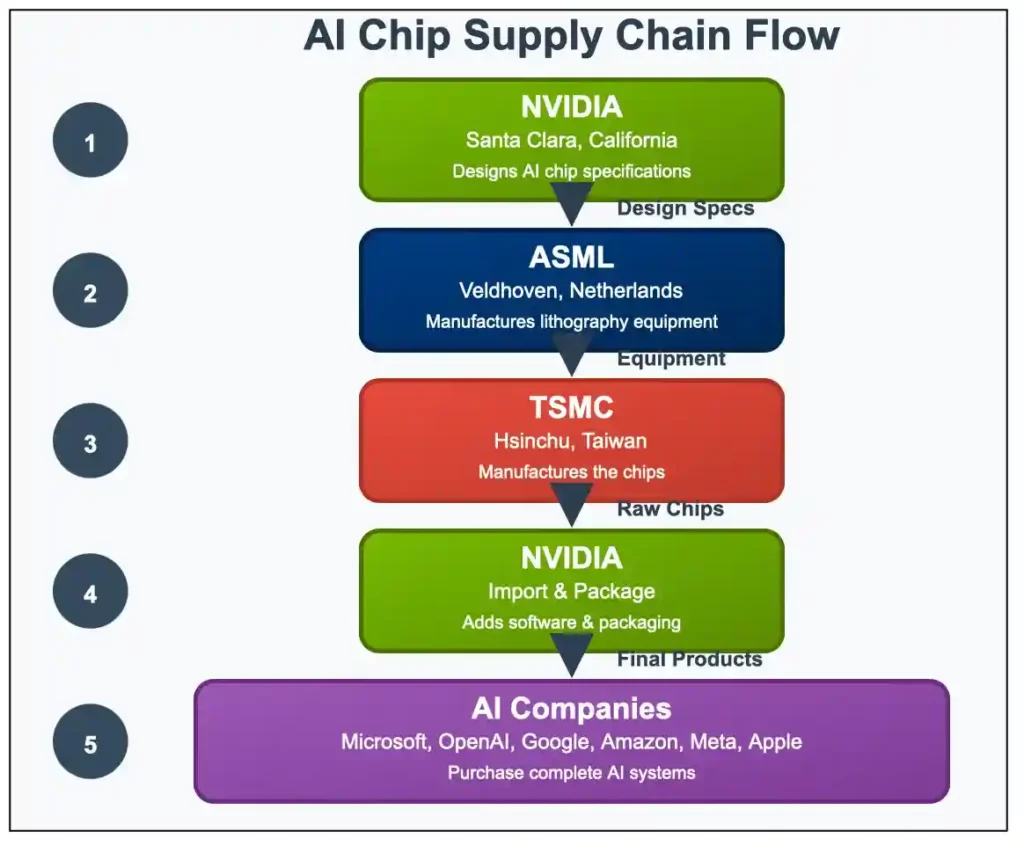
Over 200 new AI data center projects were announced globally in Q1 2026 alone. The AI chip market hit $120 billion in revenue in 2025, triple the 2023 figure. It’s projected to reach $400 billion by 2030.
That spending doesn’t come from nowhere. It comes from the same semiconductor supply chain that makes the DRAM in your phone and the chips in your washing machine’s control board.
Why HBM chips became critical in 2026
HBM chips are a specialized form of DRAM that stacks chips vertically to move data dramatically faster than conventional memory. For AI training and inference, it’s not optional. It is what makes large model workloads possible. NVIDIA’s AI accelerators require HBM. Every major AI data center is built around it.
The catch is physical. According to Sha Rabii at Majestic Labs, a single silicon wafer yields three times as much commodity DRAM as HBM. HBM processing also takes significantly longer per wafer. So every time a fab allocates capacity to HBM, it produces proportionally less of the memory that goes into consumer devices.
AI firms have already locked up HBM supply well into 2027. SemiAnalysis estimates memory could account for roughly 30% of hyperscaler AI spending in 2026, up from about 8% in 2023 and 2024. That shift in spend is directly correlated with the tightening supply of commodity chips for everyone else.
Why AI data centers are driving chip demand
The numbers here are almost hard to process. NVIDIA described the next five years as a $3 to $4 trillion AI infrastructure opportunity. HBM revenue is expected to grow from roughly $16 billion in 2024 to more than $100 billion by 2030.
Hyperscaler investment in AI infrastructure is expected to increase by more than 50% in 2026 alone. This will drive demand for AI accelerators and custom chips alongside the GPU shortage.
Sovereign AI investments are adding pressure, too. Governments in Europe, Southeast Asia, and the Gulf region are funding their own AI data center buildouts. All are competing for the same limited pool of advanced chips and semiconductor supply chain capacity.
Why Consumer Electronics Are Becoming More Expensive
Here is the part that directly affects you. The same fabs producing HBM for hyperscalers also produce the DRAM inside your devices. When Samsung, SK Hynix, and Micron shift production lines toward HBM, they produce less commodity DRAM. Less supply, same or growing demand, resulting in higher prices.
Gartner’s Rajeev Rajput put it plainly, Memflation will destroy, or at least delay, non-AI demand into 2028, to varying degrees depending on the application. That’s the base case forecast for the next two years.
Phones, laptops, and gaming hardware
The GPU shortage has made graphics cards expensive and scarce. And that is broadly understood, but what’s less visible is the DRAM shrinkflation happening inside phones and laptops.
Gizmodo reported in May 2026 that the upcoming Google Pixel 11 Pro Fold may ship with 12GB of RAM, instead of 16GB on its predecessor. That’s a 25% downgrade in memory on a flagship model that’ll likely cost the same or more. Google didn’t announce this change. It leaked through the spec sheets.
Framework, the maker of modular, repairable laptops, has already hiked prices on its RAM modules in response to rising DRAM costs. Mainstream PC makers are expected to follow. Some will eat the cost and ship lower RAM configs at existing prices. Others will pass it on directly.
The consumer electronics impact is showing up in a few ways:
- Spec downgrades at the same price: Less RAM, smaller batteries, or slower chips in devices that cost the same as their predecessors.
- Direct price increases: Entry-level laptops and smartphones are getting more expensive for the same hardware as before.
- Longer product cycles: Manufacturers are delaying refreshes because the cost increase from new DRAM pricing cannot be justified in the current market.
- Feature cuts disguised as redesigns: Sensors, hardware features, and performance tiers are being quietly removed and replaced with software-based alternatives.
How chip shortages affect cars and smart appliances
The semiconductor shortage in consumer electronics is visible. The one in automotive and appliances is slower and quieter.

| Product Category | Primary Chip Affected | Effect of Shortage |
| Smartphones | DRAM/application processor | Less RAM, spec downgrades, price increases |
| Laptops & PCs | DRAM / GPU | Higher prices, slower refresh cycles |
| Gaming hardware | GPU / GDDR memory | GPU shortage worsens, prices rise |
| Cars | Automotive-grade MCUs | Production delays, feature stripping |
| Smart appliances | Low-power embedded chips | Longer delivery lead times, higher unit costs |
| Industrial equipment | FPGA / MCU | Extended procurement timelines |
Car manufacturers faced a crippling chip shortage from 2021 to 2023. That eased, but the semiconductor supply chain for automotive chips is already showing stress again as TSMC’s most advanced nodes get absorbed by AI infrastructure orders. Smart appliance makers, who run on lower-margin embedded chips, are seeing price pressure pass through their supply chains with roughly a 12 to 18-month lag.
The Hidden Economic Impact of the Semiconductor Shortage
Fortune described the situation as imposing a tax on the entire economy. When a handful of hyperscalers corner the supply of HBM chips and push commodity DRAM prices upward, every downstream buyer pays more, whether they use AI or not.
Why are businesses passing higher costs to consumers
The semiconductor shortage affects businesses at multiple levels of the supply chain before it ever reaches a retail shelf:
- Component manufacturers pay more for DRAM and flash memory, raising the cost of finished boards.
- OEMs face both higher component costs and longer lead times, which increases inventory risk.
- Retailers absorb margin pressure or pass costs on directly.
- Consumers get higher prices, fewer features, or both.
IDC forecasts DRAM revenues rising 177% year over year in 2026, hitting $418.6 billion. It’s a raw price increase driven by AI infrastructure demand, bidding up the cost of the underlying resource.
Why Chip Manufacturing Cannot Scale Fast Enough
Everyone has the same question, why can’t chipmakers just build more capacity? The semiconductor industry is making record revenue. Why isn’t that translating into faster supply?
Building a semiconductor fab takes years.
A leading-edge semiconductor fab costs between $20 and $30 billion to build. It takes three to five years from groundbreaking to commercial production. Even fabs that are currently under construction, funded by the US CHIPS Act, the EU Chips Act, and private capital, won’t be online before 2027 or 2028 at the earliest.
The CNAS report on AI semiconductor constraints found that capacity for advanced logic, HBM, and advanced packaging can’t keep pace with AI demand. And that this gap threatens to slow the next wave of hyperscale expansion.
The bottleneck isn’t about adding more fabs. Advanced packaging capacity, which integrates multiple chip types into a single system, is equally constrained. TSMC’s CoWoS packaging capacity, used in Nvidia’s AI chips, is projected to expand by only 60% by the end of 2026. That may sound significant, but it’s not enough due to a steeper demand curve.

The Global Dependence on a Few Chipmakers
The global semiconductor supply chain funnels through a very small number of companies at the leading edge.
| Company | Role | Market Position |
| TSMC | Leading-edge logic fab | ~90% of chips below 7nm |
| Samsung | Logic fab + DRAM + HBM | Second-largest foundry; major HBM producer |
| SK Hynix | HBM and DRAM | Supplies the majority of Nvidia HBM |
| Micron | DRAM and NAND | Major US-based memory producer |
TSMC raised its 2026 guidance, expecting full-year revenue growth above 30%. It plans to spend near the high end of $52 to $56 billion in capex this year. That investment will expand capacity, but primarily for advanced AI chips. But the commodity DRAM market doesn’t benefit from TSMC’s capex cycle. Samsung and SK Hynix’s allocation decisions determine that, and right now, both are prioritizing HBM.
Will the Chip Shortage Last Beyond 2026?
Yes, at least for consumer electronics.
Gartner’s base case is that memflation delays non-AI demand recovery into 2028. The semiconductor shortage in commodity memory will ease when HBM demand stabilizes or when enough new fab capacity comes online to separate HBM production from commodity DRAM. Neither of those things is expected to happen in 2026.
The AI chip market is projected to hit $400 billion by 2030. If that trajectory holds, the pressure on the semiconductor supply chain from AI infrastructure won’t decrease over that period. In fact, it’ll increase.
What Consumers Should Expect Next
If you’re planning a device purchase in the next 12 months, here’s what the semiconductor shortage and GPU shortage mean:
- Mobiles: Expect spec-equivalent models to ship with less RAM than their predecessors. But budget and mid-range sets will feel the pinch harder than flagships.
- Laptops: DRAM-intensive configs (32GB and above) will carry a larger premium than usual. Entry-level options may ship with slower or lower-capacity memory.
- Gaming GPUs: The GPU shortage for mid-range consumer cards isn’t easing. Companies like NVIDIA and AMD are prioritizing AI accelerator production over consumer GPUs.
- Smart home devices: Lower-end smart displays, speakers, and appliances using commodity chips may see retail price increases by 10 to 20% through 2027.
- Cars: Feature packages tied to semiconductor-dependent systems, such as driver assistance, digital dashboards, and in-car connectivity, may be offered only on higher trims or delayed to later models.
Will Governments Intervene Again?
The CHIPS Act in the US committed $52 billion toward domestic semiconductor manufacturing. The EU Chips Act targeted 20% of global chip production by 2030. Both have made partial progress.
Export controls on advanced AI chips to China have reshaped the semiconductor supply chain but haven’t meaningfully expanded production capacity for consumer electronics. They’ve primarily accelerated China’s domestic investment in alternative chip development.
Honestly, government intervention has lengthened the timeline rather than shortened it. Environmental permitting, labor constraints, and supply chain dependencies for fab construction equipment create delays that policy can’t fully offset.
Whether additional intervention helps depends on what it targets. Subsidizing leading-edge logic fabs for AI accelerators won’t fix consumer DRAM prices. Targeted support for commodity memory production is a different policy instrument, and not one that has received serious attention yet.
The Bottom Line
The 2026 chip shortage is a story about AI infrastructure crowding out consumer electronics at the semiconductor supply chain level. HBM chips, GPU supply, and advanced packaging capacity have been absorbed by a small group of hyperscalers with nearly unlimited capital. The ripple effects show up in higher phone prices, laptop spec downgrades, and delayed product refreshes. Gartner expects this pressure to persist into 2028.
What’s different about this shortage is that the revenue is there. The semiconductor industry is posting record numbers. The problem is to whom that revenue is flowing, and what it is building. AI data centers are getting bigger and more capable. Consumer electronics are getting more expensive and, in some cases, quietly worse.
For now, the devices getting cheaper are the ones you were going to buy anyway.
FAQs
AI data centers are consuming HBM chips and GPU supply faster than the semiconductor industry can produce them, leaving less commodity DRAM for consumer electronics.
Lack of commodity DRAM production due to HBM production puts pressure on phone, laptop, and appliance memory prices, resulting in lower prices and specifications.
HBM (high-bandwidth memory): A high-quality stacked memory chip that is utilized in AI accelerators. It requires the production capacity of existing wafers used to make standard DRAM.
Gartner predicts that memflation will postpone semiconductor demand recovery until 2028. For a full resolution, it will take new fab capacity, which will not be available until 2027 or 2028.
The most advanced chip and memory production is dominated by the likes of Taiwan Semiconductor Manufacturing Co., Samsung, SK Hynix, and Micron. SK Hynix is the leading HBM supplier and will mostly be supplying to Nvidia.
NVIDIA and AMD are focused on now is AI accelerators, leaving the mid-range gaming card market high and tight in 2026.
The pressure from AI infrastructure requirements for HBM chips, instead of commodity DRAM, drives a Memflation, or memory price inflation, according to Gartner.
