



The best open-ear earbud in this category isn’t the one with the best sound. SoundGuys ran its lab suite across the current list of the best open-ear earbuds, and the $99 Nothing Ear (Open) beat the $299 Bose Ultra Open Earbuds on measured sound quality, by a wide margin. Price and performance are also a very important part of the discussion, and it matters more than brand reputation.
In this guide, we’ll talk about the best open-ear earbuds and discuss how to choose the right one.
Key Takeaways
- The Nothing Ear (Open) is the best overall choice for most people. Strong sound for an open design, 8 hours per charge plus 30 with the case, with a price around $99.
- For calls specifically, the Soundcore AeroClip outperforms pricier rivals on mic clarity.
- The biggest buying trap is assuming the most expensive option sounds best. The $299 Bose Ultra Open Earbuds scored lower on measured sound quality than the three cheaper options from this guide.
- No open-ear earbuds cancel noise. And if that matters for you, this entire category is the wrong tool.
What Are Open-Ear Earbuds and How Do They Work?
Open-ear earbuds sit outside your ear canal instead of plugging into it. A small driver aims sound at the opening of your ear from a hook, clip, or cuff, which is why people also call this open-ear audio.
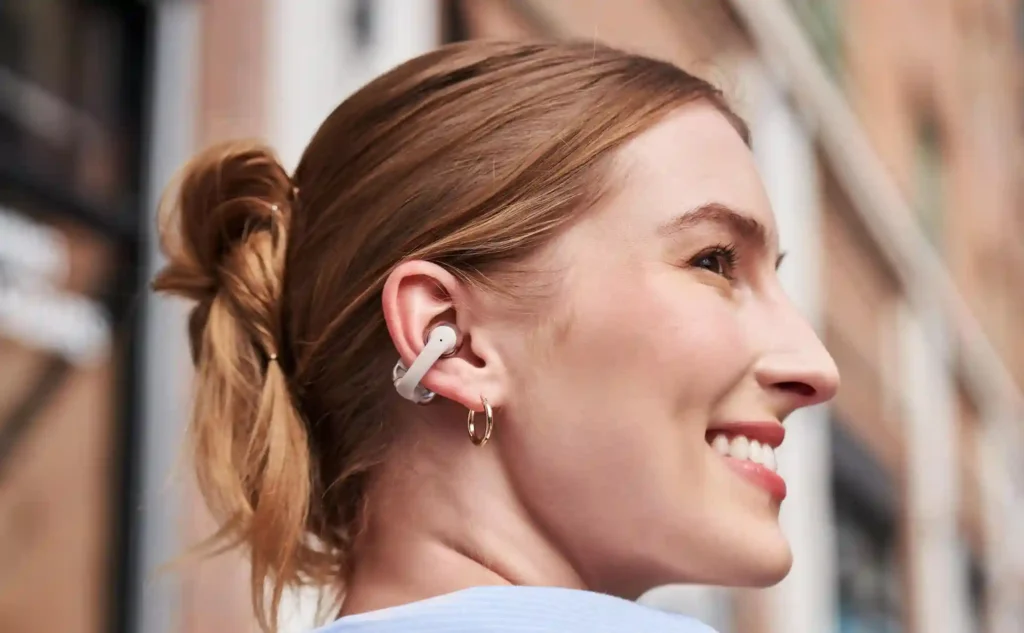
A few things follow from that design:
- The speaker is a traditional dynamic driver, so open-ear earbuds generally sound fuller and bassier than bone conduction.
- The ear canal stays open, so you keep full awareness of traffic, conversations, and alarms around you.
- Sound leakage is the trade-off. Anyone standing close enough can usually hear a faint version of what you’re listening to, especially at higher volumes.
- Open-ear is the right pick for quality audio plus environmental awareness.
How I Evaluated These Picks
These are the factors that were considered:
- Lab-measured specs like battery life, IP rating, driver size, and sound quality scores.
- A second independent review for every model, since a clip-on that feels secure on a narrow helix can slide off a wider one, and specs alone miss that.
- Call quality reports from multiple testers over any single glowing or scathing review, since a mic array rated for clear calls can still get buried by a gust of wind.
- Disagreements between reviewers, flagged rather than smoothed over, especially on comfort and call quality.
Best Open-Ear Earbuds in 2026: Top Picks Compared
These are the best open earbuds I found. Full breakdowns and the honest trade-offs are below the table.
Comparison table at a glance
| Model | Best For | Battery buds/cases) | IP Rating | Weight | Price |
| Nothing Ear (Open) | Overall pick | 8h / 30h | IP54 | Not disclosed | ~$99 |
| Soundcore AeroClip | Calls | 8h / 24h | IPX4 | Not disclosed | $129.99 |
| EarFun Clip 2 | Running and workouts | 11h / 40h | IP55 | Not disclosed | $79.99 |
| Soundcore C30i | Budget | 10h / 30h | IPX4 | 5.4g per bud | $69.99 |
| Shokz OpenDots ONE | All-day wear | 10h / 40h | IP54 | 6.5g per bud | $199.95 |
Best overall open-ear earbuds: Nothing Ear (Open)
The Nothing Ear (Open) is currently the best in its category. It’s the best-sounding open design most people can actually afford. Battery life measures at 8 hours per charge, with the case adding roughly 30 more, which lands way above average even against sealed wireless earbuds, not just the open ones.
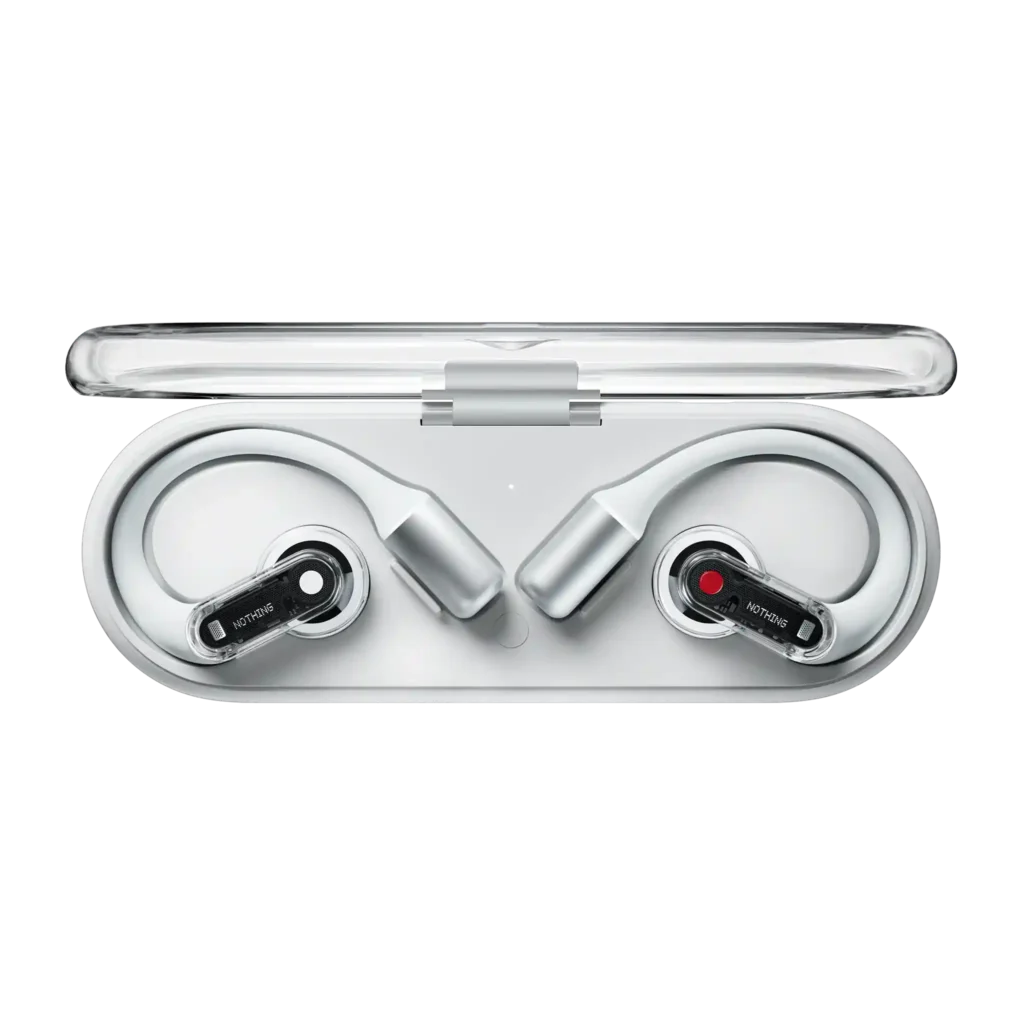
SoundGuys’ own MDAQS sound score still puts it in the bottom quarter of all wireless earbuds they’ve measured, open or closed. Fit is a bit narrow, so if you’ve a wider or fuller outer ear, try before you buy.
- Street price has dropped as low as $99, down from an original $159.
- IP54 rated, so sweat and light rain are fine; submersion isn’t.
- No ANC, which is standard for this entire category.
Best for calls: Soundcore AeroClip
The AeroClip is an exception, when most open-ear earbuds embarrass themselves. It’s clarity alongside a comfortable, secure fit, at a price that undercuts the Bose option by over $150. With 8 hours per charge, which is a bit below the category leaders, the tradeoff buys you a mic array that’s actually useful for daily use.
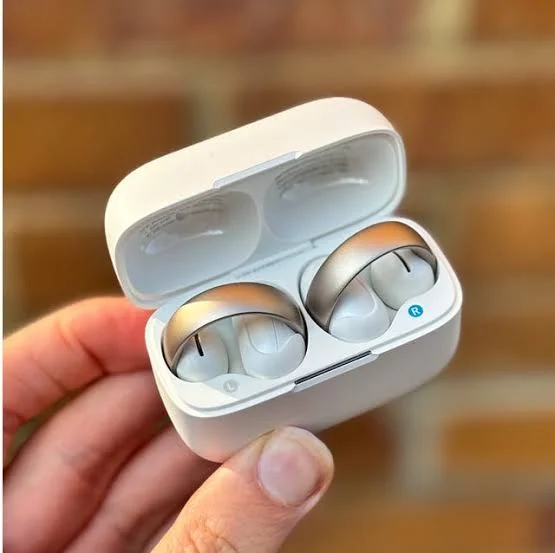
No fully open design blocks background noise from reaching your ears, and that direct wind can overwhelm even strong mic processing. That’s true of every pick on this list, the AeroClip included. And it handles outgoing voice clarity better than most on the list.
- IPX4-rated, fine for a sweaty commute, not a swim.
- Fast charging support.
- Skip it if you need ANC, since this model doesn’t offer it at all.
Best for running and workouts: EarFun Clip 2
The EarFun Clip 2 was tested specifically for gym use and called it an instant win for people who want ambient awareness while lifting or running. The IP55 rating is very important here, since it covers both dust and low-pressure water jets. At 11 hours per charge and 40 with the case, it also beats every other model on raw endurance.
A separate review of EarFun Clip flagged noticeable sound leakage as a real drawback, loud enough that someone sitting next to you on a train would likely hear a thin version of your music. Calls also required raising your voice in noisier settings, per the same review.
- Button controls instead of touch panels, which matters mid-workout with sweaty fingers.
- LDAC support on Android for higher-resolution streaming.
- SoundGuys measured its noise isolation near the bottom of their entire database, which is expected for a fully open design.
Best budget open-ear earbuds: Soundcore C30i
Soundcore C30i at $69.99 MSRP is a good way into the category without spending Bose-level kind of money, and it still clears 10 hours per charge with 30 more from the case. The design visually borrows from both Nothing’s see-through aesthetic and Bose’s clip-on shape.
Compared with the overall pick, no active wind noise reduction on the mic, relying on passive reduction only. Some also flagged touch control issues and bugs that needed firmware polish at launch.
- IPX4-rated, same tier as most mid-range open-ear models.
- At 5.4 grams per bud, it’s lighter than three of the five picks here.
- Optional ear grips included for a more secure fit during workouts.
Best open-ear earbuds for all-day wear: Shokz OpenDots ONE
This is the pick for people who put earbuds in at 8 am and don’t think about them again until dinner. At 6.5 grams per bud, the OpenDots ONE is the lightest model in this guide. One reviewer at tbreak said comfort was the area where it genuinely impressed them, with the clip-on nickel-titanium design applying effectively no pressure anywhere on the ear.
The case brings the total battery to 40 hours, with 10 hours per charge from the buds alone. And that’s among the best in the category at any price. The $199.95 price is real money for earbuds without ANC. The call quality was fine, but wasn’t something exceptional, and the voice assistant accuracy occasionally missed commands.
- IP54-rated, same tier as the Nothing Ear (Open).
- Dolby Audio support, a feature most competitors skip.
- Not the pick if your budget caps out under $150, since this sits near the top of the price range here.
How to Choose Open-Ear Bluetooth Headphones
If you’re not sure which open-ear Bluetooth headphones fit your life. Go through these in order before you check out.
- How much do you actually care about call quality?
If calls are a daily, non-negotiable part of your workday, try to prioritize mic and noise-reduction qualities. Battery specs almost always describe music playback time, not the continuous call time, so try not to assume the two to match.
- Will you wear these somewhere loud?
Trains, construction zones, and busy streets will beat any fully open mic array. If that’s your daily environment, consider a model with an optional sealed or ANC mode.
- How much sound leakage can you tolerate?
Clip-on styles tend to leak more at higher volumes than ear-hook styles. If you share an office or sit close to coworkers, keep volume moderate.
- What’s your battery routine?
If you forget to charge things overnight, prioritize total playback with the case. The EarFun Clip 2’s 40-hour case total, for instance, buys real slack for a forgetful week.
- Do you need water resistance for workouts?
IPX4 handles sweat and splashes. IP54 and IP55 add dust protection, useful for trail runners or anyone training outdoors regularly.
Open-ear vs. bone conduction vs. in-ear
Three designs solve the same problem differently.
| In-Ear (sealed) | Open-Ear | Bone Conduction | |
| How sound reaches you | Silicone tip seals the canal | Driver aimed at the canal from outside | Vibration through the cheekbone, no canal contact |
| Bass and overall sound | Strongest of the three | Fuller and bassier than bone conduction | Thinnest, even with a hybrid driver |
| Noise isolation | Strongest of the three | None, canal stays open | None, canal stays open |
| Awareness of surroundings | Weakest, canal is sealed | Full | Full, often the most secure fit during intense movement |
| Ear fatigue on long sessions | Highest | Lower | Lowest |
| Best for | Isolation, air travel, focus work | Sound quality plus awareness | Maximum awareness during high-intensity exercise |
RTINGS’ top-rated bone conduction pick pairs the bone-conduction design with a hybrid dynamic driver built specifically to patch the category’s thin bass. If situational awareness during activity matters more than sound quality, it’s worth comparing against the open-ear picks above before you buy.
Final Thoughts
No single pair here wins on every metric. The Nothing Ear (Open) sounds the best for the money, the AeroClip handles calls the best, and the OpenDots ONE wins on comfort and battery if you’ve deep pockets. So, pick based on what you’ll actually use these for most.
If you need real noise isolation for focus work or frequent flights, skip this category entirely and look at sealed ANC earbuds instead. Open-ear earbuds solve a specific problem. It helps you stay aware of your surroundings without giving up decent audio. If that’s not your problem, you’ll be happier elsewhere.
For more information on AI, tech, Science, Futurism, and more, check Yaabot.
FAQs
Some are. AeroClip comes with multiple mics and dedicated voice processing, which ensures clarity for outgoing calls. None of them helps to prevent background noise from interfering with your hearing, so noisy places are still bad news even for two people.
Yes, in part, particularly clip-on at higher volumes. This has been noted by reviewers on various models in this guide. Use moderate volume in areas where privacy is important.
There are no definite advantages or disadvantages to either one. Open-ear earbuds are typically louder, have a firmer sound, and have more bass. Bone conduction will keep your ear canal fully open and will tend to be more secure during intense exercise, but will sound “thinner.”
Yes, and several models here are built for it. Look for an IP55 rating or higher plus a secure clip or hook design, like the EarFun Clip 2, rather than relying on fit alone.
Yes, often, because unlike closed earbuds, the open design does not obstruct the ear canal. There is still a degree of compatibility that will depend on the model of the hearing aids, so consult your hearing specialist before purchasing.

