


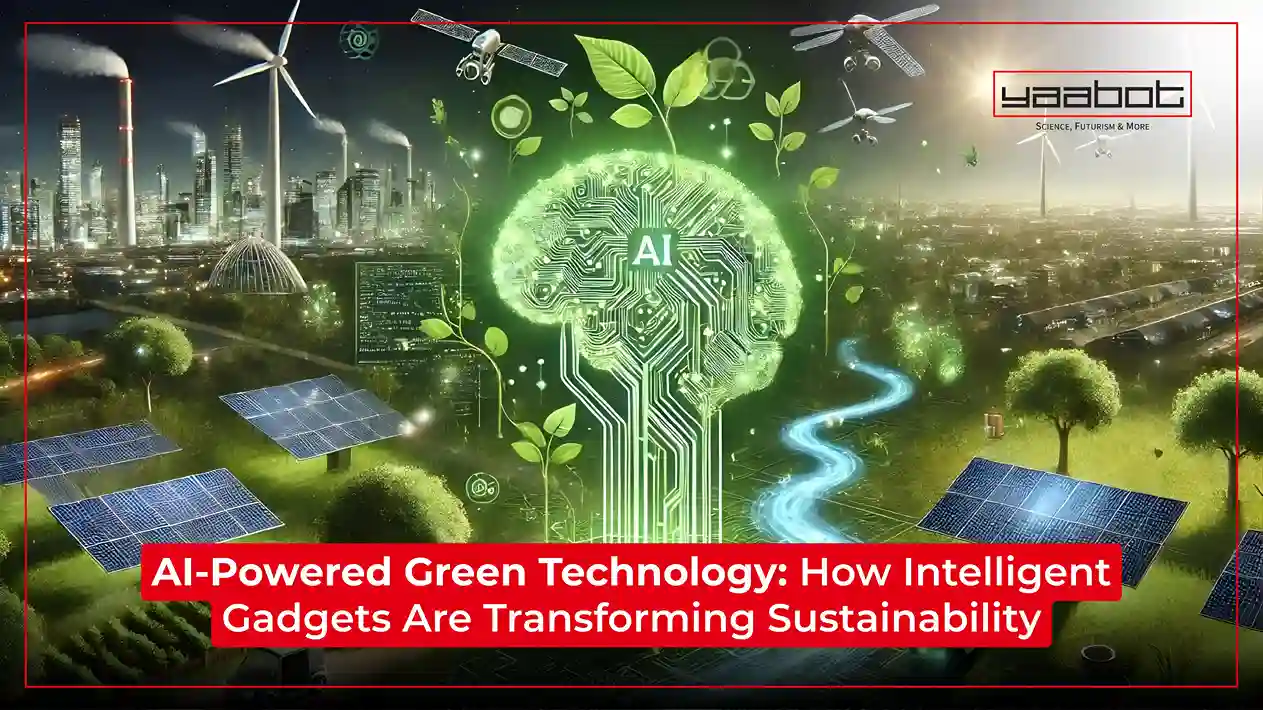
Sustainability has transitioned from corporate initiative to regulatory requirement over recent years, with consumersF becoming more aware of their environmental responsibilities. Concurrently, artificial intelligence has achieved mainstream adoption across industrial and commercial sectors. Therefore, the demand for AI-backed green technology solutions is only increasing…

Market.us says that the global AI in GreenTech market is projected to reach $127 billion by 2034, which demonstrates the convergence of these technological and environmental imperatives.
Smart thermostats, adaptive irrigation systems, and other devices providing green technology benefits are gaining mainstream adoption by addressing the limitations of traditional appliances.
Read more: Best Netflix Shows of 2025: Top Series, Hidden Gems & Genre-Wise Picks
In this blog, we’ll explore what these green-tech gadgets are, the benefits they offer, the pros and cons of this technology, and more!
Key Takeaways
- Green Power Automation involves optimizing measurable variables that the product affects, such as reducing water or energy, and promoting efficient resource use.
- Green Tech products will offer sustainable energy use powered by Artificial Intelligence, which is far more advanced than any conventional products.
- Early adoption of this technology offers advantages, but it also has its downsides, requiring customers to make an informed decision.
Top AI-Powered Real World Green Technology Solutions
Real-World Gadgets and Appliances
| Category | AI-Powered Green Tech Gadget | Sustainability Impact |
| Air Conditioner | Midea Smart Air Conditioner with AI ECOMASTER | It is up to 45% more energy efficient, with AI ECO mode monitoring and through SmartHome App |
| Water Purifier | Bluewater Kitchen Station 1 Smart Water Purifier | It removes up to 99.97% of toxic PFAS chemicals and contaminants using SuperiorOsmosis technology, And generates around 80% clean drinking water. |
| Washing Machine | LG ThinQ AI Washing Machine and Dryers | Offers 55% lower Energy Efficiency Index compared to minimum threshold through AI DD technology. |
| Vacuum Cleaner | Dyson 360 Vis Nav AI Robot Vacuum | Its fully sealed HEPA H13 filtration captures 99.99% of particles down to 0.1 microns. |
| Smart Thermostat | Google Nest Learning Thermostat | It saves an average of 12% on heating bills and 15% on cooling bills Google Store through Gemini AI-powered Smart Schedule. |
How we evaluated Green-tech gadgets
We looked at the following parameters will selecting the above real-world green-tech gadgets:
- Energy savings potential and ROI: We took a note of the projected energy reduction percentage advertised by the companies in their official brochures.
- Manufacturer reputation and support: We also looked at the company’s track record, the availability of local technical support for a foreseeable period.
- Data collection and usage terms: We also saw what kind of user data will be collected by the companies, and how it will be utilized.
AI-Powered Green Technology: The Key Drivers
Green Technology Solutions are evolving. With the rise of automated and AI-backed services, the tech is being increasingly infused in such green-tech gadgets. There are many reasons for integration. Take these for example:
- Escalating Energy Costs: – Soaring electricity prices and volatile energy markets have made optimization financially critical, which AI systems are able to achieve.
- LLMs providing AI access: Large Language Models have democratized AI implementation, enabling manufacturers to integrate it into green technology solutions, without incurring substantial expenditure.
- Environmental concerns and conservation urgency: Environmental preservation awareness among consumers in recent years has accelerated demand for green-tech gadgets infused with AI.
- Limitations of Conventional Systems: Traditional products lack learning capabilities, and AI addresses these fundamental gaps by enabling dynamic responses, continuous improvement, and personalized optimization.
How AI Makes Green Gadgets Intelligent
AI transforms appliances into adaptive systems by continuously analyzing usage patterns and environmental data to make real-time optimization decisions. Thus, it provides the green technology benefits while ensuring maximum optimization.
What AI Learns in Everyday Green Tech Gadgets
The intelligence behind green gadgets comes from their ability to observe, learn, and adapt. Different appliances focus on different variables, depending on their function.
| Gadget/Appliance | What AI Learns | Result |
| AC | Occupancy patterns, humidity levels, and outdoor temperature forecasts. | Cooling only occupied rooms during peak usage times and reducing unnecessary energy consumption. |
| Washing Machine | Fabric type detection, load weight, and detergent residue levels | Adjustments in water volume and cycle duration precisely, and cutting water usage while extending clothing lifespan. |
| Vacuum | Room layout mapping, dirt concentration zones, and foot traffic patterns. | Focus on cleaning of high-traffic areas, and faster cleaning process with improved coverage efficiency. |
| Water Purifier | Seasonal TDS variations, daily consumption patterns, and condition of the filter. | Scheduling cleaning cycles during off-peak hours, and extending filter life through optimized regeneration |
| Refrigerator | Door opening frequency, temperature fluctuations, and food placement patterns. | Dynamic adjustment of cooling zones, and energy waste reduction from frequent door access. |
AI-Powered Green Gadgets vs Regular Products
While learning capability explains how AI-driven sustainability works, the comparison below highlights why it matters in real-world usage.
| Parameter | Green Tech Gadgets | Regular Products |
| Energy Optimization | These automatically adjust based on occupancy, weather, and usage patterns, learn your schedule and optimize without manual input. | These operate on fixed settings and run the same way until you manually change it, regardless of actual needs. |
| Real-time Learning Capability | These improve over time by tracking routines and adapting to changes in your lifestyle automatically. | No learning ability. These work identically from day one until it breaks, as all adjustments require manual intervention. |
| Maintenance Requirements | AI-backed systems send alerts before failures occur by monitoring component health, enabling proactive servicing to prevent breakdowns. | Problems discovered only at complete failure, which results in emergency repairs and unexpected downtime. |
| Data Collection Practices | Green-tech gadgets track usage patterns, schedules, and preferences. And the collected data’s usage raises privacy concerns. | No data collection or transmission. Zero privacy risks from monitoring or potential breaches. |
| Environmental Impact | Measurable carbon reduction through verified energy savings and optimized resource use. | Standard emissions footprint with no efficiency optimization settings beyond initial appliance rating. |
AI And Green Technology: Benefits and Pitfalls
AI-backed Green Technology Benefits
- Significant energy savings: Sustainable Automation systems via predictive automated adjustments can ensure energy consumption optimization.
- Carbon footprint reduction: Automated resource management and waste minimization can significantly lower environmental impact across all applications.
- Extended equipment lifespan: Predictive maintenance and optimized usage ensure that the device’s maximum lifespan and enhanced performance across years.
- Continuous optimization: Data-driven insights such devices to make real-time improvements and personalize sustainability recommendations tailored to usage patterns.
- Widespread adoption potential: Green technology solutions can work effectively across residential, commercial, and industrial settings.
Pitfalls of Green Technology Solutions
- High initial expenditure: The significantly high initial investment in green power automation makes them inaccessible to many consumers, especially the low-income individuals.
- AI-specific energy needs: Training and operating AI systems require significant power, potentially offsetting some environmental gains.
- Data Privacy Risks: Constant monitoring and data collection raise concerns about security breaches and access to unauthorized consumer information.
- Accessibility disparity: Such green technology benefits are only available to affluent sections of society, with the ability to purchase such expensive alternatives.
Read more: AI in Cinema: 5 Areas Where Artificial Intelligence Truly Belongs
Green Technology Solutions: The Future Ahead

- Reaction to prediction Shift: Green Power Automation will focus on forecasting equipment failures, adjust resource allocation based on weather patterns, and eliminate redundant operations, rather than reacting to such stimuli.
- Ease of affordability and increased competition: Mass production and growing market competition will cut the required expenses. And as more manufacturers enter the space, competition will increase and so will the alternatives available.
- On-device edge processing capabilities: The devices will be capable of processing the data in contrast to cloud servers which will address privacy concerns, eliminate latency issues, and ensure applicability even when internet connections fail.
- Emergence of laws and regulatory incentives: Governments will look to establish laws enforcing green technology solutions. And relevant subsidies, rebates and tax credits will make green tech adoption economically compelling.
The Bottom Line
To conclude, AI-integrated green technology signals a shift from passive efficiency to active optimization. For businesses who have to comply with environmental standards or consumers who are worried about the detrimental impact of their energy requirements, these devices ensure maximum sustainability.
However roadblocks like initial investment barriers, and the paradox of AI’s own computational footprint cannot be ignored, nor can privacy implications of constant behavioral monitoring.

Lastly, the transition toward AI-optimized resource management appears irreversible. And as production volumes increase and standardization efforts mature, the cost barriers will diminish while the capabilities will continue to improve, making the green technology benefits and solutions accessible to wider sections of society.
Read more: How Multi-Agent AI Systems Are Transforming Decision-Making Across Industries
Want to learn more about the latest tech developments and solutions? At Yaabot, we pride ourselves on being your ultimate stop for all things related to online technology, software, applications, consumer trends, AI, science, health tech, and more.
Frequently Asked Questions
1. Do the AI systems energy requirements offset the environmental benefits of green technology?
While AI training and operation do consume energy, localized edge computing and efficient algorithms have significantly reduced power requirements. And the net energy savings far exceed the AI’s operational costs and significant initial expenditure, especially in the long run.
2. Are AI-powered green technology gadgets worth the upfront cost?
The exact answer depends on energy prices, usage patterns, and the specific device. And most importantly on the consumer, his preferences and financial status. And while green technology benefits outweigh the costs involved, the consumers should make an informed decision before investing in such products.
3. What are the data privacy concerns with AI-powered green technology?
Sustainable automation systems usually function by collecting the device usage data and customer’s behavioral information to optimize the future performance. This collected data can be stored locally, transmitted to cloud servers, or shared with third-party services. Therefore, consumers should review privacy policies to understand what data is collected, how it’s stored, whether it’s encrypted, and if it’s sold to advertisers or other companies.
4. How difficult is it to install and set up AI-powered green technology gadgets?
Installation complexity is dependent on the device type. Some gadgets like smart thermostats and power strips usually involve basic installation steps, while HVAC-integrated systems usually require a professional to install them correctly. Additionally, most of these green tech gadgets also require initial configuration through smartphone apps which involves setting your preferences.
5. Can AI-powered green gadgets function if the AI features fail or are disabled?
Most AI-powered devices include fallback modes that allow basic manual operation if smart features malfunction or are intentionally disabled. However, disabling AI features eliminates the green technology benefits, as they are now functioning as standard electrical appliances.
