


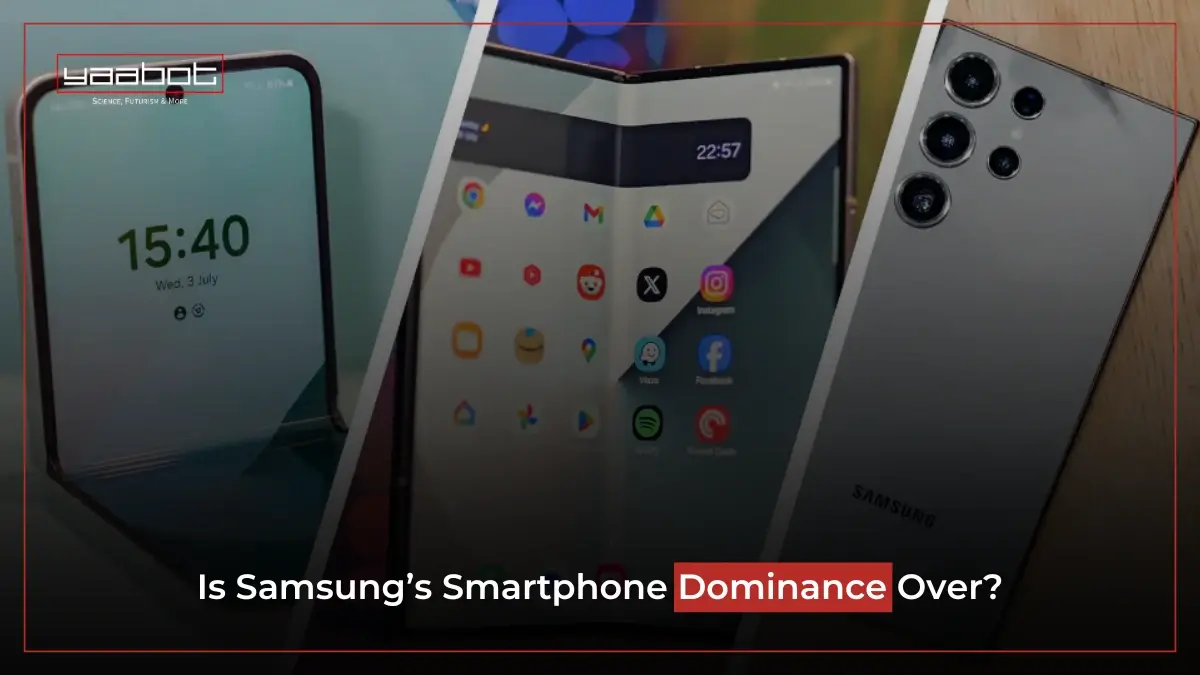
Samsung has come a long way from the days when its dominance in the smartphone market was questioned. In leading smartphone markets like India, smartphone brands like Micromax, Xiaomi, and Oppo challenged its stronghold. High-end competitors like Apple entered India with aggressive pricing and manufacturing, threatening the company’s market position.
Today, Samsung is one of the leading electronic brands in India, selling smartphones and other gadgets. Galaxy S24 Ultra, S25, and Galaxy Z Fold are some of the best-selling smartphones that are dominating the global markets today.

- On a global scale, Samsung reported its Q1 2025 revenue of around $55+ billion, driven by strong sales of its flagship Galaxy S25 smartphones and other premium products. Despite challenges in its semiconductor division, the company’s operating profit rose to over $4.5 billion.
- As of Q1 2025, Samsung has taken the top spot in the global smartphone market, with a 20% market share and shipments crossing 60 million units. This growth is due to the strong performance of its Galaxy S25 series and refreshed Galaxy A series.
- Samsung smartphones’ market value share in India rose to 22% by Q4 2024 from 21% in 2023. Though the growth was not very significant last year, Samsung’s S series performed really well and helped the company gain share in the premium model segment.
Samsung is setting benchmarks in design, performance, and user experience, making it the leading brand in the smartphone market, followed closely by Apple.
In this blog, we will discuss how Samsung’s innovation is strengthening its dominance in the highly competitive global market.
The Dominance of the Galaxy Series

Samsung smartphones – the Galaxy series – continue to dominate the market. From the early Galaxy model (launched in 2009) to the latest Galaxy S25, Galaxy A series, Galaxy S24 Ultra, Z Fold6, and Flip phones, Samsung has shown us what smartphones can do. With a high-definition camera, powerful processors, and sleek design, the Samsung Galaxy series is truly the hallmark of innovation.

Let’s look at the market data and see how some of the models are performing:
In May 2024, Counterpoint’s report stated that the Galaxy S24 series dominated the GenAI-capable smartphone market, taking the top three spots in the list of best-sellers. Samsung Galaxy S24 Ultra accounted for over 30% of the market share.


According to the latest report by Counterpoint, the Samsung Galaxy S25 series, which was launched in Q1 2025, experienced a slightly slower start (9% lower sales) than last year’s Galaxy S24 series. However, the S25 series still outperformed Samsung’s overall sales, which were down 17% year-on-year. While 70% of Samsung’s Indian revenue currently comes from smartphones, that mix is gradually evolving with premium models.

The All-New Galaxy S25 Series
Samsung unveiled its new Galaxy S25 series at the Galaxy Unpacked event on January 22, 2025, streamed globally from San Jose, California. The lineup includes the Galaxy S25, Galaxy S25+, and the flagship Galaxy S25 Ultra with next-gen Galaxy AI innovations powered by One UI 7 – Samsung’s latest interface, which focuses on streamlining the user experience while enhancing privacy and control. It includes smart suggestions, enhanced voice recognition, and seamless auto-scheduling, making everyday tasks faster and more intuitive for users.

Models like these provide tough competition to Apple’s iPhones, especially the Ultra series and AI features, which often outperform in camera tech. It’s not a new fact that Samsung and Apple have always been the leading competitors in the smartphone domain. Whether it is intellectual property infringement lawsuits, marketing campaigns, or witty ads, Samsung and Apple are always fighting for the top spot. They have remained among the top five smartphone manufacturers in the world since 2009 (after Nokia’s sudden downfall).
- In 2024, Apple’s shipments dropped about 10%, pushing Samsung to the top and as the best smartphone maker in the market.
- According to the recently published report by Statista, in Q4 2024, Samsung held a global smartphone market share of 15.6%. Samsung shipped around 223+ million smartphones and accounted for a total of 19.4% of total shipments globally.
Samsung India Market Insight
Samsung stepped foot in India in 1995. Ever since then, it has transformed from a company with a $6 million valuation to one with over $12+ billion in annual revenue in 2024, becoming one of the globally leading consumer electronics and smartphone brands.
Samsung India has solidified its position as a key global supplier, innovation partner, and R&D hub. The Samsung R&D Institute in Bengaluru is the largest outside Korea, which employs around 5,000 engineers and has filed over 7,500 patents globally. Along with the design centers in Noida and Delhi, Samsung India is exploring and innovating in 5G, IoT, and human-centric design.
Korea Economic Daily published a report focusing on the Indian market:
- Samsung led the Indian smartphone market with a 22.8% value share in Q3, outperforming Apple (21.6%) and Chinese competitors like Vivo and Xiaomi.

- The Galaxy series – S, M, and A models – continue to be the best Samsung smartphones in India, combining premium features like AMOLED displays, long battery life, AI features, and high-quality cameras at affordable prices.
- Despite close-knit competition from Xiaomi, Vivo, Oppo, and other brands, Samsung’s innovation, trust, and reliability have allowed it to maintain its edge in the market.
- High-end devices like the Galaxy S24 and S25 series and foldable models like the Galaxy Z Flip and Z Fold have positioned the company in India as the leader in the smartphone market.
- Since many consumers rely on mid-range and budget-friendly phones, Samsung smartphones offer a perfect balance of price and performance. Samsung 5G models like the Galaxy S25, S24, M55, A16, A26, and many others ensure better features without compromising on their performance.
Galaxy AI in India
As AI becomes more integral, Samsung has focused on scaling its Galaxy AI experience across 12,000+ stores. The company has also trained over 40,000 retailers to deliver AI-led experiences, especially with the Galaxy S25 series.
In Q4 2024, one in ten smartphones shipped in India was GenAI-capable, and Samsung’s Galaxy S24 series played a major role in this shift. With GenAI smartphones expected to reach 40% of India’s market and over 500 million units by 2027, Samsung India is betting big on AI innovation.
Samsung’s Diversified Products
Beyond smartphones, the other electronic gadgets are also proof of their innovative portfolio and continue to dominate across various categories:
- Laptops and tablets

Samsung’s Galaxy Book and Galaxy Tab series include various laptop and tablet models that offer versatile features, improved performance, and sleek designs for work and entertainment purposes.
- Home appliances

Company also manufactures washing machines, refrigerators, TVs, and (microwave) ovens, which makes it the most reliable brand in many countries, especially in the US and India. Samsung retained its top position in the US home appliance market for the eighth consecutive year.
As the smart appliance market continues to grow, Samsung India is gearing up to lead this transformation with SmartThings and a connected home ecosystem.
- Wearables

Samsung is one of the leading smartwatch companies globally. The Galaxy Buds and Galaxy Watches are some of the company’s wearable tech products in the market. But are smartwatches safe to use?
Samsung Continues to Grow
Samsung smartphones’ continuous market growth can be attributed to its adaptability and commitment to innovation. The company’s ability to evolve with market trends has kept it ahead of competitors like Apple and other Chinese brands. Looking ahead, Samsung is well-positioned to dominate over famous Chinese smartphone manufacturers like Xiaomi, OPPO, and Huawei. The company’s investment in 5G tech and GenAI-powered devices further solidifies its place in the global market.
Samsung is also taking active measures to tackle environmental issues. As global awareness of environmental concerns grows, Samsung’s focus on sustainability resonates with a broader audience, enhancing its brand image.
Samsung’s Device eXperience (DX) division achieved 93.4% renewable energy conversion in 2023, which includes 100% renewable energy used at major global manufacturing facilities in many countries.
The Future of Samsung
Samsung’s roadmap for the future is centered on advancements in AI, sustainable innovation, and next-generation mobile factors. Recent official announcements and events highlight the company’s commitment to smartphones and other electronic gadgets.
- At the Galaxy Unpacked 2024 event, Samsung introduced Galaxy AI, marking a significant leap in mobile intelligence. These AI features will only continue to evolve and enhance mobile performance in the future.
- Reports also speculate that Samsung smartphones might have a flexible display or a rollable screen in the future.

- Samsung unveiled the MICRO LED Beauty Mirror, which integrates cutting-edge display tech with personalized skincare analysis. It was developed in collaboration with Amorepacific, Korea’s leading cosmetic company. The mirror offers personalized beauty recommendations based on individual skin diagnostics, blending innovation with everyday wellness.
- Samsung introduced The Premiere 5, the world’s first interactive triple-laser ultra-short-throw projector. It features touch interaction and LightWARP technology, enabling users to project content onto various surfaces and engage with them directly.
Samsung is not just competing, but it is setting the standard for the smartphones and other electronic devices as well. The journey of Samsung’s smartphone growth is far from over, and as the company continues to innovate, it’s safe to say that its dominance in the tech world is inevitable.
Want to learn more about robotics, AI, other advanced tech, and top tech brands? We’ve got you covered with all the latest tech developments and solutions. At Yaabot, we pride ourselves on being your ultimate stop for all things related to online technology, software, applications, science, health tech, and more.


1 Comment
Pingback: Is Windows Becoming Irrelevant? - Yaabot